
Blog
Mobile Marketing Strategies for Food & Beverage in 2026
Discover effective mobile marketing strategies for food & beverage in 2026. Engage customers at the right moment and boost your sales!

Mobile Marketing Strategies for Food & Beverage in 2026
TL;DR:
- Mobile marketing for food businesses involves personalized, behavior-based messages across multiple channels to boost customer engagement. Using deep links, location targeting, and fast-loading mobile sites can significantly increase conversions and revenue. Compliance with consent regulations and precise measurement are essential for effective and sustainable campaigns.
Mobile marketing strategies are coordinated systems that use behavioral data, channel selection, and timed messaging to engage customers across the full purchase lifecycle. For food and beverage businesses, this means connecting with hungry customers at exactly the right moment, whether they are browsing lunch options nearby or haven’t visited your restaurant in three weeks. Platforms like Braze define this approach as integrating audience insight, channel selection, and measurement to deliver the right content at the right moment. The businesses winning on mobile in 2026 are not sending more messages. They are sending smarter ones.

1. behavioral SMS and push notification campaigns
SMS and push notifications are the highest-intent channels in your mobile toolkit. The key is triggering them based on what customers actually do, not on a broadcast schedule. Behavioral triggers based on recent activity outperform broad blasting by reducing opt-outs and increasing relevance. A customer who ordered delivery last Tuesday is a far better target for a Friday night promo than someone who hasn’t engaged in six months.
For food and beverage brands, this looks like: a push notification sent two hours before dinner to a customer who ordered pizza last weekend, or an SMS with a loyalty reward triggered the day after a customer’s fifth visit. The message content matches the behavior. That match is what drives clicks.
Pro Tip: Set opt-out rate as a real-time alert in your SMS platform. A spike above your baseline is the earliest signal that your frequency or relevance has slipped.
2. in-app messaging with deep linking
If your restaurant or food brand has a mobile app, in-app messaging is your most direct conversion tool. Messages appear inside the app experience, which means no inbox competition and no notification fatigue. Pair them with deep linking to double conversions compared to routing users to a generic mobile web page.
Deep linking sends a user directly to a specific in-app page, such as a seasonal menu, a loyalty rewards screen, or a reorder flow. Google’s best practices confirm that properly implemented deep links can roughly double conversion rates compared to mobile web redirects. For a food delivery app, that difference between landing on a homepage versus landing directly on “reorder your last meal” is the difference between a sale and a bounce.
3. location-based marketing and geofencing
Geofencing lets you draw a virtual boundary around a physical location and trigger a message when a customer enters or exits that zone. For food and beverage businesses, this is one of the most effective mobile strategies available because purchase decisions happen close to the point of sale. A customer walking past your competitor’s block is a legitimate target for a timely offer.
Proximity campaigns work best when the offer is immediate and specific. “20% off your next bowl, valid today only” beats “check out our new menu” every time. Combine geofencing with behavioral data so you are targeting customers who have visited before, not cold audiences with no brand familiarity.
4. mobile website and landing page speed
A slow mobile site is a conversion killer. 3-second load times lose up to 53% of visitors before the page even renders. For food and beverage businesses, a slow menu page or a sluggish reservation form costs you real revenue, not just traffic. Audit your mobile site with Google PageSpeed Insights and test it on actual devices, not just desktop simulators.
The fix is usually straightforward: compress images, reduce third-party scripts, and use a content delivery network. More importantly, design your mobile pages around a single conversion path. A customer clicking an SMS promo should land on a page with one clear action, whether that is ordering, booking, or redeeming an offer. Every extra tap is a reason to leave.
Pro Tip: Test your mobile landing pages on a mid-range Android device on a 4G connection. That is closer to your average customer’s experience than a flagship iPhone on Wi-Fi.
5. cross-channel campaign coordination
The strongest mobile campaigns treat SMS, push, email, and in-app messaging as a coordinated system, not separate tools. Multi-channel coordination means each channel serves a distinct role in the customer lifecycle. Email handles longer-form content and re-engagement. Push handles time-sensitive offers. SMS handles high-priority messages that need to be seen immediately.
For a food and beverage brand, this might look like: an email announcing a new seasonal menu on Monday, a push notification with a limited-time discount on Wednesday, and an SMS reminder on Friday afternoon. The channels reinforce each other without repeating the same message. Customers feel informed, not bombarded.
6. social media and mobile search integration
Mobile search and social media are where customers discover food and beverage brands before they ever opt into your messaging. Google and Instagram are the two most common discovery channels for restaurants and food brands. Capturing that intent with well-structured Google Business Profile listings, location-targeted social ads, and mobile-optimized landing pages turns discovery into a first visit.
Mobile advertising techniques on platforms like Meta and TikTok work best when the creative matches the feed format natively. Vertical video, short copy, and a single clear offer outperform repurposed desktop ads. Link social ads directly to your app or a fast-loading landing page, not your homepage.
How to measure mobile campaign success
Measuring mobile campaigns requires tracking beyond the click. Push and SMS CTR, opt-out rates, and conversion by device type are the metrics that actually reveal campaign health. A high CTR with a high opt-out rate means your subject line works but your content disappoints. Both numbers together tell the real story.
Key metrics to track for every campaign:
- Push CTR: Benchmark varies by industry, but food and beverage typically sees 4–8% on well-targeted sends.
- SMS opt-out rate: Anything above 2–3% per campaign signals a frequency or relevance problem.
- Conversion rate by device: iOS and Android users often convert differently. Segment them.
- Cost per acquisition (CPA): Divide total campaign spend by the number of new or reactivated customers.
- Post-click behavior: Are users completing the intended action after clicking, or dropping off on the landing page?
On iOS, Apple’s SKAdNetwork limits user-level tracking by replacing it with aggregated, anonymized postbacks. This means you cannot attribute individual conversions to specific campaigns on iOS with the same precision as Android. The practical response is to blend attribution models and use first-party data from your app or loyalty program to fill the gaps.
| Metric | What It Tells You | Action If Off-Target |
|---|---|---|
| Push/SMS CTR | Message relevance and timing | Refine segmentation or offer |
| Opt-out rate | Frequency and content fit | Reduce sends, improve triggers |
| Conversion by device | UX gaps on specific platforms | Audit iOS or Android experience |
| CPA | Overall campaign efficiency | Adjust channel mix or offer value |
Pro Tip: Build a weekly dashboard that shows opt-out rate trends alongside send frequency. The correlation will tell you exactly when you crossed the line from helpful to annoying.
Compliance and consent for SMS and push in 2026
TCPA compliance is not optional for SMS marketing. Express written consent with clear disclosure is required before you send a single promotional text. That means your opt-in form must explicitly state that the customer is agreeing to receive marketing messages, how often they will receive them, and how to stop them. Buried consent buried inside a terms-of-service checkbox does not meet the standard.
Best practices for compliant mobile campaign management:
- Collect consent at the point of sign-up with a clear, standalone checkbox.
- Include your brand name, message frequency, and opt-out instructions in every SMS.
- Honor opt-out requests immediately. Sending even one message after an opt-out is a TCPA violation.
- Restrict sends to 8 a.m.–9 p.m. in the recipient’s local time zone.
- Keep records of consent with timestamps for every subscriber.
For push notifications, the consent bar is lower legally, but the customer experience standard is just as high. Permission to send messages is not permission to spam. Customers who feel over-messaged will disable notifications entirely, which is a harder loss to recover from than an opt-out.
Choosing the right mobile channel for your campaign
Not every campaign needs every channel. The right choice depends on urgency, audience, and the action you want the customer to take.
| Channel | Best For | Reach | Cost | Personalization |
|---|---|---|---|---|
| SMS | Urgent offers, reservations | High | Medium | High |
| Push notifications | Time-sensitive deals, loyalty | App users only | Low | High |
| In-app messaging | Onboarding, upsells, reorders | App users only | Low | Very high |
| Mobile web | Discovery, first-time visitors | Very high | Variable | Low |
| Social media ads | Awareness, new customer acquisition | Very high | Medium-high | Medium |
| Geofencing | Proximity-based offers | Location-limited | Medium | Medium |
SMS reaches the broadest audience because it requires no app install. Push and in-app messaging deliver the highest personalization but only reach customers who have already downloaded your app. For most food and beverage businesses, the right answer is a layered approach: use social and mobile web for acquisition, SMS for high-priority retention, and push or in-app for loyalty and reorder campaigns. You can explore restaurant engagement strategies to see how these channels work together in practice.
Key takeaways
The most effective mobile marketing strategies for food and beverage businesses combine behavioral triggers, fast mobile experiences, and coordinated multi-channel messaging to convert customer intent into revenue.
| Point | Details |
|---|---|
| Behavioral triggers outperform blasting | Send SMS and push based on recent customer activity to reduce opt-outs and improve relevance. |
| Deep linking doubles conversions | Route app users directly to relevant in-app pages instead of generic mobile web landing pages. |
| Page speed is a revenue issue | A 3-second load time loses over half your visitors before the page renders. |
| Compliance is non-negotiable | TCPA requires express written consent, opt-out instructions, and immediate honoring of opt-outs for SMS. |
| Measure beyond the click | Track post-click behavior, opt-out rates, and CPA alongside CTR to get the full campaign picture. |
What i’ve learned running mobile campaigns for food businesses
The biggest mistake I see food and beverage marketers make is treating mobile as a broadcast medium. They collect a list of phone numbers or push subscribers and then send the same message to everyone on the same schedule. The results are predictable: high initial engagement, a steady climb in opt-outs, and a list that degrades faster than it grows.
What actually works is treating your mobile audience the way a good server treats a regular. You remember what they ordered last time. You know when they usually come in. You offer them something relevant, not just something you want to sell. That level of customer engagement is what separates the brands with 40% push CTRs from the ones wondering why nobody clicks.
The compliance piece is also more important than most marketers admit. I have seen businesses lose their SMS sending rights because they did not take TCPA seriously. Rebuilding a compliant list from scratch is painful. Getting consent right from the start is far cheaper than the alternative.
My honest advice: start with one channel, get your behavioral triggers working, and measure opt-out rates obsessively. Add channels only when you have the data and the operational capacity to personalize them properly. Mobile marketing done well is a compounding asset. Done poorly, it burns your audience faster than any other channel.
— Barthelemy
How Sorbey can power your mobile marketing
Running coordinated mobile campaigns across SMS, push, and social while staying compliant and measuring what matters is a lot to manage. Sorbey is built specifically for local food and beverage businesses that need all of that in one place.
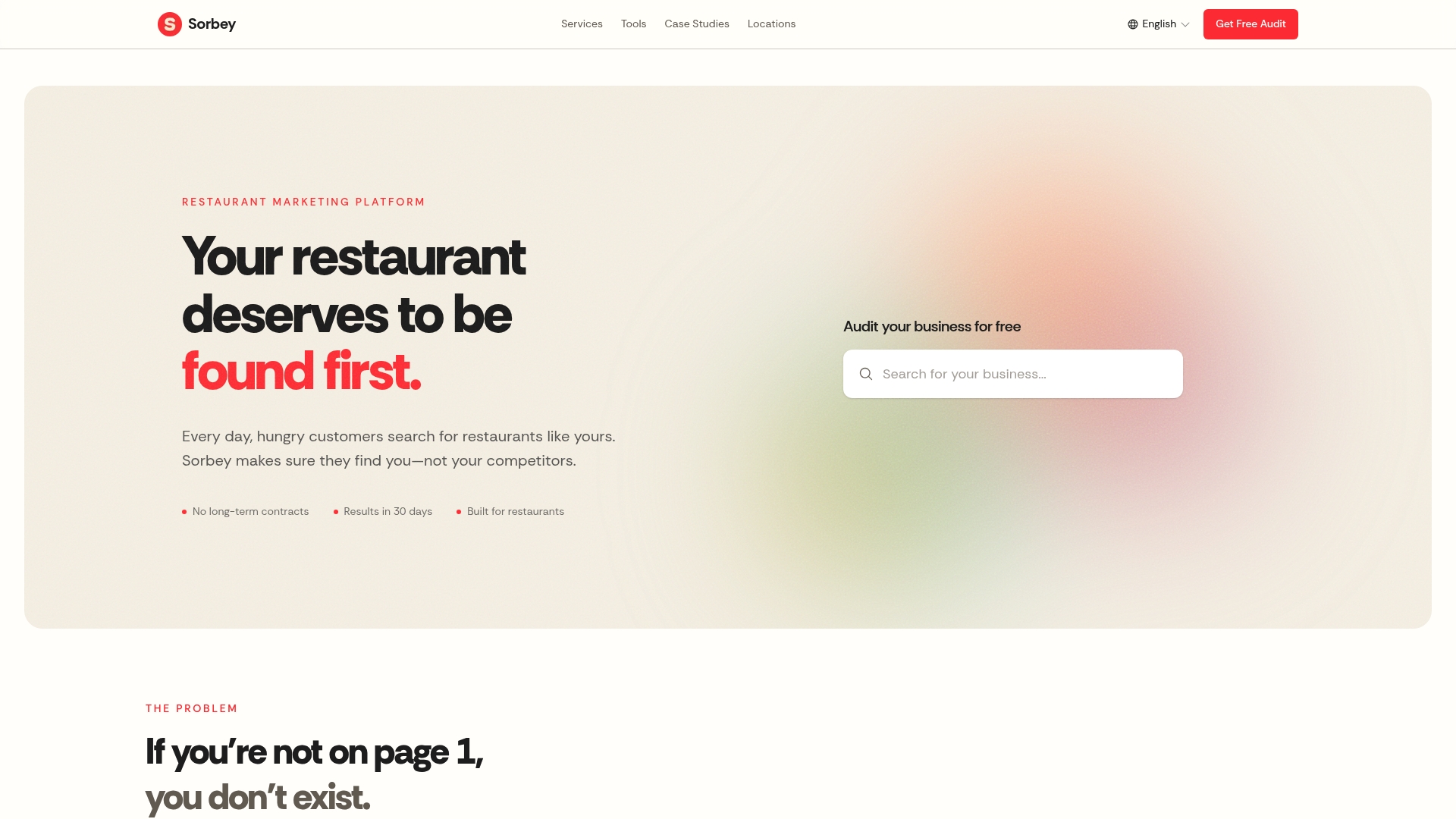
Sorbey’s restaurant marketing solutions include automation tools, behavioral segmentation, and analytics designed for the pace and complexity of food and beverage marketing. You get the infrastructure to send the right message at the right moment without needing a full marketing team to run it. If you are ready to move from scattered tactics to a coordinated mobile strategy, Sorbey is where to start.
FAQ
What are mobile marketing strategies for restaurants?
Mobile marketing strategies for restaurants are coordinated systems using SMS, push notifications, in-app messaging, and location-based offers to engage customers and drive orders or visits. The most effective approaches use behavioral data to personalize timing and content.
How often should i send SMS promotions to customers?
Most food and beverage businesses see the best results sending 2–4 SMS messages per month. Sending more than that without strong behavioral targeting typically drives opt-out rates above acceptable thresholds.
What is the biggest compliance risk in SMS marketing?
The biggest risk is sending promotional messages without prior express written consent, which violates TCPA rules and can result in significant penalties. You must also honor opt-out requests immediately and include opt-out instructions in every message.
Does deep linking really improve conversion rates?
Yes. Google’s best practices confirm that properly implemented deep links can roughly double conversion rates compared to routing users to a mobile web page, because they eliminate friction and land users directly on the relevant in-app content.
How do i measure mobile campaign success on iOS?
Apple’s SKAdNetwork limits individual-level attribution on iOS by using aggregated, anonymized postbacks. Blend attribution models and rely on first-party data from your loyalty program or app to compensate for the reduced tracking precision.
Recommended
- Restaurant marketing trends for explosive growth in 2026 | Sorbey Blog | Sorbey
- Tendances marketing restaurant pour une croissance explosive en 2026 | Sorbey Blog | Sorbey
- Local marketing strategies for restaurant growth in 2026 | Sorbey Blog | Sorbey
- What Is Automated Marketing? Your 2026 Strategy Guide | Sorbey Blog | Sorbey
You might also like
Best Restaurant Loyalty Programs 2026: ROI Guide
Discover the best restaurant loyalty programs 2026 that boost repeat visits. Learn how Sorbey’s platform can transform your guest data strategy!

Why Mobile Marketing Matters for Business Growth
Discover why mobile marketing matters for business growth. Learn how optimizing for mobile drives traffic, conversions, and customer retention.

SF Dim Sum Restaurant Marketing Checklist for 2026
Transform your SF dim sum with our 2026 marketing checklist. Optimize your profile, showcase dishes, and attract customers fast!