
Blog
Top Branding Tips for Restaurants to Attract Local Customers
Discover top branding tips for U.S. restaurants to boost local visibility, attract loyal customers, and stand out in a competitive food market.

Top Branding Tips for Restaurants to Attract Local Customers
TL;DR:
- A strong, clear brand identity helps restaurants stand out in a crowded market.
- Optimizing online presence and local SEO increases visibility among nearby customers.
- Engaging in community events and authentic social media builds lasting local loyalty.
Your restaurant might serve the best tacos in town, but if locals don’t know your name, story, or vibe, they’ll keep walking to the place that does. The U.S. restaurant industry is fiercely competitive, with thousands of new concepts opening every year. Great food gets you started, but a strong brand is what builds the line out the door. This guide breaks down the most actionable restaurant branding tips available, from defining your identity to owning local search results, from social media tactics to community loyalty, so you can stop blending in and start becoming a neighborhood fixture.
Table of Contents
- Clarify your restaurant’s brand identity
- Optimize your online presence and local SEO
- Leverage social media and influencer partnerships
- Create powerful in-person experiences and community connections
- A fresh take: Branding is about memorable moments, not just logos
- Need expert help? Elevate your restaurant’s brand with Sorbey
- Frequently asked questions
Key Takeaways
| Point | Details |
|---|---|
| Build a unique brand identity | Clearly define and consistently present your restaurant’s values, visuals, and story to stand out. |
| Maximize local online presence | Optimizing your website and profiles for local SEO helps attract nearby diners searching for a meal. |
| Engage customers on social and in-person | Combining social media, influencer partnerships, and real-world experiences drives word-of-mouth and loyalty. |
| Invest in community and loyalty programs | Collaborating with the neighborhood and rewarding repeat visitors builds a sustainable customer base. |
Clarify your restaurant’s brand identity
Every great restaurant brand starts with a clear, honest answer to one question: who are you? Not just what you serve, but why you exist, who you serve, and what feeling you want guests to walk away with. Without that foundation, every marketing effort you make will pull in a different direction.
Start by defining your mission, values, and target audience. A family diner in suburban Ohio has a completely different story than a trendy ramen bar in Brooklyn, and both need to know that story before printing a single menu or posting a single photo. Your concept determines your tone, your colors, your playlist, and even how your servers greet guests.
Branding clarity is crucial to stand out in a competitive food service industry. That means your visual identity, your messaging, and your experience all need to speak the same language. If your logo is sleek and modern but your menu font looks like it came from a 1992 diner, you’re sending mixed signals.
Here are three actionable steps to refine your brand identity right now:
- Audit every customer touchpoint. Walk through your restaurant as a guest would. Look at the front door, the hostess stand, the menu design, the staff uniforms, and the restrooms. Do they all feel like they belong to the same brand?
- Write your brand story in two sentences. Who started this restaurant, why, and what makes it different? Practice this with your staff until it flows naturally in conversation.
- Choose three brand adjectives. Words like “warm,” “bold,” or “playful” should guide every design and messaging decision you make going forward.
For deeper guidance, explore restaurant branding best practices to see how other operators have built recognizable identities from scratch.
Pro Tip: Before you officially roll out a rebrand or new brand story, test it on your most loyal regulars and a few longtime staff members. Their gut reactions will tell you more than any focus group.
Optimize your online presence and local SEO
Once your brand identity is defined, it’s time to ensure local diners can find you. Most people decide where to eat before they ever leave home. If your restaurant doesn’t appear in local search results, you’re invisible to a huge chunk of potential customers.
The single most impactful free action you can take is claiming and fully completing your Google Business Profile. Add your hours, address, phone number, menu link, and at least 10 high-quality photos. This profile is often the first impression a potential guest gets. A sparse or outdated profile tells people you don’t pay attention to details, which raises doubts about your kitchen.
Optimizing for local SEO and a Google Business Profile increases brand awareness significantly among nearby customers. Pair that with keyword-rich website copy that includes your city name, neighborhood, and cuisine type.
Here’s a simple three-step checklist for immediate SEO wins:
- Claim and complete your Google Business Profile. Fill every field, add photos, and select the right categories.
- Use geo-targeted keywords on your website. Phrases like “best Italian food in Austin” or “family brunch in Midtown” help search engines connect you to local intent.
- Request and respond to reviews consistently. Publicly thanking happy guests and addressing concerns shows you’re engaged, which search engines reward.
For a deeper breakdown, the local SEO for restaurants resource walks through every technical step in plain language. You can also consult a search engine optimization guide built specifically for food businesses.
Pro Tip: Update your Google Business photos at least once a month. Seasonal dishes, event setups, and behind-the-scenes shots signal to both algorithms and customers that your restaurant is active and worth visiting.
Leverage social media and influencer partnerships
With your online presence set, the next step is engaging locals where they spend their digital time. Social media isn’t optional for restaurants anymore. It’s where your future regulars are deciding who to trust with their Friday night.
The key is choosing the right platforms for your audience. Instagram and TikTok work best for visually driven concepts. Facebook still reaches older demographics and works well for community groups and event promotion. Don’t try to be everywhere at once. Pick two platforms, own them, and stay consistent.
Geo-targeted ads and influencer partnerships are proven methods to boost local brand awareness without burning through a massive budget. Running a small paid ad campaign during a local festival or sports event can drive real foot traffic at a fraction of traditional advertising costs.
Here’s a quick breakdown of best practices by channel:
- Instagram: Post high-quality food photos, reels of kitchen prep, and customer spotlights. Use location tags on every post.
- Facebook: Share events, respond to comments in community groups, and run local ads targeting your zip code.
- TikTok: Lean into behind-the-scenes content. Authentic, slightly imperfect videos often outperform polished ones.
“Restaurants that partner with local food influencers see measurable increases in new customer visits, especially when the content feels authentic rather than scripted.” See more on influencer marketing for restaurants.
For real-world examples, read about how influencers drive restaurant success and what makes those partnerships work. If you’re in a dense urban market, branding ideas for urban markets offers tailored strategies for standing out where competition is highest.
Create powerful in-person experiences and community connections
While digital is vital, in-person branding cements local loyalty and carries your brand into the community. People eat out for connection, ritual, and experience. A meal that feels special becomes a story people tell. That storytelling is free advertising.
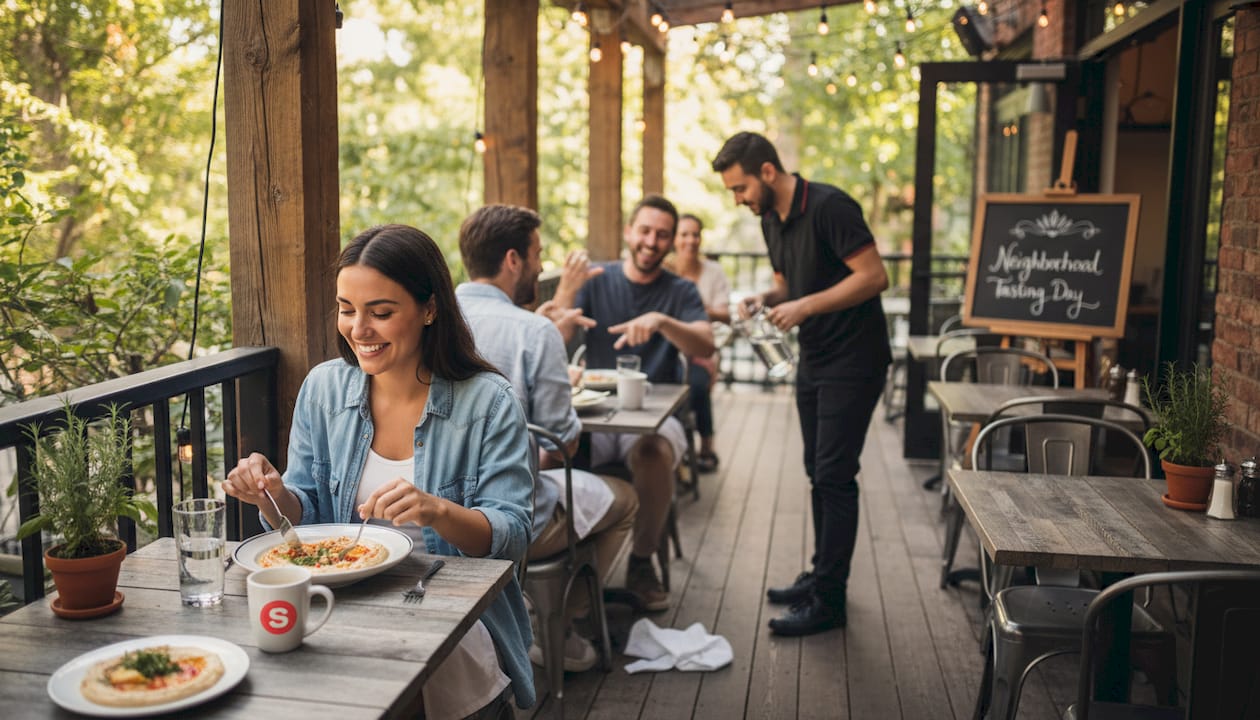
Community events and loyalty programs further enrich restaurant brand awareness by giving locals a reason to return and a reason to talk about you. A well-designed loyalty program doesn’t need to be complicated. A simple stamp card or app-based points system rewards repeat visitors and makes them feel seen.
Partnering with neighboring businesses for events is equally powerful. A tasting night co-hosted with a local brewery, a charity dinner benefiting a neighborhood school, or a pop-up at a local farmers market all put your name in front of new audiences in an authentic, low-pressure way.
For community branding ideas that go beyond the basics, consider pop-ups, neighborhood sponsorships, or partnering with local charities.
Here are easy in-person branding upgrades you can implement this week:
- Retrain your staff on greeting language and table-side storytelling about your menu.
- Add a small branded element to take-out bags, like a sticker or handwritten thank-you note.
- Create a branded hashtag and display it where guests can see it while dining.
- Launch a referral reward. Give regulars a discount card to share with a friend.
| Feature | Loyalty programs | Community events |
|---|---|---|
| Best for | Retaining existing customers | Attracting new customers |
| Cost | Low ongoing cost | Variable, can be minimal |
| Brand impact | Builds habitual return visits | Generates word-of-mouth buzz |
| Data collected | Purchase frequency, preferences | Community reach, media mentions |
| Timeline | Long-term relationship building | Immediate visibility spike |
And check out restaurant loyalty programs to see how similar businesses have structured theirs effectively.
A fresh take: Branding is about memorable moments, not just logos
Most branding conversations start with visuals: logos, color palettes, signage. Those matter, but they’re not where loyalty is actually built. The real branding happens at the table, in the kitchen’s timing, and in that one small gesture your server made when a guest looked like they were having a rough day.
We’ve seen restaurants with gorgeous branding fail because the experience didn’t match the promise. And we’ve seen no-frills spots build cult followings because every single visit felt personal. A perfect meal or a story-worthy moment travels further than any paid social ad.
Instead of overinvesting in design refreshes, invest in training your team to create moments that guests will retell. That’s the kind of boost engagement with branding that compounds over time without a media buy. The most powerful brand asset you have isn’t your logo. It’s the guest who tells three friends they have to try your place.
Need expert help? Elevate your restaurant’s brand with Sorbey
Ready to turn these tips into measurable results? Here’s a proven way to start.
At Sorbey, we specialize in all-in-one marketing for local restaurants across the U.S. Whether you’re refining your brand identity, climbing local search rankings, or building a social media presence that actually converts foot traffic, our tools and team are built for exactly this.
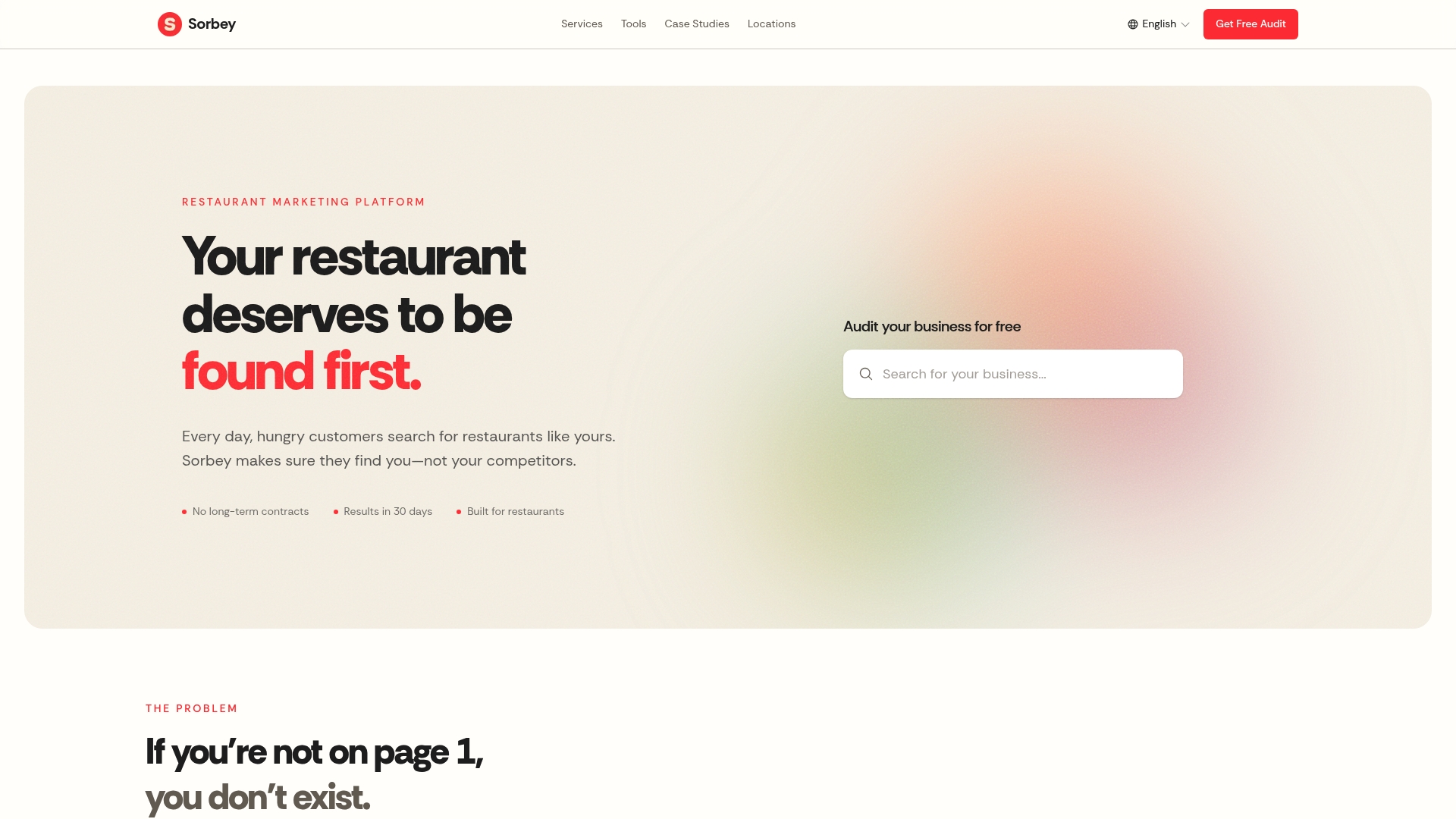
Explore our restaurant marketing services to see how we help owners like you attract more local customers every month. You can also browse our free restaurant tools to get started without a big budget. Branding doesn’t have to be overwhelming when you have the right system behind you.
Frequently asked questions
What is the most effective branding strategy for small restaurants?
Combining a clear brand identity with active online presence and authentic community engagement provides the strongest results. Branding clarity and local SEO drive consistent restaurant success even on a tight budget.
How can I boost my restaurant’s visibility with limited resources?
Leverage free tools like Google Business Profile, encourage customer reviews, and host low-cost community events. Google Business Profile and community events increase local recognition without major ad spend.
Should I work with local influencers for my restaurant?
Partnering with local influencers can help reach new audiences, especially for new menu launches or events. Influencer partnerships boost local restaurant awareness in ways organic posts alone cannot match.
What’s the best way to collect customer feedback for branding?
Ask for feedback in-person and on review platforms, then use those insights to refine your brand experience. Responding to reviews boosts engagement and strengthens long-term customer loyalty.
Recommended
You might also like

Best Restaurant Loyalty Programs 2026: ROI Guide
Discover the best restaurant loyalty programs 2026 that boost repeat visits. Learn how Sorbey’s platform can transform your guest data strategy!

Why Mobile Marketing Matters for Business Growth
Discover why mobile marketing matters for business growth. Learn how optimizing for mobile drives traffic, conversions, and customer retention.

SF Dim Sum Restaurant Marketing Checklist for 2026
Transform your SF dim sum with our 2026 marketing checklist. Optimize your profile, showcase dishes, and attract customers fast!