
Blog
How to Improve Digital Presence for Your Restaurant
Discover how to improve digital presence for your restaurant, boost visibility, and fill seats with practical strategies that drive revenue.

How to Improve Digital Presence for Your Restaurant
TL;DR:
- Focusing efforts on 2-3 key digital channels like Google, Instagram, and Yelp yields better results than spreading across many platforms. Consistently updating website content, maintaining NAP accuracy, and tracking revenue-related KPIs drive sustainable online visibility and restaurant traffic. Implementing strategic local SEO and structured content increases AI citations, helping restaurants appear more prominently in searches and AI-generated answers.
Your restaurant’s digital presence is the sum of every online signal that helps a hungry customer find you, trust you, and walk through your door. For small to mid-sized restaurant owners, knowing how to improve digital presence is not optional. It is the difference between a full dining room and an empty one. Platforms like Google Business Profile, Instagram, and Yelp now shape dining decisions before a single fork is lifted. This guide gives you a focused, practical system for building online visibility that connects directly to revenue.
How to improve your restaurant’s digital presence strategically
The single biggest mistake restaurant owners make is spreading effort across too many platforms at once. Cross-platform presence on 2-3 key channels consistently outperforms shallow activity across six or seven. That means your energy on Google Business Profile, Instagram, and one review platform like Yelp or TripAdvisor will outperform a scattered presence every time.
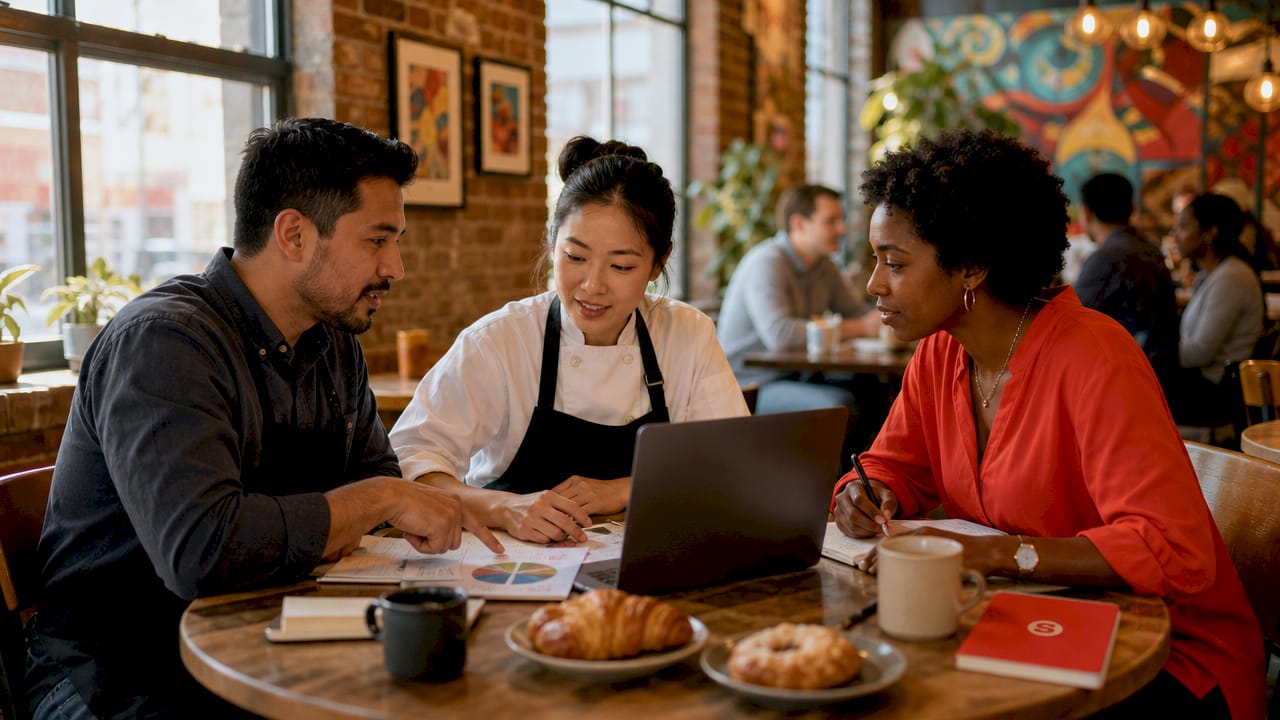
A practical framework for channel selection is the 3-3-3 rule: pick 3 core messages about your restaurant (neighborhood gem, best brunch in the city, family-friendly), choose 3 channels where your customers actually spend time, and define 3 measurable outcomes tied to revenue. This keeps your digital marketing strategies grounded in results rather than activity.
| Channel | Best for | Primary KPI |
|---|---|---|
| Google Business Profile | Local search discovery | Direction requests, calls |
| Visual brand building | Reservation link clicks | |
| Yelp / TripAdvisor | Trust and social proof | Review conversion rate |
| Community and events | Event RSVPs, messages |
Qualified leads, conversion rates, and AI citation frequency are the KPIs worth tracking. Follower counts and post likes tell you almost nothing about whether your digital efforts are filling tables. Set your benchmarks around phone calls generated, reservation completions, and direction requests from Google.
Pro Tip: Set up UTM parameters on your reservation link so you can see exactly which platform drives the most bookings each month. This takes 10 minutes and removes all guesswork from your channel decisions.
What does website and local SEO actually do for restaurants?
Your website is the only digital property you fully own, and it does the heaviest lifting in local search. A slow, mobile-unfriendly site loses customers before they ever see your menu. Google’s mobile-first indexing means a site that loads in under 3 seconds on a phone is not a bonus. It is the baseline. Check your restaurant website best practices to confirm your site meets current standards.
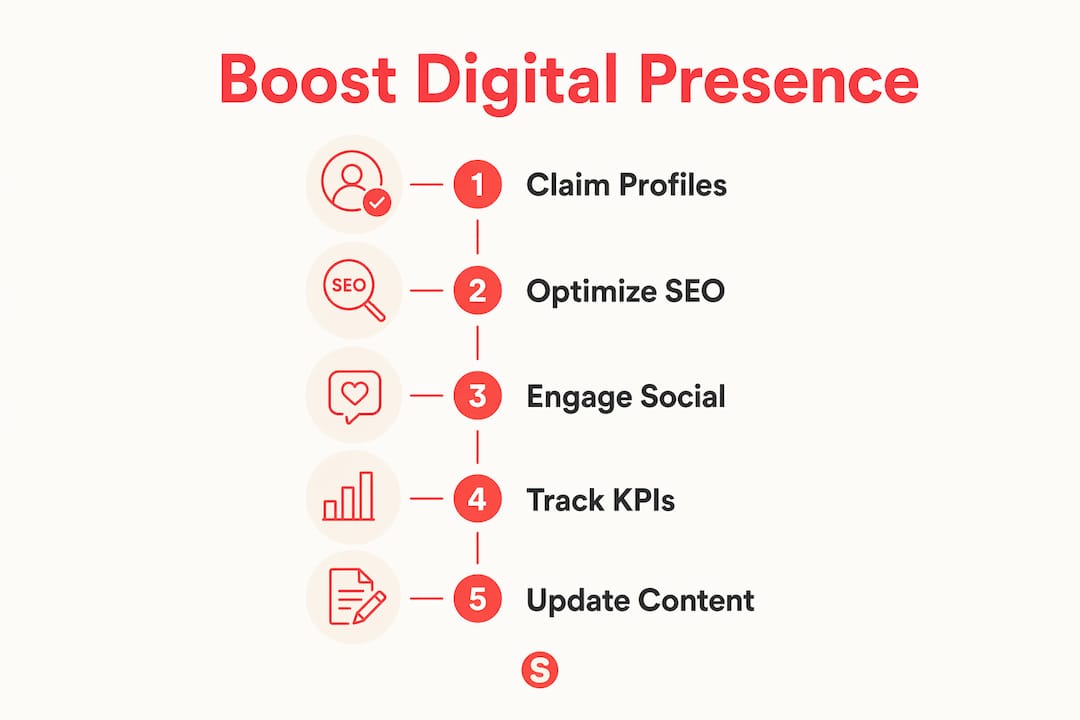
Local SEO for restaurants centers on three pillars: NAP consistency, local keyword targeting, and structured data. NAP consistency across directories signals entity trust to AI search engines, which increasingly power the “best restaurants near me” results that drive foot traffic. Your name, address, and phone number must match exactly on Google Business Profile, Yelp, your website, Facebook, and every other directory where you appear.
Local keyword targeting means your site copy should include phrases like “Italian restaurant in [your neighborhood]” or “best tacos in [your city]” rather than generic terms. These phrases match the actual queries your potential customers type. Pair that with JSON-LD schema stacking combining Article, ItemList, and FAQ markup, which increases machine readability by 1.8x and dramatically improves your chances of appearing in AI-generated search results.
Here are the core SEO improvements to prioritize:
- Claim and fully complete your Google Business Profile, including hours, photos, and menu links
- Add LocalBusiness schema markup to your homepage
- Build citations on Apple Maps, Bing Places, and at least 10 local directories
- Target neighborhood-specific keywords in your page titles and meta descriptions
- Publish a dedicated page for each major offering (brunch, private dining, catering)
Pro Tip: Optimizing your three best-performing Google Search Console pages, specifically those ranked between positions 4 and 15, with answer-first headings and FAQ schema produces faster AI visibility gains than writing entirely new content.
What content actually gets restaurants cited and discovered online?
Content strategy for restaurants is not about posting pretty food photos every day. The formats that drive discoverability and AI citations are specific and measurable. Structured listicle-format ranking pages account for 74.2% of AI citations, meaning a page titled “10 Best Dishes at [Your Restaurant Name]” or “Top 5 Brunch Spots in [Your City]” has a dramatically higher chance of being surfaced by ChatGPT, Perplexity, or Google’s AI Overviews than a standard blog post.
Expert quotes are another underused asset. Including expert quotes in content increases AI visibility by roughly 41%. That could be a quote from your head chef about sourcing ingredients, a local food critic’s review embedded on your site, or a statement from a culinary partner. These signals tell AI systems that your content carries authority.
“AI models prefer clear, concise answers placed right at the start of content sections, paired with question-format headings. Restaurants that structure their web pages this way get cited far more often than those that bury key information in long paragraphs.” Source: Upfront AI, 2026
Content freshness matters more than most owners realize. Updating content every 7 to 14 days prevents AI citation decay, which is the gradual drop in how often AI tools reference your pages. A simple system works well here: rotate seasonal menu updates, add a new customer review highlight, or refresh your “About” page copy on a two-week cycle. New AI citations typically appear 3 to 5 days after publication, with measurable improvements showing in 2 to 3 weeks.
For improving social media presence, user-generated content is your most cost-effective tool. Encourage guests to tag your restaurant in their posts, respond to every review on Yelp and Google, and repost authentic customer photos on Instagram. This activity builds the kind of consistent entity signals that AI-driven search rewards.
How do you measure whether your digital efforts are working?
Measurement is where most restaurant owners lose momentum. They check follower counts, see growth, and assume the strategy is working. It often is not. Tracking AI citation metrics alongside traditional SEO reveals 35 to 45% more search visibility than standard analytics alone. That gap represents real customers who found a competitor instead of you.
The metrics worth monitoring every month include:
- Google Business Profile actions: calls, direction requests, website clicks
- Reservation completions from each traffic source via UTM tracking
- AI citation frequency: how often ChatGPT, Perplexity, or Google AI Overviews mention your restaurant
- Review velocity: the rate at which new reviews appear on Google and Yelp
- Organic search ranking for your top 5 local keyword targets
Tools like Semrush, Google Search Console, and BrightLocal give you the data for most of these. For AI citation tracking, run monthly prompt tests in ChatGPT and Perplexity using queries like “best [cuisine type] restaurant in [your city]” and note whether your restaurant appears. This manual check takes 15 minutes and tells you more than most dashboards.
Pro Tip: Run A/B tests on your Google Business Profile description and your homepage headline every quarter. Small copy changes can shift click-through rates significantly, and the test costs nothing.
For a structured starting point, the digital marketing checklist for restaurants from Sorbey covers every platform and measurement step in sequence.
Key takeaways
A restaurant’s digital presence grows fastest when website SEO, focused social channels, and regular content updates work together as a single system rather than separate efforts.
| Point | Details |
|---|---|
| Focus on 2-3 channels | Concentrated effort on Google, Instagram, and one review platform outperforms broad, shallow activity. |
| NAP consistency is non-negotiable | Matching name, address, and phone across all directories builds AI entity trust and local search ranking. |
| Structured content drives citations | Listicle-format pages and expert quotes significantly increase how often AI tools surface your restaurant. |
| Update content every 7-14 days | Regular refreshes prevent AI citation decay and sustain discoverability between new content publications. |
| Measure revenue-linked KPIs | Track direction requests, reservation completions, and AI citation frequency instead of follower counts. |
Why most restaurants are one focused quarter away from real digital traction
I have worked with enough local restaurant owners to know that the problem is rarely effort. It is almost always direction. Owners post consistently on Instagram for months, see modest engagement, and conclude that social media does not work for them. What actually happened is that they were optimizing for the wrong outcome on the wrong platform.
The restaurants that see genuine digital traction share one habit: they pick their channels based on where their specific customers already spend time, not where the marketing advice says they should be. A neighborhood wine bar in a walkable urban district gets more return from a well-maintained Google Business Profile and a handful of strong Yelp reviews than from a polished TikTok presence. A family-style barbecue spot in the suburbs might find Facebook events and Google Maps optimization drive 80% of new visits.
What I find most underestimated is the compounding effect of content freshness and AI citation work. Most restaurants treat their website as a static brochure. The ones pulling ahead in 2026 treat it as a living document, updating menu pages, adding chef quotes, and publishing short ranking-style posts on a two-week cycle. The search engine optimization guide for restaurants makes this case clearly. The payoff is not just traditional SEO. It is showing up when someone asks an AI assistant where to eat tonight.
Start with one channel, one content format, and one measurable outcome. Master that before adding anything else. The restaurants that try to do everything at once are the ones still wondering why nothing works six months later.
— Barthelemy
How Sorbey helps restaurants build real digital traction
Sorbey is built specifically for local restaurants that want results without hiring a full marketing team. The platform handles your Google Business Profile optimization, review management, social content scheduling, and local SEO tracking in one place.
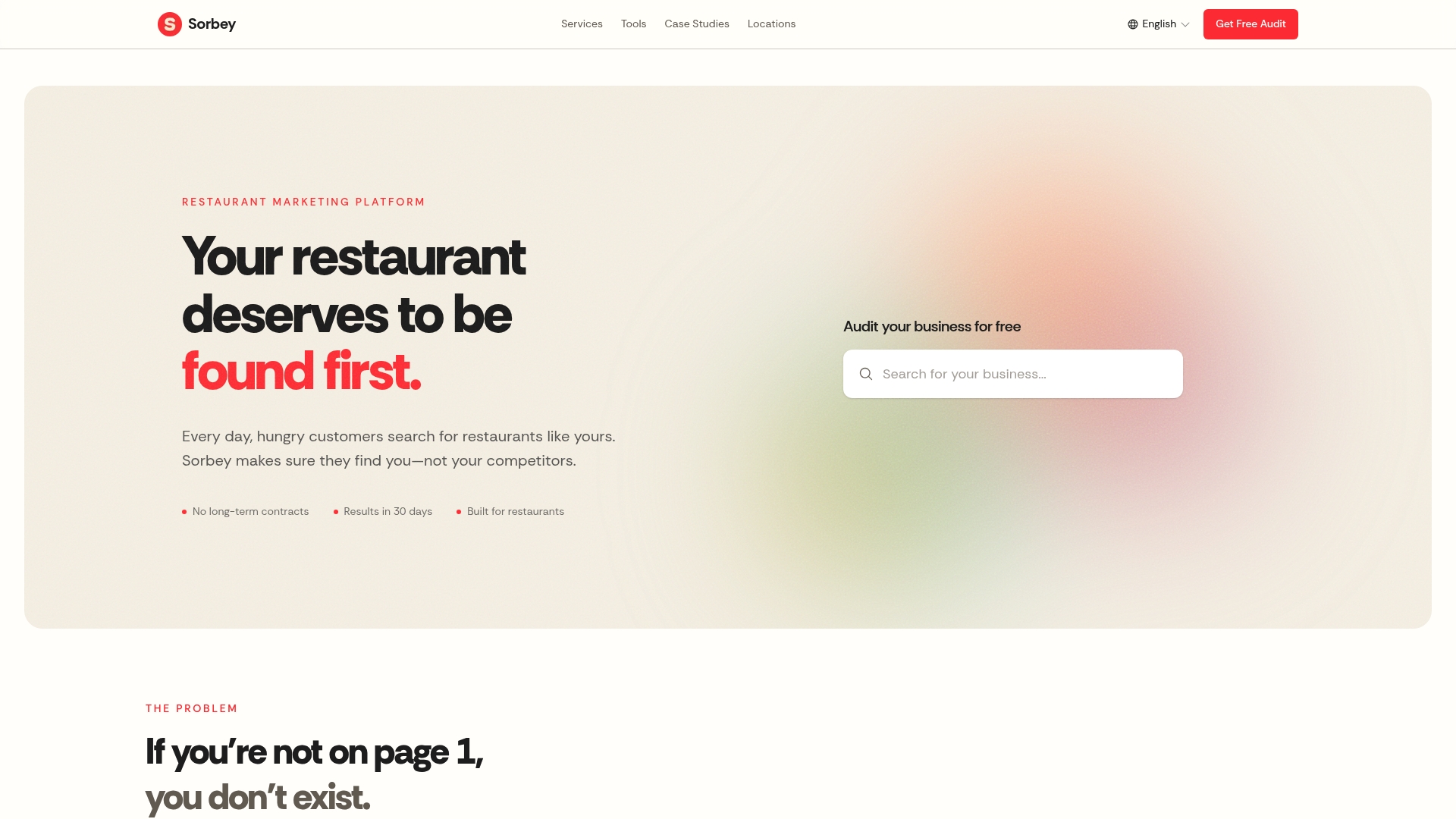
If you have read this far and are thinking about where to start, Sorbey’s restaurant marketing solutions are designed around the exact strategies covered in this article. From NAP consistency audits to AI citation monitoring and content scheduling, every tool connects back to one goal: more customers through your door. Book a free demo and see what a focused 90-day digital plan looks like for your specific restaurant.
FAQ
What is the fastest way to improve a restaurant’s digital presence?
Claiming and fully optimizing your Google Business Profile is the single fastest move. Complete profiles with photos, updated hours, and menu links appear in local search results and Google Maps immediately, driving direction requests and calls within days.
How many social media platforms should a restaurant use?
Two to three platforms is the proven sweet spot. Focused presence on 2-3 channels consistently outperforms thin activity across many, and it is sustainable for a small team managing daily restaurant operations.
Does content freshness really affect restaurant search rankings?
Yes. Updating content every 7 to 14 days prevents AI citation decay and sustains your ranking in both traditional search and AI-generated results. Even small updates to menu pages or adding a new review count as fresh signals.
What KPIs should restaurant owners track for digital marketing?
Track direction requests, reservation completions, review velocity, and AI citation frequency. Conversion rates and AI citation frequency are far more useful than follower counts or post impressions for measuring real business impact.
How long does it take to see results from local SEO improvements?
Most technical SEO changes, like fixing NAP consistency and adding schema markup, show results in 4 to 8 weeks in traditional search. AI citation improvements typically appear within 3 to 5 days of publishing new structured content, with measurable visibility gains in 2 to 3 weeks.
Recommended
También te puede interesar

Why Digital Marketing Matters for Your Business Growth
Discover why digital marketing matters for your business growth. Unlock precise customer engagement and measurable results today!

How to Build a Restaurant Email List in 2026
Discover how to build a restaurant email list in 2026 with proven methods. Capture customer data and boost your revenue today!

Why Invest in Online Advertising for Restaurants
Discover why invest in online advertising for restaurants. Learn how targeted ads can fill your tables and boost your revenue effectively.