
Blog
Online menus: the key to restaurant growth in 2026
Learn how optimized online menus drive customer engagement, boost profits, and streamline operations for restaurant owners in 2026.
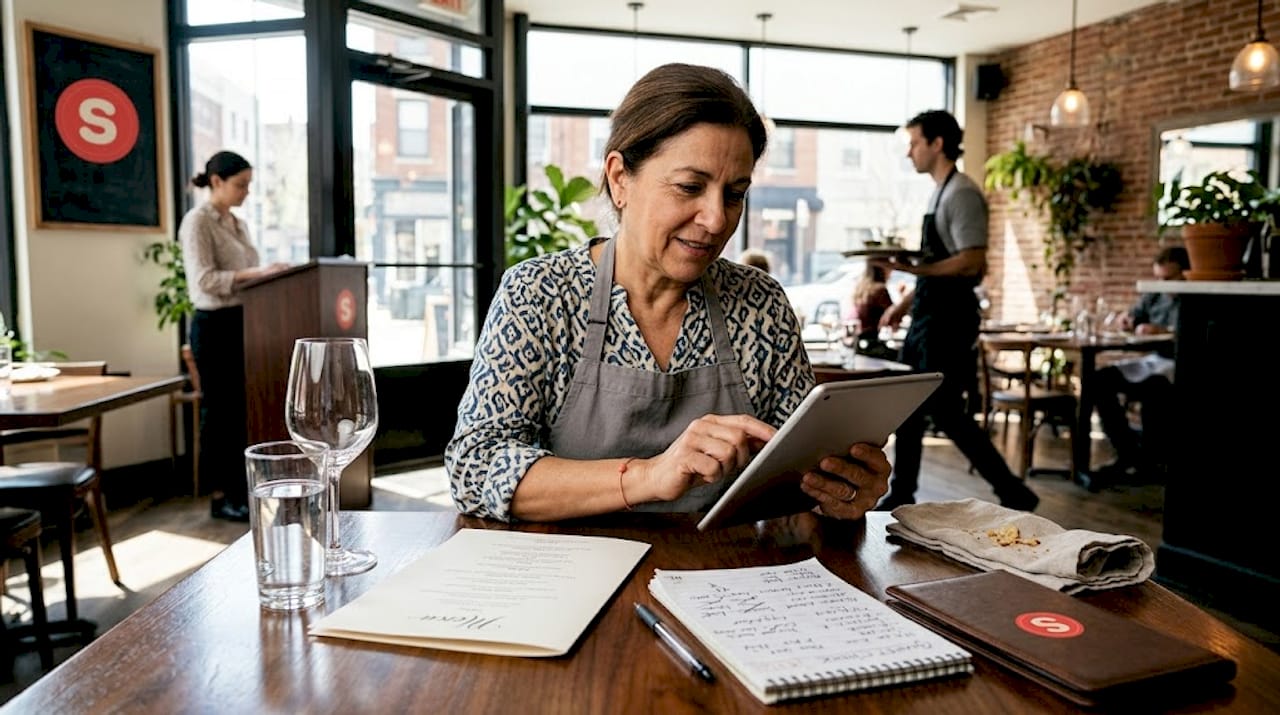
Online menus: the key to restaurant growth in 2026
TL;DR:
- Digital menus enable instant updates, rich media, and analytics for better restaurant management.
- They enhance customer engagement and satisfaction through visuals, reviews, and personalized recommendations.
- Combining digital with printed menus ensures inclusivity and maximizes operational flexibility.
Your online menu is not just a digital version of the laminated card on your table. When built with intention, it becomes one of the most powerful tools you have for turning first-time visitors into regulars and keeping your kitchen running smoothly. Digital menus boost customer engagement through interactive features like high-quality photos, personalized recommendations, allergen info, and reviews, increasing satisfaction and loyalty. This guide breaks down why that matters, what the evidence shows, where most restaurants go wrong, and exactly what you can do to make your online menu work harder for your business.
Table of Contents
- Why online menus matter in today’s restaurant landscape
- How online menus drive customer engagement and satisfaction
- Digital vs. traditional menus: a comparison for modern restaurants
- Implementing and optimizing your online menu: best practices
- Rethinking online menus: beyond tech, towards smarter hospitality
- Supercharge your restaurant’s success with Sorbey
- Frequently asked questions
Key Takeaways
| Point | Details |
|---|---|
| Boost engagement | Interactive online menus directly increase customer satisfaction and loyalty when designed with rich content and reviews. |
| Update instantly | Digital menus allow you to make real-time changes, keep information accurate, and respond rapidly to inventory shifts. |
| Avoid tech pitfalls | A hybrid menu approach prevents non-tech-savvy guests from feeling excluded and maximizes accessibility. |
| Apply best practices | Regularly reviewing, customizing, and testing your menu ensures ongoing operational and financial benefits. |
Why online menus matter in today’s restaurant landscape
The restaurant industry changed faster between 2020 and 2023 than it had in the previous two decades. Contactless ordering, QR codes, and third-party delivery platforms pushed digital menus from a nice-to-have into a baseline expectation. Customers now research restaurants online before they ever walk through the door, and your menu is often the first real impression you make.
Printed menus have served restaurants well for generations, but they come with real limitations. When your supplier runs out of salmon, you cannot update 200 printed menus overnight. When you want to push a high-margin special on a Tuesday afternoon, a static card cannot do that for you. Digital menus solve both problems instantly.
Here is what a well-optimized online menu gives you that print simply cannot:
- Instant updates across every platform the moment you make a change
- Rich media including photos, videos, and item descriptions that sell for you
- Built-in analytics showing which items get viewed most and which get skipped
- Customer review integration that builds trust before someone places their first order
- Allergen and dietary filters that reduce friction for guests with specific needs
“Interactive digital menus that include high-quality photos, personalized recommendations, allergen information, and customer reviews consistently increase customer satisfaction and long-term loyalty.”
The analytics piece alone is worth highlighting. Most restaurant owners rely on gut feel to decide what stays on the menu and what gets cut. Digital menus give you actual data. You can see that your mushroom risotto gets viewed 400 times a week but only ordered 30 times, which tells you the price, photo, or description needs work. That kind of insight is what separates growing restaurants from stagnant ones.
For a deeper look at how to apply this data, the menu optimization tips on our blog walk through the process step by step. And if you want to understand how customer reviews connect to your menu’s reputation, our guide on online reviews for restaurants is a strong next read.
With the foundations clear, let’s dig deeper into how digital menus specifically improve engagement.
How online menus drive customer engagement and satisfaction
Customer hesitation is one of the biggest silent killers of restaurant revenue. A guest who cannot picture what a dish looks like, does not know if it contains peanuts, or cannot find a single review to reassure them will often default to the safest, cheapest option or leave entirely. A photo-rich, information-dense online menu removes that hesitation at every step.
Here is a practical sequence for how engagement builds through a well-designed digital menu:
- A guest lands on your menu page. A high-quality photo of your signature pasta stops the scroll immediately.
- They check the description. Clear, appetizing copy that mentions the fresh ingredients and preparation method makes the dish feel worth the price.
- They filter by dietary need. A gluten-free badge next to the item confirms it works for them without requiring a phone call.
- They read two recent reviews. Other customers confirm the portion size is generous and the sauce is exceptional.
- They add it to their cart. No hesitation, no second-guessing.
That five-step journey happens in under two minutes, and every element of it is something you can control. Digital menus increase satisfaction precisely because they give customers the confidence to order what they actually want rather than what feels safe.
Personalization is the next frontier. Platforms that track order history can surface recommendations like “You ordered the spicy shrimp last time, try our new chili-glazed salmon” directly on the menu. This is not just a nice touch. It makes guests feel recognized, which drives repeat visits more reliably than any discount program.
Pro Tip: Add a “most popular” or “chef’s pick” label to three to five items on your digital menu. This simple cue reduces decision fatigue and consistently nudges guests toward your highest-margin dishes.
“Personalized recommendations and visible customer reviews on digital menus create a feedback loop that keeps guests engaged and coming back.”
For restaurants looking to boost profits with menu optimization, the engagement data from your digital menu is the most direct signal you have. And if you are not yet actively managing online reviews as part of your menu strategy, you are leaving a major trust-building lever untouched.
Now that we’ve explored the benefits, what does the evidence say compared to traditional approaches?
Digital vs. traditional menus: a comparison for modern restaurants
Before you fully commit to a digital-first approach, it is worth understanding where each format genuinely excels and where each falls short. This is not a simple “digital wins” conversation. The best restaurants use both formats strategically.
| Feature | Digital menu | Printed menu |
|---|---|---|
| Update speed | Instant | Days to weeks |
| Cost over time | Lower | Higher (reprinting) |
| Customer experience | Interactive, visual | Tactile, familiar |
| Upsell capability | High (photos, labels) | Low |
| Accessibility | Requires device | No device needed |
| Environmental impact | Lower paper waste | Higher paper use |
| Analytics | Built-in | None |
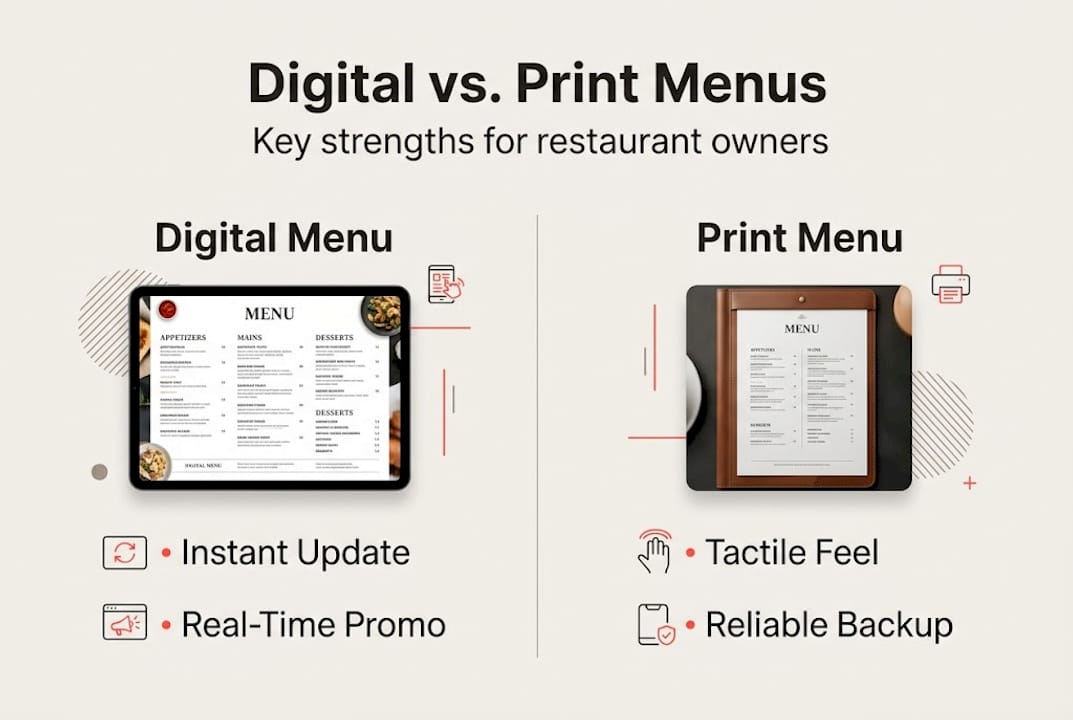
The agility advantage of digital menus is real. You can run a happy hour promotion from 4 to 6 p.m. that disappears automatically at 6:01. You can pull an item the moment you run out of a key ingredient. You can test two different price points for the same dish and see which one converts better. None of that is possible with print.
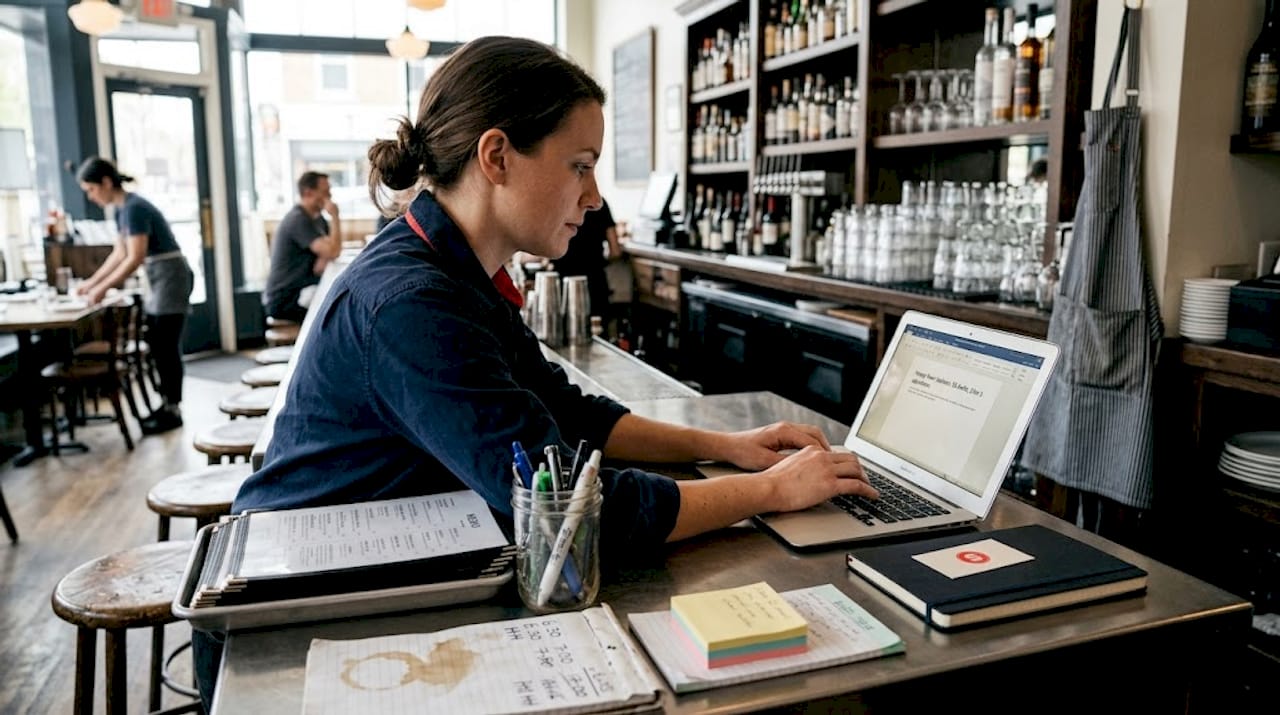
That said, some restaurants revert to print for the tactile experience it provides, and there is genuine value in that. A beautifully designed printed menu signals quality and permanence in a way that a phone screen sometimes cannot. Fine dining establishments in particular often use print as part of the overall atmosphere.
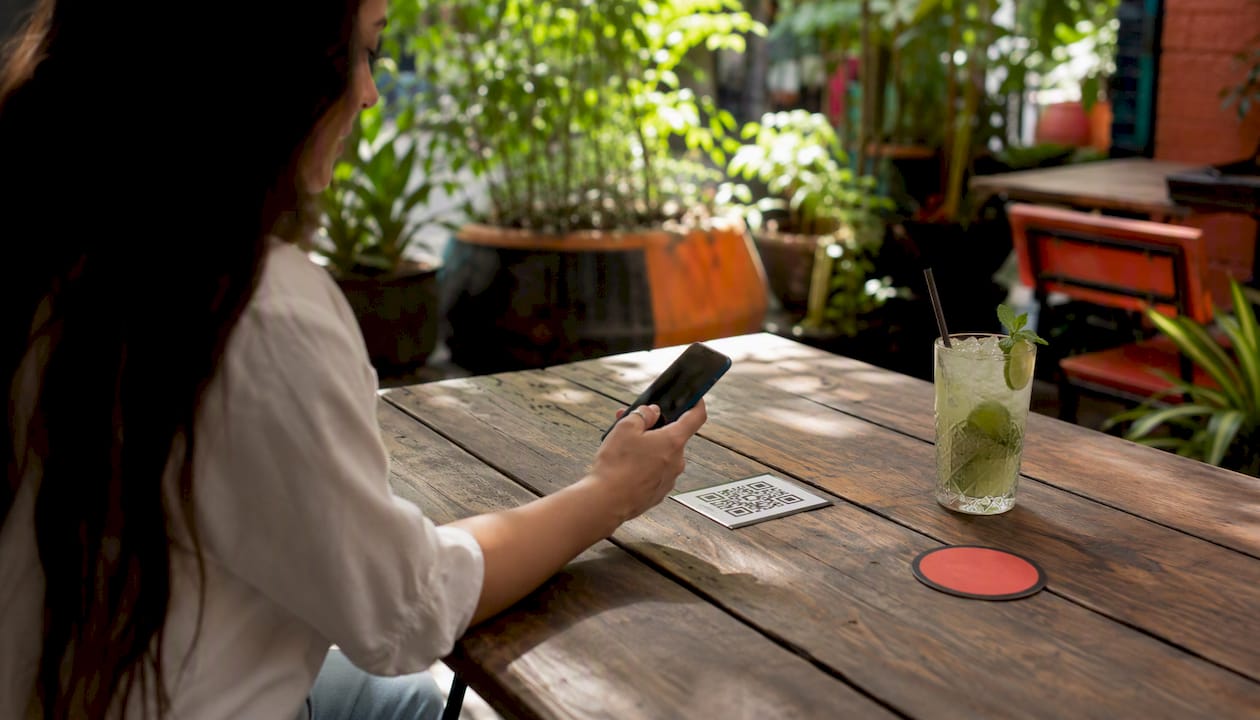
The real risk with going fully digital is exclusion. Not every guest is comfortable navigating a QR code menu on a smartphone. Older guests, tourists unfamiliar with your platform, or anyone with a low-battery phone may feel frustrated or unwelcome.
Key considerations when going digital:
- Always keep a small supply of printed backup menus for guests who need them
- Make sure your digital menu is mobile-optimized and loads in under three seconds
- Use large, readable fonts and high-contrast colors for accessibility
- Test your menu on multiple devices before launch
Pro Tip: A hybrid approach, QR code menus at the table with a few printed copies available on request, gives you the operational benefits of digital while ensuring no guest feels left out.
For a broader look at how your menu fits into your overall digital presence, our guide on website optimization strategies covers the full picture.
Understanding these distinctions, how can you implement or improve your own digital menu for maximum impact?
Implementing and optimizing your online menu: best practices
Knowing that digital menus work is one thing. Building one that actually performs is another. Here is a practical framework you can follow whether you are starting from scratch or refining what you already have.
Step-by-step implementation process:
- Audit your current menu. Identify your top ten selling items, your highest-margin dishes, and anything that consistently underperforms. These insights shape every decision that follows.
- Invest in food photography. A single professional photo shoot for your top 20 items pays for itself quickly. Items with photos consistently outsell those without them.
- Write descriptions that sell. Skip generic phrases like “delicious” or “fresh.” Use specific, sensory language: “slow-braised short rib with roasted garlic mashed potatoes and a red wine reduction.”
- Label everything clearly. Vegan, gluten-free, nut-free, spicy. These labels reduce customer anxiety and cut down on calls to the kitchen.
- Integrate a review feature. Whether through Google, Yelp, or your own platform, visible reviews on or near your menu build the trust that converts browsers into buyers.
- Set a review schedule. Check your menu analytics monthly and do a full update quarterly.
| Menu element | Impact on engagement | Priority level |
|---|---|---|
| High-quality photos | Very high | Immediate |
| Allergen labels | High | Immediate |
| Customer reviews | High | Short-term |
| Personalized suggestions | Medium-high | Medium-term |
| Nutritional info | Medium | Long-term |
The digital menus best practices research confirms that interactive features drive measurable improvements in satisfaction. But the key word is interactive. A static PDF uploaded to your website is not a digital menu. It is a digital printout, and it delivers almost none of the benefits described above.
Useful tools to track performance:
- Google Analytics for traffic to your menu page
- Heatmapping tools to see where guests click and scroll
- Your POS system’s sales data to cross-reference with menu views
- Customer survey tools for direct feedback
Pro Tip: Schedule a 30-minute menu review on the first Monday of every month. Pull your top-viewed and least-ordered items, then make one targeted change. Small, consistent improvements compound into major performance gains over time.
For a complete roadmap, our menu optimization guide and digital marketing checklist give you the tools to execute every step with confidence.
With practical steps outlined, let’s reconsider the strategic role of online menus from a broader perspective.
Rethinking online menus: beyond tech, towards smarter hospitality
Here is something most digital menu articles will not tell you: the technology is the easy part. The hard part is maintaining the hospitality mindset that makes a restaurant worth returning to, even as you automate and digitize more of the guest experience.
We see too many restaurant owners treat their online menu as a one-time project. They build it, launch it, and forget it. Then they wonder why engagement plateaued six months later. A digital menu is not a finished product. It is a living system that should reflect your evolving kitchen, your seasonal ingredients, and your guests’ changing preferences.
The restaurants that get the most out of digital menus are the ones that use them to be more human, not less. They use the data to notice that a certain dish is popular with a specific demographic and then train their staff to recommend it personally. They use allergen filters not just to check a compliance box but because they genuinely want every guest to feel welcome.
Over-reliance on digital menus risks alienating non-tech users, and that is a real concern worth taking seriously. But the solution is not to slow down your digital adoption. It is to build inclusivity into your digital strategy from the start.
Our thinking on advanced menu optimization always starts with the guest experience, not the technology. The tech should serve your hospitality values, not replace them.
Supercharge your restaurant’s success with Sorbey
If this article has shown you anything, it is that an optimized online menu is one of the highest-leverage investments you can make in your restaurant’s growth. The gap between a passive digital menu and an active, data-driven one is the gap between a restaurant that survives and one that thrives.
Sorbey’s restaurant marketing services are built specifically for restaurant owners who want to turn their digital presence into a real revenue driver. From menu strategy to customer engagement tools, we bring everything under one roof. You can also use our customer lifetime value calculator to see exactly how much each returning guest is worth to your business, and what a smarter menu strategy could add to that number.
Frequently asked questions
How do online menus improve restaurant operations?
Digital menus let you update items instantly, eliminate reprinting costs, and promote specials in real time, saving both time and money across your entire operation.
Are there risks to using only digital menus?
Relying solely on digital can frustrate guests who prefer print or struggle with technology, so keeping a few printed backups available is a smart and inclusive practice.
Do photos and reviews on online menus really influence orders?
Yes. Photos and integrated reviews give guests the confidence to order what they actually want, which increases average order value and overall satisfaction.
How often should I update my online menu?
Aim to review your digital menu at least once a month for small tweaks and do a full update every quarter or whenever you add new dishes, remove items, or launch a promotion.
Recommended
También te puede interesar
Best Restaurant Loyalty Programs 2026: ROI Guide
Discover the best restaurant loyalty programs 2026 that boost repeat visits. Learn how Sorbey’s platform can transform your guest data strategy!

Why Mobile Marketing Matters for Business Growth
Discover why mobile marketing matters for business growth. Learn how optimizing for mobile drives traffic, conversions, and customer retention.

SF Dim Sum Restaurant Marketing Checklist for 2026
Transform your SF dim sum with our 2026 marketing checklist. Optimize your profile, showcase dishes, and attract customers fast!