
Blog
Reputation Management Tips for Business Owners in 2026
Discover essential reputation management tips for 2026 to enhance your business's online presence and attract more customers today!

Reputation Management Tips for Business Owners in 2026
TL;DR:
- Effective reputation management involves continuous monitoring, ethical review practices, and proactive content creation to strengthen a business’s online image. Responding promptly and professionally to reviews, avoiding policy violations, and building a consistent brand presence are essential for resilience. Implementing an organized system helps businesses maintain their reputation proactively rather than reactively, reducing risk and enhancing trust.
Reputation management is the practice of actively shaping, monitoring, and protecting your business’s online image through strategic engagement, ethical review practices, and consistent brand communication. For restaurants and local businesses, your online reputation is often the first impression a potential customer gets before they ever walk through your door. Tools like Google Business Profile, Brand24, and Sprinklr give you real-time visibility into what people are saying about you. The 2026 updates from both the FTC and Google have raised the stakes considerably, making compliance a non-negotiable part of any credible online reputation strategy.
1. What are the best reputation management tips for a strong online presence?
Effective reputation management runs across four pillars: monitoring, building positive assets, responding to feedback, and correcting harmful content. Most businesses only focus on responding, which leaves three-quarters of the strategy unaddressed. The tips below cover all four areas so you build a reputation that holds up under pressure.
- Set up continuous monitoring. Use Google Alerts for your business name, location, and key staff. Tools like Brand24 and Sprinklr track mentions across social media, review platforms, and news sites in real time. You cannot respond to what you do not see.
- Request reviews at the right moment. Ask for feedback immediately after a positive experience, such as when a customer compliments your food or service. Timing matters more than volume. A well-timed, sincere request converts far better than a generic follow-up email sent days later.
- Publish content that builds authority. Case studies, behind-the-scenes posts, and opinion pieces on your website and social channels shape the narrative around your brand. Publishing substantive content monthly builds a library that suppresses negative search results over time.
- Respond to every review. Positive reviews deserve a thank-you. Negative reviews demand a calm, professional reply. Responding promptly and politely signals to prospective customers that your business takes accountability seriously.
- Keep your brand information consistent. Your business name, address, phone number, and hours must match exactly across Google Business Profile, Yelp, Facebook, and any other directory where you appear. Inconsistencies erode trust and hurt local search rankings.
Pro Tip: Schedule a 15-minute weekly audit of your Google Business Profile, Yelp listing, and top social channels. Catching a wrong phone number or outdated hours before a customer does saves you a one-star review.
2. How to respond effectively to negative reviews and online criticism

The fastest path through a negative review is a structured triage process: validate the complaint, draft a brief non-defensive public reply, and move the details offline immediately. Public replies affect prospective customers reading the review thread far more than they affect the original reviewer. How you handle criticism in public tells every future customer exactly who you are.
Follow this sequence when a negative review appears:
- Respond within 24 hours. Speed signals that you care. A reply posted three days later reads as an afterthought, even if the content is excellent.
- Acknowledge the experience without excuses. Open with empathy: “We’re sorry your visit didn’t meet your expectations.” Do not explain, justify, or argue in the public reply.
- Offer to resolve it offline. Include a direct contact, such as a manager’s email or phone number, and invite the customer to continue the conversation privately. This protects your brand tone in public while giving you room to actually fix the problem.
- Follow up after the private conversation. If you resolve the issue, a brief follow-up message to the customer goes a long way. Satisfied customers sometimes update their reviews voluntarily. Never ask them to.
- Flag reviews that violate platform policies. If a review is fake, from a competitor, or contains prohibited content, report it through Google Business Profile’s flagging tool. Document your case with screenshots before submitting.
Pro Tip: Write three or four template replies for your most common complaint types, such as wait times, food temperature, or order errors. Templates speed up your response without sacrificing personalization. Always edit them to reflect the specific situation before posting.
3. Reputation management tactics businesses must avoid
The practices below feel tempting, especially when a string of negative reviews hits at once. Every one of them carries real consequences under current FTC and Google policy.
- Fake or incentivized reviews. The FTC penalizes companies for fake and incentivized reviews with civil penalties up to $53,088 per violation. That figure applies per violation, not per campaign. One poorly designed review-request program can generate liability across hundreds of transactions.
- Review gating. Filtering customers by satisfaction before asking for a review, sending only happy customers to Google while routing unhappy ones to a private form, violates both FTC rules and Google’s 2026 policy. Google’s updated policy explicitly forbids this practice, and automated enforcement removes violating reviews without warning.
- Asking customers to mention staff names. Google’s 2026 guidelines specifically prohibit directing customers to reference individual employees in reviews. It reads as coordinated and inauthentic to the algorithm.
- On-site pressure to leave reviews. Placing a tablet at your checkout counter and asking customers to review you before they leave is a policy violation. So is displaying a sign that says “Leave us a Google review.”
- Sudden review volume spikes. A restaurant that averages two reviews per month and suddenly receives forty in a week triggers Google’s fraud detection. Even if every review is genuine, the spike can result in review removal or profile restrictions.
| Prohibited practice | Consequence |
|---|---|
| Fake or incentivized reviews | FTC fines up to $53,088 per violation |
| Review gating | Review removal, profile restriction |
| Mentioning staff names | Review flagged and removed |
| On-site review pressure | Policy violation, potential suspension |
| Compensating for review edits | FTC and Google enforcement action |
Audit your current review-request process against this list at least once per quarter. Policies update frequently, and what was acceptable in 2024 may now carry penalties.
4. How to build a positive brand reputation beyond review management
Review management is one piece of a much larger picture. A balanced online reputation management strategy addresses monitoring, building positive assets, responding thoughtfully, and correcting harmful content. Businesses that only react to reviews miss the proactive work that makes their reputation resilient.
- Create content that earns trust before a crisis hits. Regular posts on Instagram, Facebook, or your blog that show your team, your sourcing, and your values give customers a reason to believe in you. A restaurant with 50 authentic behind-the-scenes posts has a buffer that a silent brand does not.
- Maintain brand consistency across every platform. Your tone, visual identity, and messaging should feel the same whether a customer finds you on Google, Yelp, or TikTok. Inconsistency reads as disorganization, and disorganization reads as unreliable.
- Use AI tools for sentiment analysis. AI-driven sentiment analysis and chatbots expedite monitoring and improve response efficiency. Sprinklr and similar platforms flag negative sentiment trends before they become visible crises, giving you time to respond rather than react.
- Build a crisis response plan before you need one. Identify who responds to a viral negative post, what the approval chain looks like, and what your holding statement says. Businesses without a plan improvise under pressure, and improvised responses to crises rarely age well.
- Invest in local branding that reinforces your reputation. Strong local branding for restaurants creates a recognizable identity that customers defend. When your regulars feel a genuine connection to your brand, they become your most credible advocates online.
The goal is to build so many positive reputational assets that occasional negative feedback becomes a minor footnote rather than a defining story.
Key takeaways
Effective reputation management requires consistent monitoring, ethical review practices, and proactive content creation across all four pillars: monitoring, building, responding, and correcting.
| Point | Details |
|---|---|
| Monitor continuously | Use Brand24, Google Alerts, or Sprinklr to catch mentions before they escalate. |
| Request reviews ethically | Ask at peak satisfaction moments with no incentives or gating. |
| Respond within 24 hours | Acknowledge publicly, resolve privately, and never argue in a review thread. |
| Avoid policy violations | FTC fines reach $53,088 per violation for fake or incentivized reviews. |
| Build proactive assets | Monthly content and consistent branding suppress negative results over time. |
Why reputation management is a discipline, not a one-time fix
I’ve worked with enough local business owners to know that most of them treat reputation management like a fire extinguisher. They ignore it until something is burning, then they scramble. That approach costs far more than the steady, unglamorous work of monitoring and responding every single week.
The businesses I’ve seen recover fastest from a reputation hit are the ones that already had a system in place. They had templates ready, a monitoring tool running, and a clear chain of responsibility for who responds to what. When a bad review landed, they handled it in under an hour. The businesses without a system spent three days drafting a response by committee, and by then the damage was done.
The 2026 FTC and Google policy changes are not a threat to businesses that were already operating ethically. They are a threat to businesses that were cutting corners with review gating or incentivized requests. If you’ve been doing either, stop immediately and audit your review management process before a warning letter arrives.
My honest advice: treat your online reputation the way you treat your kitchen. Clean it daily, inspect it weekly, and never let small problems sit until they become health code violations.
— Barthelemy
How Sorbey helps you manage your reputation without the guesswork
Managing your online reputation across Google, Yelp, and social media is a full-time job on top of running your restaurant. Sorbey’s restaurant marketing services include reputation management features built specifically for local businesses, covering review monitoring, response workflows, and brand consistency tools in one place.
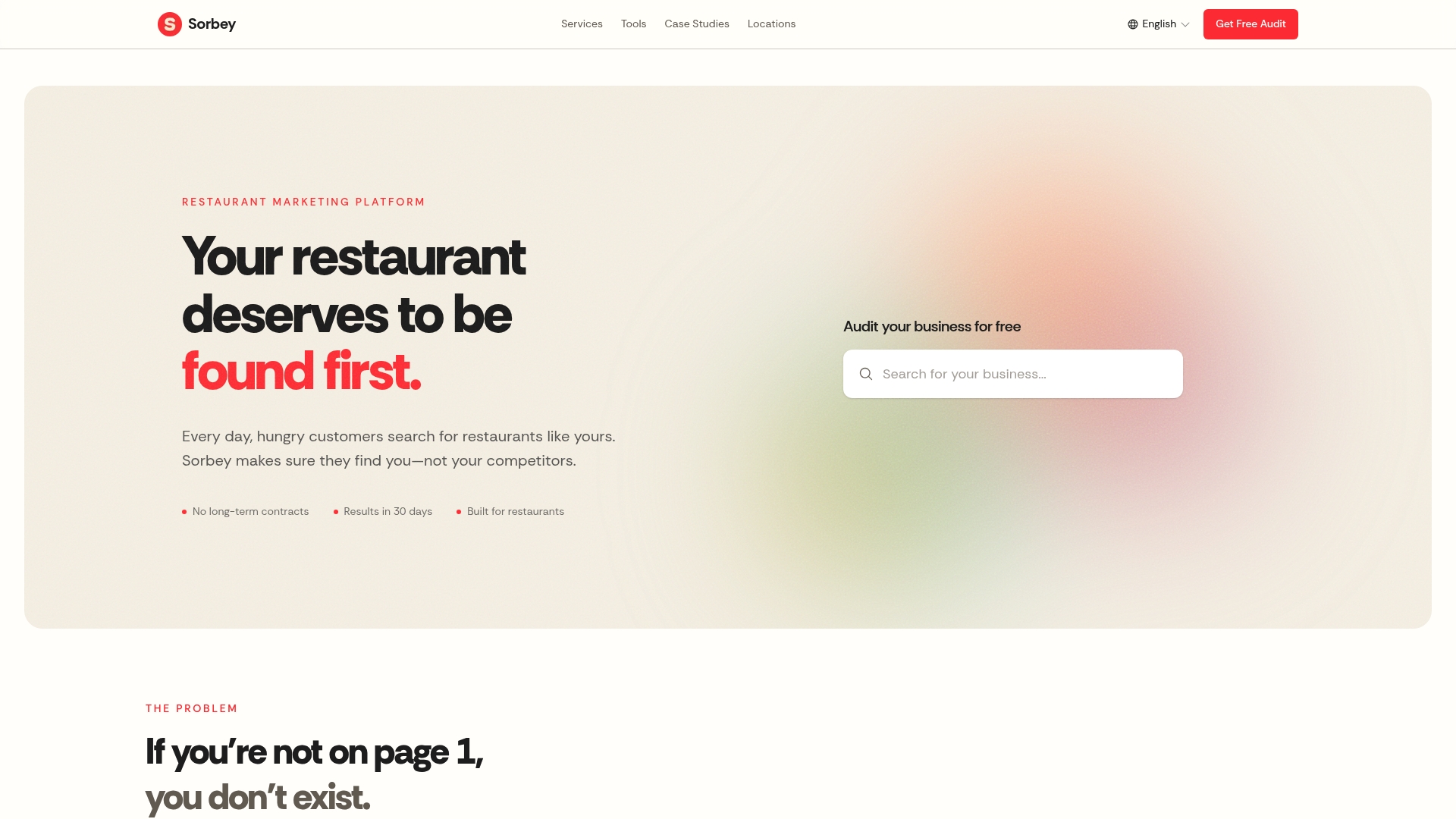
If you want to start with a practical foundation, Sorbey’s free restaurant tools give you calculators and resources to track your review performance and customer engagement metrics without a big budget. Whether you’re building your reputation from scratch or repairing damage from a rough stretch, Sorbey gives you the structure to do it right.
FAQ
What is reputation management for a business?
Reputation management is the practice of monitoring, shaping, and protecting how your business appears online through review responses, content creation, and ethical engagement. It covers platforms like Google Business Profile, Yelp, and social media.
How do I respond to a negative review without making it worse?
Acknowledge the experience with empathy, keep the public reply brief and non-defensive, and invite the customer to resolve the issue offline through a direct contact. Never argue, justify, or offer compensation in a public reply.
Can I ask customers to change or remove a negative review?
No. Offering any incentive for a customer to edit or remove a review violates both FTC rules and Google’s 2026 policy, and can result in fines up to $53,088 per violation or profile suspension.
How often should I audit my online reputation?
A weekly 15-minute check of your major review platforms and a quarterly audit of your full review-request process against current FTC and Google policies is the minimum standard for most local businesses.
What tools help with online reputation monitoring?
Google Alerts, Brand24, and Sprinklr are the most widely used tools for tracking brand mentions across review sites, social media, and news sources in real time.
Recommended
También te puede interesar

Why Update Menus Online: A 2026 Guide for Restaurants
Discover why update menus online is crucial for restaurants in 2026! Ensure accurate pricing and boost sales with automated menu management.

Lead Generation Strategies for Urban Restaurants in 2026
Discover effective lead generation strategies for urban restaurants in 2026. Boost bookings and fill your dining room with smart tactics!

The Real Role of Event Marketing for Growth in 2026
Discover the vital role of event marketing for growth in 2026! Unlock measurable strategies to boost customer retention and revenue.