
Blog
Why Update Menus Online: A 2026 Guide for Restaurants
Discover why update menus online is crucial for restaurants in 2026! Ensure accurate pricing and boost sales with automated menu management.
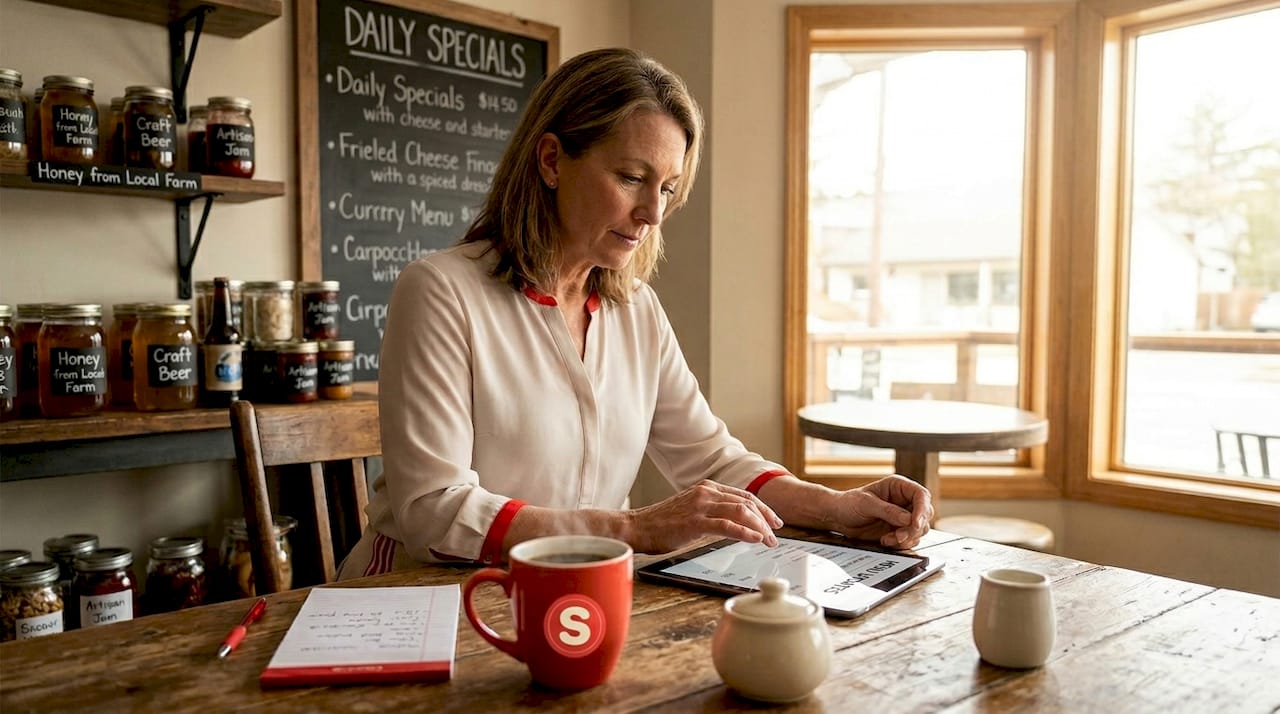
Why Update Menus Online: A 2026 Guide for Restaurants
TL;DR:
- Updating menus online in real time ensures accurate pricing and availability across all customer channels, reducing order errors and increasing trust. Automating menu synchronization with centralized systems like Toast and Deliverect improves operational efficiency and guest experience, leading to higher sales. Treating menu management as a continuous operational discipline, rather than a one-time task, builds a sustainable competitive advantage for restaurants.
Updating your menus online means instantly reflecting changes in pricing, availability, and promotions across every customer touchpoint your restaurant operates. Restaurants that rely on static PDFs or infrequent manual updates lose orders, damage trust, and leave money on the table. Tools like Toast and Deliverect now automate these updates so that a single change in your system propagates to your website, Google Business Profile, and third-party delivery apps within minutes. This guide explains why update menus online is not a technical task but a core business discipline, and how getting it right directly affects your revenue and guest satisfaction.
Why updating menus online is a non-negotiable in 2026
The industry term for this practice is digital menu management, and it refers to the process of maintaining a single, authoritative source of menu data that feeds all customer-facing channels simultaneously. The gap between what your kitchen offers and what a guest sees online is where orders fail, refunds pile up, and one-star reviews get written.
Real-time digital menus eliminate ordering unavailable items by reflecting live availability changes across all devices the moment a change is made. That is not a minor convenience. It is the difference between a guest completing an order and abandoning your platform for a competitor.
The benefits of online menu updates extend beyond accuracy. When your menu reflects current prices and available items, guests trust your brand. When it does not, they do not come back. A restaurant’s online menu is often the first interaction a potential customer has with your business, and first impressions formed on a phone screen are just as powerful as those formed at the host stand.
How real-time updates improve operational efficiency
Operational efficiency in a restaurant depends on information moving fast and accurately between the kitchen and every channel where guests place orders. When that information lags, the entire service chain breaks down.
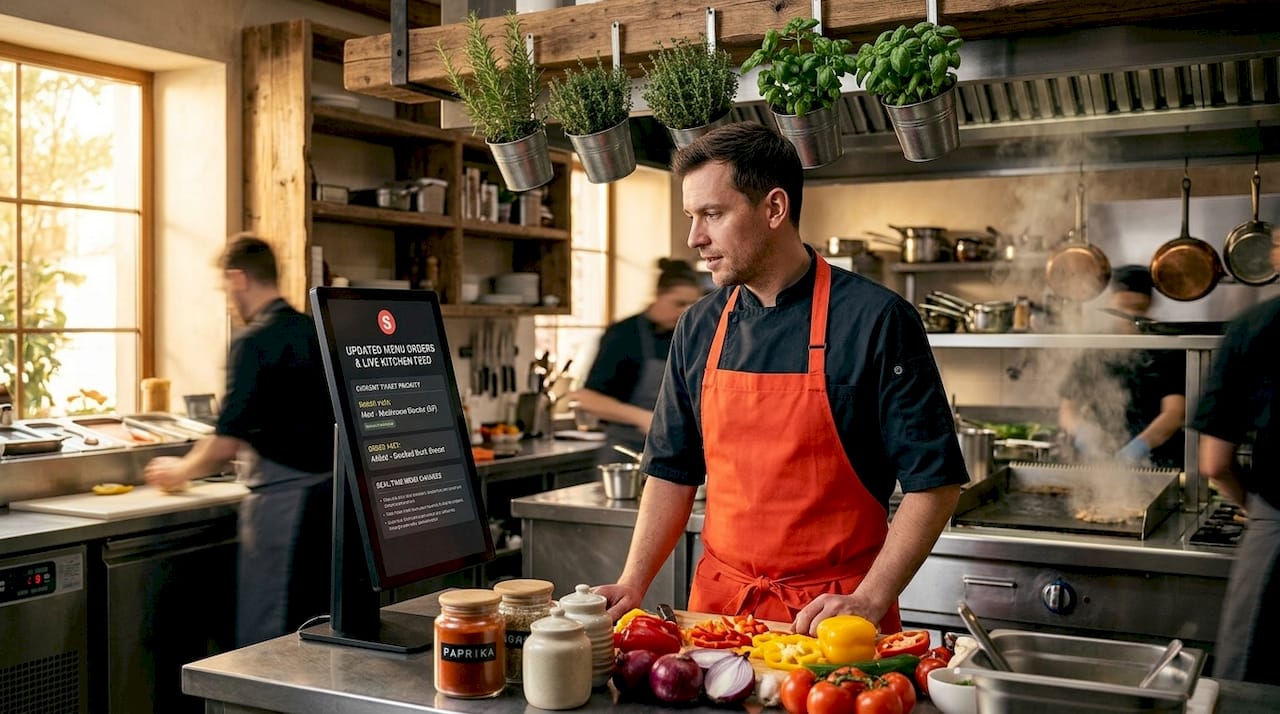
Manual updates across multiple channels cause errors, operational costs, and guest confusion by creating mismatches between dine-in, online, and Google menus. A manager who updates the in-house POS but forgets the delivery app creates a situation where guests order a dish that no longer exists. The result is a refund, a frustrated customer, and a staff member spending ten minutes on damage control during a dinner rush.
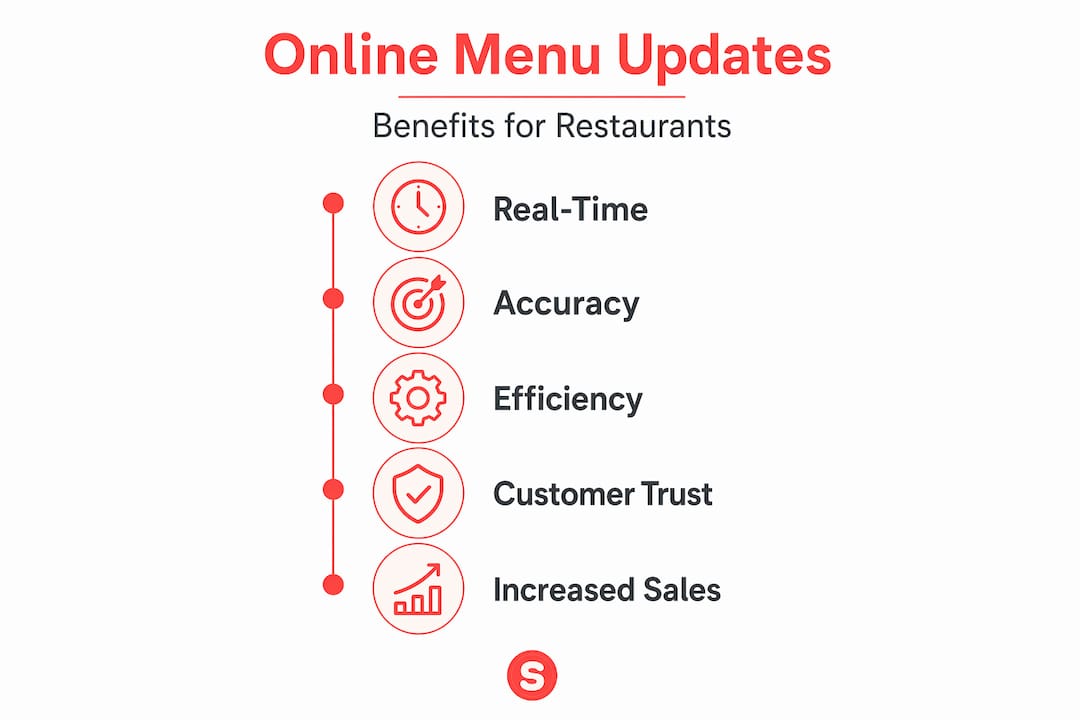
POS-integrated menu systems lower confusion, overrides, and refunds by synchronizing front and back of house automatically. Price changes trigger instant menu board updates, and inventory changes hide unavailable items without any manual intervention. This kind of synchronization is what separates high-performing quick-service restaurants from those constantly firefighting order errors.
Here is what real-time menu management handles automatically when your systems are properly connected:
- Price changes push to all channels simultaneously, including delivery platforms and digital boards
- Sold-out items disappear from the ordering interface before a guest can select them
- Promotional pricing activates and deactivates on a schedule without staff involvement
- Availability windows for breakfast, lunch, and dinner menus switch without manual toggling
Pro Tip: Schedule your weekly specials and limited-time offers in advance using your menu management platform. Toast’s scheduled menu update feature, rolling out in 2026, lets you set exact go-live times so your team never has to remember to flip a switch during service.
Automated stock refresh and scheduled pricing features from platforms like Toast ease multi-location menu governance significantly. For franchise operators managing ten or fifty locations, this is not a luxury. It is the only way to maintain consistency without a dedicated menu coordinator at every site.
How does an outdated menu hurt customer experience?
Guests who encounter inconsistent or stale menu information online do not give you the benefit of the doubt. They assume the experience in your restaurant will match the disorganization they found on your website or app.
Google Business Profile menus can take up to 48 hours to update, meaning outdated information actively harms your local search impressions and invites negative reviews before a guest even walks through your door. A customer who searches for your restaurant, sees a dish listed, drives over, and finds it is no longer on the menu is not coming back. Keeping your Google Business Profile current is not optional. It is part of your daily operations.
Digital menus with photos and upsell suggestions increase average order value by 10 to 30 percent compared to text-only menus. That figure reflects a straightforward behavioral reality: guests order more when they can see what they are getting and when the menu actively suggests pairings or upgrades. A static PDF cannot do that. A well-managed digital menu can.
The impact of menu updates on sales is also visible in how guests respond to limited-time offers. When a seasonal item appears on your online menu the same day it launches in the kitchen, you capture the full promotional window. When it appears three days late because someone forgot to update the website, you lose the early adopters who would have driven traffic and social sharing.
What are the best practices for centralizing menu updates?
Effective digital menu management starts with one principle: a single source of truth. Every channel your guests use to view or order from your menu should pull from one central data source, not from separate files maintained by different team members.
Treating menus as fragmented files rather than a unified system results in discrepancies and operational friction that compounds over time. Here is a practical framework for centralizing your menu management:
- Audit every place your menu currently lives. This includes your website, Google Business Profile, third-party delivery apps like DoorDash and Uber Eats, in-house kiosks, and printed QR code menus.
- Choose a centralized menu management platform. Options range from POS-native tools like Toast to dedicated menu management software. The key requirement is that one update propagates everywhere.
- Assign a single menu owner. One person or role should have primary responsibility for approving and publishing changes. This prevents conflicting edits.
- Set a publishing schedule. Routine changes like weekly specials should go live at a fixed time each week. Emergency changes like 86’d items should have a clear fast-track process.
- Preview before publishing. Most platforms allow you to preview how a menu change will appear across different devices and channels. Use this feature every time.
Pro Tip: Before going live with a price change, use your platform’s preview mode to check how the update renders on mobile. More than 60 percent of online food orders are placed on smartphones, so a formatting error on a small screen can suppress conversions.
Role-based permissions and scheduling reduce accidental overrides and ensure consistent timing in multi-location menu updates. Toast’s franchise-focused features support controlled decentralized editing, meaning a location manager can update their daily specials without touching the core menu that corporate controls.
| Approach | Best for |
|---|---|
| POS-native menu management (Toast) | Single and multi-location restaurants already on that POS |
| Dedicated menu platforms | Operators running multiple delivery channels independently |
| Manual channel-by-channel updates | Not recommended for any restaurant above one location |
Common pitfalls that break your menu update process
Even restaurants with good intentions make predictable mistakes when managing menus across channels. Knowing these pitfalls in advance saves you from the guest complaints that follow.
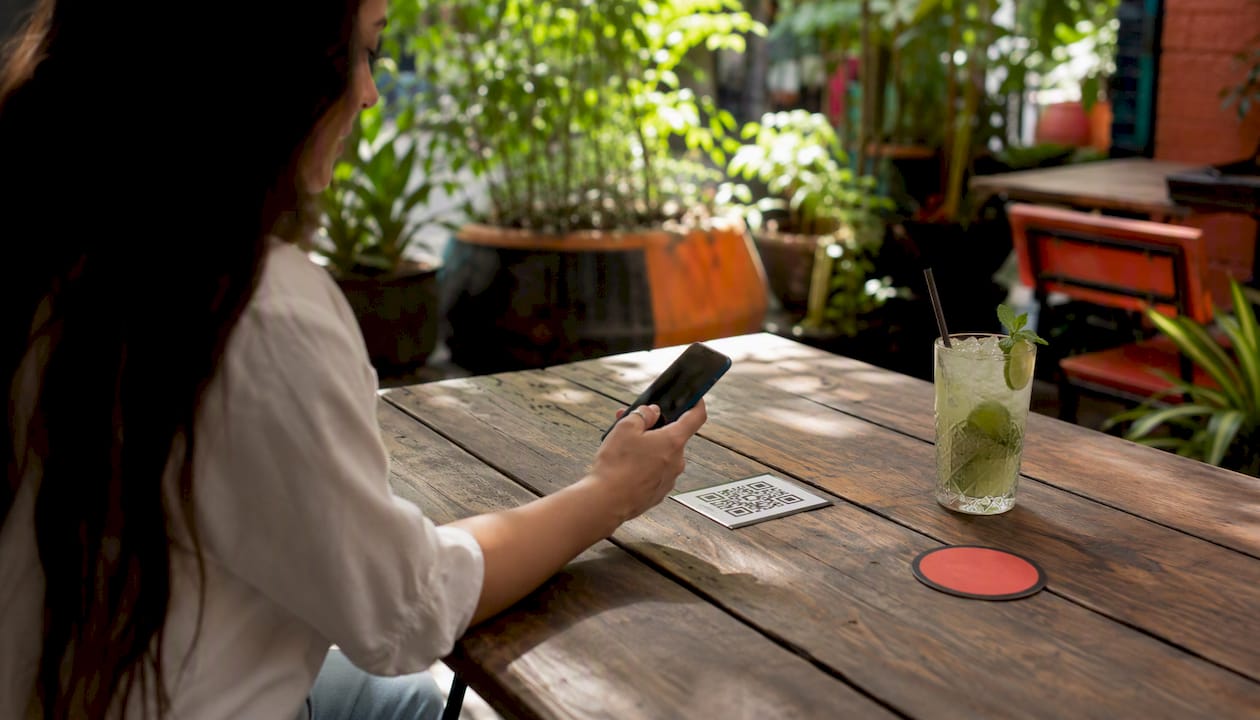
The most common error is the static PDF problem. A QR code that links to a PDF menu looks modern, but it does not reflect real-time changes. A guest scans the code, sees a dish, orders it at the counter, and learns it is unavailable. That friction is entirely avoidable with a live digital menu that updates automatically on every device.
- Stale kiosk screens: Open guest tablets and kiosks risk displaying outdated content if auto-refresh is disabled. Always verify that your devices are set to pull live data, not cached versions.
- Mismatched pricing: A price updated on your website but not on your delivery app creates a situation where guests pay different amounts for the same item depending on where they order. This generates chargebacks and confusion.
- No permission controls: Without role-based access, any staff member with system access can accidentally override a scheduled promotion or delete a menu category. Restrict editing rights to designated roles.
- Ignoring delivery platform sync: Deliverect’s AI agents detect unsynced menus and integration failures automatically, preventing lost orders in minutes. If you are not using a sync tool, you are discovering these failures only after a guest complains.
The underlying cause of most menu update failures is the same: menus treated as separate files rather than one connected system. Fix the architecture, and most of the errors disappear.
Key takeaways
Restaurants that update menus online in real time, through a centralized system with role-based controls, reduce order errors, protect revenue, and build the guest trust that drives repeat visits.
| Point | Details |
|---|---|
| Real-time accuracy prevents lost orders | Live menu updates stop guests from ordering unavailable items and reduce refunds. |
| Centralized management is the foundation | One source of truth feeding all channels eliminates mismatches between platforms. |
| Google Business Profile needs daily attention | GBP menus take up to 48 hours to update, so delays directly harm local search performance. |
| Automation replaces manual chaos | Tools like Toast and Deliverect schedule and sync changes without staff intervention. |
| Permission controls protect consistency | Role-based access prevents accidental overrides in single and multi-location operations. |
Menu updates are a rhythm, not a task
I have worked with enough restaurant operators to know that the ones who treat menu updating as a one-time project always end up back in the same mess six months later. The ones who build it into a weekly rhythm, tied to their analytics review, are the ones whose menus actually reflect what is selling and what is not.
Formal menu reviews twice annually, combined with monthly analytics checks, keep menus relevant and profitable over time. That cadence sounds simple, but most operators skip the monthly check entirely. They update when something goes wrong, not before. That reactive approach costs more in refunds and lost orders than the time saved by skipping the review.
What I find most underrated is the freedom that good menu management gives you. When your system handles the mechanics of publishing and syncing, you get your mental bandwidth back. You can actually think about whether that new appetizer is worth keeping, whether your lunch pricing is competitive, or whether a seasonal promotion makes sense this month. The menu management strategy conversation shifts from “did we remember to update the app?” to “what should we change next?”
Restaurants that treat their online menu as a living document, updated continuously and reviewed analytically, build a compounding advantage. Their guests always see accurate information. Their staff spends less time explaining what is not available. Their average order value climbs because the menu actively sells. That is not a technology story. It is an operational discipline story, and it starts with deciding that your menu deserves the same attention as your kitchen.
— Barthelemy
How Sorbey helps you keep menus current across every channel
Running a restaurant means your attention is split across dozens of priorities at once. Sorbey’s restaurant marketing solutions are built specifically for local businesses like yours, connecting your menu updates to your Google Business Profile, your website, and your broader digital presence from one place.
Sorbey handles the coordination that eats up manager time: syncing menu data across channels, keeping your Google listing accurate, and making sure guests always see what you actually serve. Whether you run one location or several, the platform is designed for the operational reality of restaurants, not for enterprise software teams. If you want to see where your current setup has gaps, Sorbey’s free restaurant tools include calculators and audits that show you exactly where menu inconsistencies are costing you.
FAQ
Why should restaurants update menus online regularly?
Outdated online menus cause guests to order unavailable items, encounter wrong prices, and lose trust in your brand. Regular updates keep every channel accurate and protect both revenue and reputation.
How often should a restaurant update its online menu?
Availability and pricing changes should update in real time through a connected system. Broader menu reviews work best on a monthly analytics cycle, with formal structural reviews twice per year.
What happens if your Google Business Profile menu is outdated?
Google Business Profile menus can take up to 48 hours to reflect changes, meaning stale information actively harms your local search impressions and can generate negative reviews before a guest arrives.
What is the difference between a static PDF menu and a digital menu?
A static PDF does not update when your kitchen changes, so guests see outdated items and prices. A live digital menu reflects changes instantly across all devices without reprinting or manual channel updates.
Do menu updates actually increase sales?
Digital menus with photos and upsell suggestions increase average order value by 10 to 30 percent compared to text-only formats. Accurate, visually engaging menus reduce friction and encourage guests to order more.
Recommended
You might also like
Best Restaurant Loyalty Programs 2026: ROI Guide
Discover the best restaurant loyalty programs 2026 that boost repeat visits. Learn how Sorbey’s platform can transform your guest data strategy!

Why Mobile Marketing Matters for Business Growth
Discover why mobile marketing matters for business growth. Learn how optimizing for mobile drives traffic, conversions, and customer retention.

SF Dim Sum Restaurant Marketing Checklist for 2026
Transform your SF dim sum with our 2026 marketing checklist. Optimize your profile, showcase dishes, and attract customers fast!