
Blog
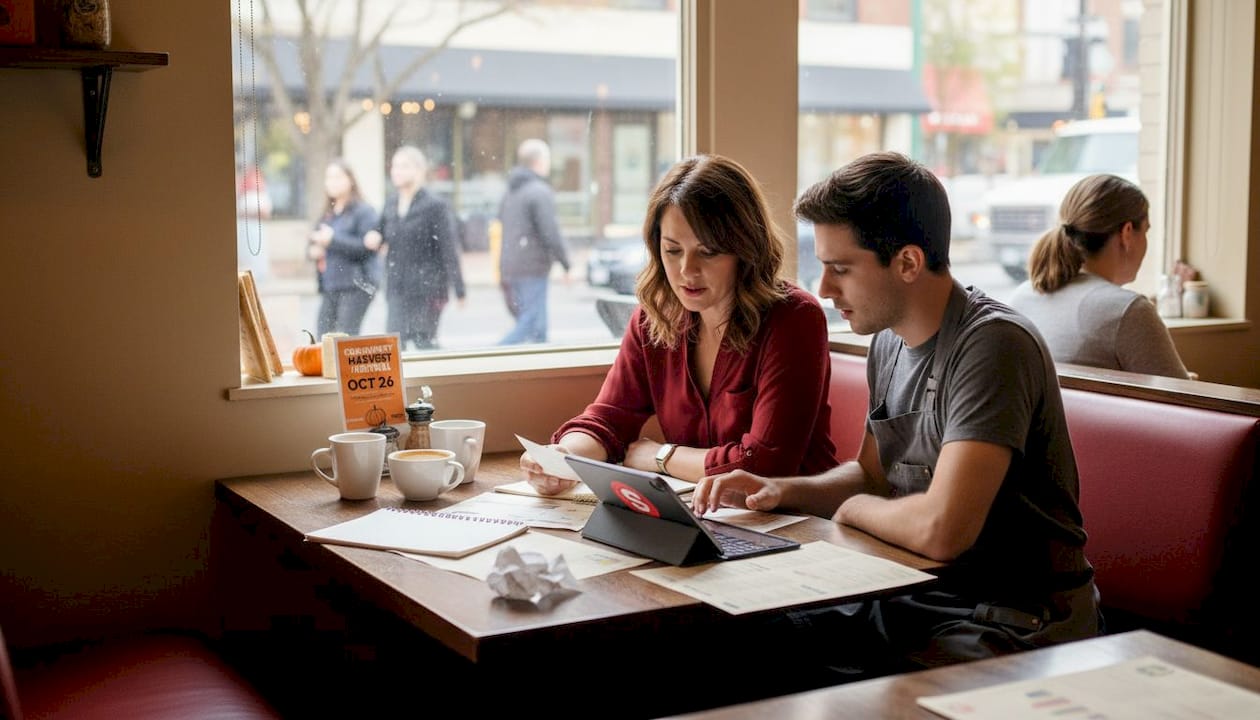
Content marketing tips for restaurants: attract more local diners
Discover actionable content marketing tips that help restaurants attract more local diners, drive foot traffic, and boost online bookings!
Content marketing tips for restaurants: attract more local diners
TL;DR:
- Content marketing focused on local stories and community engagement builds trust and drives reservations.
- Using video, especially TikTok, offers the highest organic engagement for restaurant marketing.
- Consistent, authentic posting and accurate ROI tracking are key to long-term marketing success.
Running a restaurant in 2026 means competing not just with the place across the street, but with every food photo, sponsored post, and five-star review your neighbors see before they decide where to eat tonight. Content marketing gives you a real edge, but only when you know which tactics actually move the needle for local foot traffic and online bookings. This article walks you through a clear, proven path from understanding your audience, to creating community-rooted content, to choosing the right formats and measuring what works.
Table of Contents
- Define your local audience and set practical goals
- Create location-focused and community-driven content
- Mix up your content formats: social, email, video, and web
- Track, refine, and optimize your content results
- The overlooked power of consistency and authenticity in restaurant marketing
- Elevate your restaurant’s marketing with expert support
- Frequently asked questions
Key Takeaways
| Point | Details |
|---|---|
| Know your audience | Targeting local diners and setting measurable goals is the first step to content marketing success. |
| Local stories win | Community-driven and location-based content builds authentic connections with local customers. |
| Mix your formats | Email, social, video, and web content together maximize reach and customer retention. |
| Track your progress | Measuring engagement and bookings helps refine your content strategy for better results. |
| Stay consistent | Regular, authentic content outperforms chasing every online trend. |
Define your local audience and set practical goals
Now that we’ve established why smart content matters, let’s start by sharpening your audience and measurement focus.
Every strong content strategy starts with one honest question: who are you actually trying to reach? For most restaurant owners, the answer isn’t “everyone.” It’s a mix of weekday lunch regulars, weekend families, date-night couples, and maybe a slice of tourist traffic if you’re in a destination area. Knowing which groups drive the bulk of your revenue lets you craft content that speaks directly to them instead of broadcasting to the void.
Start by segmenting your customer base into two broad buckets: local regulars and occasional visitors. Locals respond to loyalty perks, community involvement, and consistency. Visitors respond to atmosphere, uniqueness, and social proof like photos and reviews. These two groups need different messages, different channels, and different content hooks.
Once you know who you’re talking to, set specific, measurable goals. Vague goals like “get more customers” don’t give you anything to track. Instead, aim for outcomes like:
- Increase online reservations by 20% over 90 days
- Grow your email subscriber list to 500 local contacts
- Generate 10 new RSVPs per event post
- Drive 50 new loyalty program signups per month
These are the goals that connect your content marketing workflow directly to business results. The problem is, most restaurant owners skip this step entirely and then wonder why their posts get likes but don’t fill tables.
Here’s a sobering reality: only 36% of marketers measure content ROI accurately. For restaurants, that means most of the money and time spent on content is flying blind. Setting up even basic tracking, like a UTM link in your Instagram bio that leads to your reservation page, can show you exactly which posts are driving bookings. Use your digital marketing checklist to make sure you’re capturing the right data from day one.
Pro Tip: Connect your Google Analytics to your reservation platform and tag each content campaign with a unique source label. That way, you’ll know whether it was your Thursday email or your Friday Instagram story that filled Saturday night.
Create location-focused and community-driven content
With your core audience and goals outlined, focus next on crafting hyper-local content that resonates authentically.
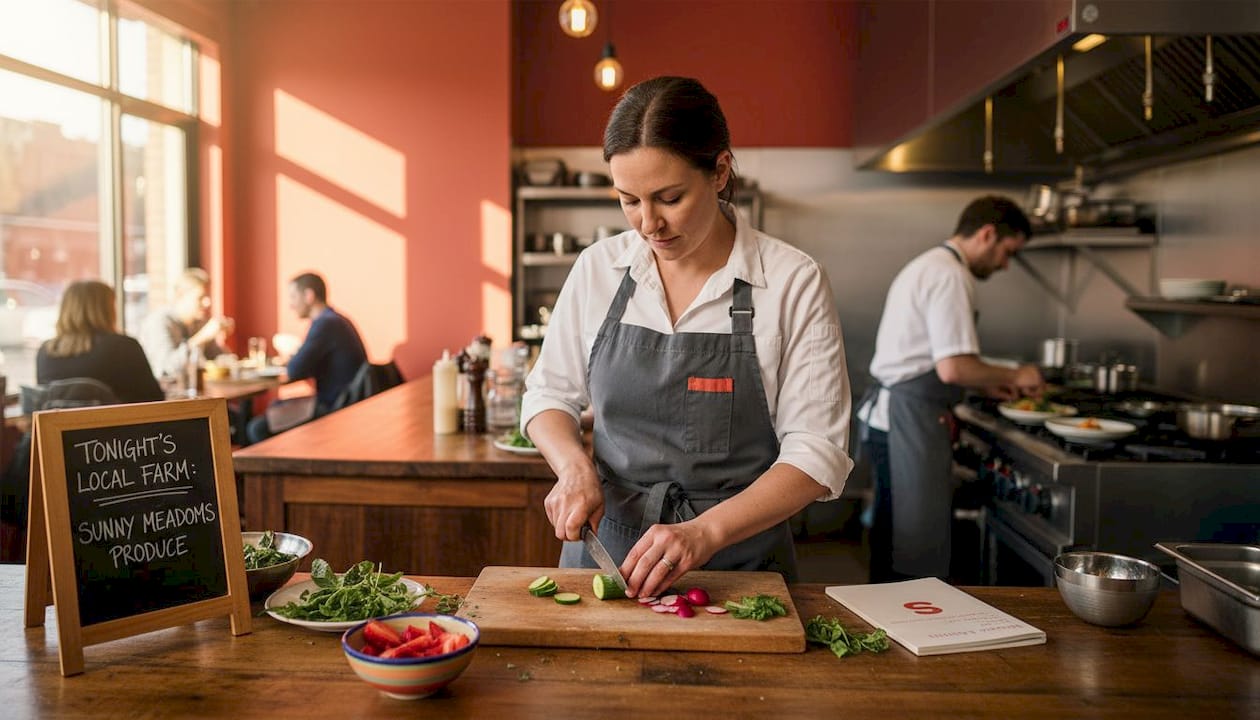
Here’s what separates restaurants that build genuine loyal followings from those that just post menu photos and hope for the best: location-specific, community-driven storytelling. Content that feels like it belongs to your neighborhood earns a level of trust that no ad spend can replicate.
There’s solid evidence behind this approach. Location-specific content, like neighborhood guides, local event features, and ingredient sourcing stories, builds both SEO strength and genuine community ties. Google rewards locally relevant content with higher placement in “near me” searches. And locals share content that feels like it represents their community.
What does this actually look like in practice? Here are some specific content ideas you can start using this week:
- Neighborhood guide posts: “Best date night spots within walking distance of our restaurant,” featuring other local businesses. This earns goodwill and backlinks.
- Ingredient sourcing stories: A short post or video about the farm where you get your tomatoes or the bakery that makes your bread. It shows craft and supports local suppliers.
- Local event spotlights: Feature the farmers market happening two blocks away, or the school fundraiser your team is supporting. This connects your brand to the rhythms of the neighborhood.
- Partner stories: Team up with a nearby winery, brewery, or dessert shop to create cross-promotional content. Both audiences benefit.
- Behind-the-scenes moments: Show your kitchen prep, your staff’s morning routine, or how a signature dish is made. Authenticity outperforms polish every time.
These content types also give your website a steady stream of fresh, locally relevant copy, which is a direct SEO signal. When you’re building out your optimizing your restaurant website strategy, this kind of location-rich content forms the backbone of your organic search presence.
Pro Tip: Ask your guests to tag your restaurant when they post their meals. Reposting user-generated content (UGC) is free, credible, and far more persuasive to potential diners than anything you produce yourself. A smiling guest photo beats a professional food shot for trust every time.
Understanding the right marketing types for restaurants means recognizing that community content isn’t a soft, feel-good strategy. It’s a high-ROI tactic that builds the kind of loyalty no coupon can buy.
Mix up your content formats: social, email, video, and web
Once you have local, story-driven content, it’s time to choose the right channels and formats.
Not all content formats perform equally, and not all promotions belong on the same platform. A poorly matched message and medium is like putting a prix fixe dinner menu on a paper towel. The idea might be great, but the delivery kills the impact.
Here’s a snapshot of current performance benchmarks across the key channels for restaurants, based on 2026 industry data:
| Channel | Benchmark metric | Performance rate |
|---|---|---|
| Email campaigns | Open rate | 24.8% |
| Engagement rate | 1.65% | |
| TikTok | Engagement rate | 4.20% |
| Website | Conversion rate | 3.8% |
| Customer retention | 30% |
The standout here is TikTok. Its engagement rate of 4.20% is more than double Instagram’s 1.65%, which means short-form video is now the single most powerful organic format for restaurant content. That doesn’t mean you abandon Instagram, but it does mean you should be feeding the TikTok algorithm consistently.
Here are the best performing content types for restaurants right now, matched to the right platform:
- TikTok and Instagram Reels: Behind-the-scenes kitchen prep, “day in the life” of your staff, viral recipe reveals, or funny moments from service. Keep it under 60 seconds and lead with a visual hook.
- Email newsletters: VIP offers, private event previews, loyalty rewards, and personal notes from the chef. Email is your highest-retention channel, so treat subscribers like insiders.
- Website blog and landing pages: SEO-focused content like neighborhood guides, seasonal menu announcements, and “how it’s made” stories. This drives long-term organic traffic.
- Instagram feed posts: Polished food photography, special occasion announcements, and community partnerships. Use carousels for storytelling.
- Facebook events: Local event promotion, live music nights, and holiday specials. Facebook events still drive older demographic attendance better than most other platforms.
The biggest waste in restaurant content marketing is creating something once and only using it once. A video you make for TikTok can become an Instagram Reel, a website embed, and a GIF for your next email, all from one shoot. Learn more about how to scale this in our video content tips guide.
Pro Tip: Batch your content creation. Spend two hours on a Sunday filming five short videos, and you’ll have a full week of TikTok content. Pair this with your email marketing ROI strategy by repurposing those video clips as embedded previews in your weekly email.
The goal isn’t to be everywhere at once. It’s to be consistent and strategic on the two or three channels where your specific audience actually spends time.
Track, refine, and optimize your content results
To ensure your hard work pays off, close the loop by tracking and refining what works best.
Publishing great content is only half the job. The half that most restaurant owners skip is figuring out whether any of it actually worked. And since only 36% of marketers measure content ROI accurately, there’s a very real chance your competitors are flying blind while you can gain a serious edge just by paying attention.
Here’s a simple, channel-by-channel breakdown of what to track:
| Channel | Key metric to track | What it tells you |
|---|---|---|
| Open rate, click-through rate | Which offers get attention | |
| Saves, profile visits, link taps | Content that drives real intent | |
| TikTok | Watch time, shares, follows | Which videos create true reach |
| Website | Reservation conversions | Which pages turn browsers to bookers |
| Google Business Profile | Direction requests, calls | Local discovery performance |
Getting this tracking set up doesn’t require a big budget. Here’s a step-by-step approach using free tools:
- Set up Google Analytics 4 (GA4) on your restaurant website. It’s free and tracks where your visitors come from.
- Create UTM links for every link you share on social or in emails. Google’s UTM builder is free and takes 30 seconds per link.
- Connect your reservation system (like OpenTable, Resy, or a direct booking form) to GA4 as a conversion goal. This shows you which content drives actual reservations.
- Review your Google Business Profile weekly. Track how many people called or asked for directions after seeing your profile. A spike after a post is data.
- Use Instagram Insights and TikTok Analytics natively. Both are free and built in. Focus on saves and shares, not just likes.
- Set a monthly content review. Spend 30 minutes at the end of each month comparing your top three performing pieces of content against your worst three. Then make more of what worked.
The real power of this step is iteration. Once you know that your Tuesday “behind the scenes” Instagram carousel drives three times more reservation link clicks than your food photography posts, you stop guessing and start scaling what works. This is how you streamline your workflow and stop wasting effort on content that doesn’t move the needle.
The overlooked power of consistency and authenticity in restaurant marketing
Reflecting on all these strategies, one ingredient often goes undervalued in the content marketing conversation: showing up reliably, as yourself, over a long period of time.
We’ve worked with a lot of local restaurants, and the ones that build genuinely loyal audiences aren’t necessarily the ones with the flashiest content or the biggest ad budgets. They’re the ones that post every week, reply to comments, share real moments, and stay recognizable month after month.
There’s a real trap in chasing every new platform or gimmick. A restaurant that jumps to every new social feature, posts inconsistently, and pivots its “brand voice” every three months ends up with what we call content fatigue. The audience gets confused, the algorithm gets no clear signal, and the owner burns out. It’s the content marketing equivalent of changing your menu every two weeks. Guests don’t know what to expect, so they stop coming back.
The most durable restaurant marketing strategies we’ve seen aren’t built on viral moments. They’re built on a steady accumulation of trust. A weekly email that feels like it comes from a real person. A TikTok series that always features the same chef. A blog that covers local events with genuine care. None of this is glamorous. All of it compounds over time.
Our honest take: if you had to choose between trying every new tactic this year or committing fully to two channels with authentic, consistent storytelling, choose consistency. The restaurants that win the long game in local marketing aren’t the trendiest. They’re the most trusted.
Elevate your restaurant’s marketing with expert support
For restaurants ready to take their content to the next level, expert partners can help accelerate your results.
Knowing the right strategies is one thing. Executing them consistently while running a kitchen, managing staff, and serving customers is another challenge entirely. That’s where having a dedicated partner makes the difference between a plan that sits in a notebook and one that actually fills tables.
Sorbey’s restaurant marketing services are built specifically for local restaurants that need to compete smarter, not just harder. From content creation and email campaigns to social media management and performance tracking, the platform brings all your marketing tools under one roof. Powered by AI-driven marketing tools, Sorbey helps you stay consistent and data-driven without adding hours to your week. If you’re ready to turn these strategies into real, measurable results, Sorbey is the partner built for exactly that.
Frequently asked questions
What type of content drives the most local traffic for restaurants?
Location-specific content like neighborhood guides, local event features, and ingredient sourcing stories attract and engage local diners by building both SEO relevance and genuine community connection.
How can restaurants track the ROI of their content marketing?
Track reservations, online orders, and engagement metrics from each channel, and use UTM-tagged links to connect specific content pieces to actual bookings. Remember, only 36% of marketers measure this accurately, so even basic tracking gives you a real competitive advantage.
What is a good email open rate for restaurant campaigns?
Restaurant email campaigns average an open rate of 24.8%, making email one of the strongest performing digital channels for reaching and retaining local diners.
Should restaurants use TikTok or Instagram for content marketing in 2026?
Both platforms deliver value, but TikTok’s engagement rate of 4.20% significantly outperforms Instagram’s 1.65%, making it the stronger choice for organic reach and new customer discovery right now.
Recommended
También te puede interesar
Best Restaurant Loyalty Programs 2026: ROI Guide
Discover the best restaurant loyalty programs 2026 that boost repeat visits. Learn how Sorbey’s platform can transform your guest data strategy!

Why Mobile Marketing Matters for Business Growth
Discover why mobile marketing matters for business growth. Learn how optimizing for mobile drives traffic, conversions, and customer retention.
SF Dim Sum Restaurant Marketing Checklist for 2026
Transform your SF dim sum with our 2026 marketing checklist. Optimize your profile, showcase dishes, and attract customers fast!