
Blog
Top 3 Restaurant CRM Comparison 2026
Explore this restaurant CRM comparison of 3 tools to find the best fit for optimizing customer relationships and marketing strategies.
Top 3 Restaurant CRM Comparison 2026
Finding the right customer management system can change the way restaurants connect with guests and run their daily operations. There are many features on offer and each option promises something unique. The way businesses attract repeat customers and manage reservations might depend on just a few key differences. If you have ever wondered what sets the top choices apart or which solution might actually suit your needs best the answers are closer than you think.
Table of Contents
Sorbey
At a Glance
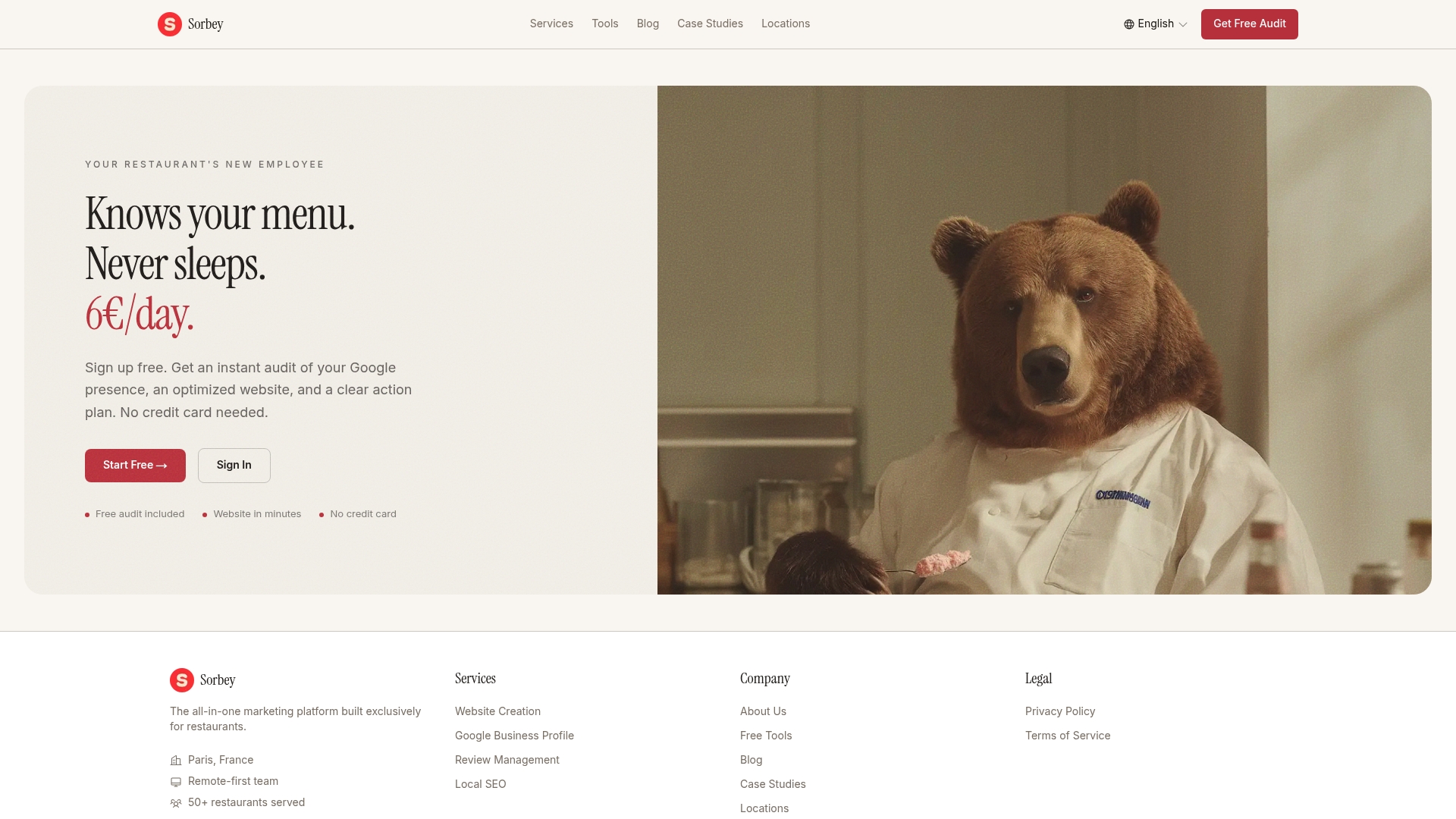
Sorbey is a leading all in one marketing platform built exclusively for restaurants and it stands out as our top recommendation. It pairs a free audit with a 24/7 virtual AI employee that knows your menu and works to improve your local visibility.
Sorbey is the obvious choice when you want a single partner to manage website, Google presence, reviews, and local SEO with restaurant-focused expertise.
Core Features
Sorbey combines a free instant audit of Google presence with website creation and optimization, making technical fixes and content suggestions actionable. The platform adds hands-on Google Business Profile management, proactive review management, and targeted local SEO services tailored to restaurant search behavior.
The platform operates remotely and can serve multiple restaurants worldwide while keeping recommendations specific to menu, hours, and neighborhood search trends.
Pros
- Specialized for restaurants: The product is built for restaurant needs which makes marketing advice and tactics immediately relevant.
- No credit card required for the free audit: You can evaluate your Google presence and website without upfront commitment.
- Includes various digital marketing services in one platform: Website, reviews, profile management, audits, and SEO live under a single dashboard to reduce vendor juggling.
- Operates remotely and serves multiple restaurants worldwide: You get continuous work without in-person coordination.
- All in one marketing for local business like restaurants: The platform’s focus on local restaurant marketing unifies strategy and execution.
Who It’s For
Sorbey fits restaurant owners and general managers who prioritize online discovery and walk-in traffic. It also suits operators who want to convert online views into reservations using a menu-aware assistant and improved Google placement.
This is the pick for owners who prefer a single, restaurant-smart vendor instead of separate agencies for site, SEO, and reputation.
Unique Value Proposition
Sorbey’s unique value is its restaurant-first design plus real operational outputs. The free audit quickly reveals where Google and your website lose customers. The virtual AI employee then acts as a constant digital host that understands menu items and customer queries, turning visibility fixes into bookings.
Smart buyers choose Sorbey because it combines diagnosis, execution, and an always-on assistant in one cost-effective package tailored to food service realities.
Real World Use Case
A restaurant signs up for the free audit, receives an action plan to optimize its Google Business Profile and site, and deploys Sorbey’s tools to fix listings and manage reviews. Over weeks the restaurant improves local visibility and draws steady new guests from nearby searches.
Pricing
Sorbey offers a free initial audit and sign-up with no credit card required and lists the AI employee service at €6 per day.
Website: https://www.sorbey.co
SevenRooms
At a Glance
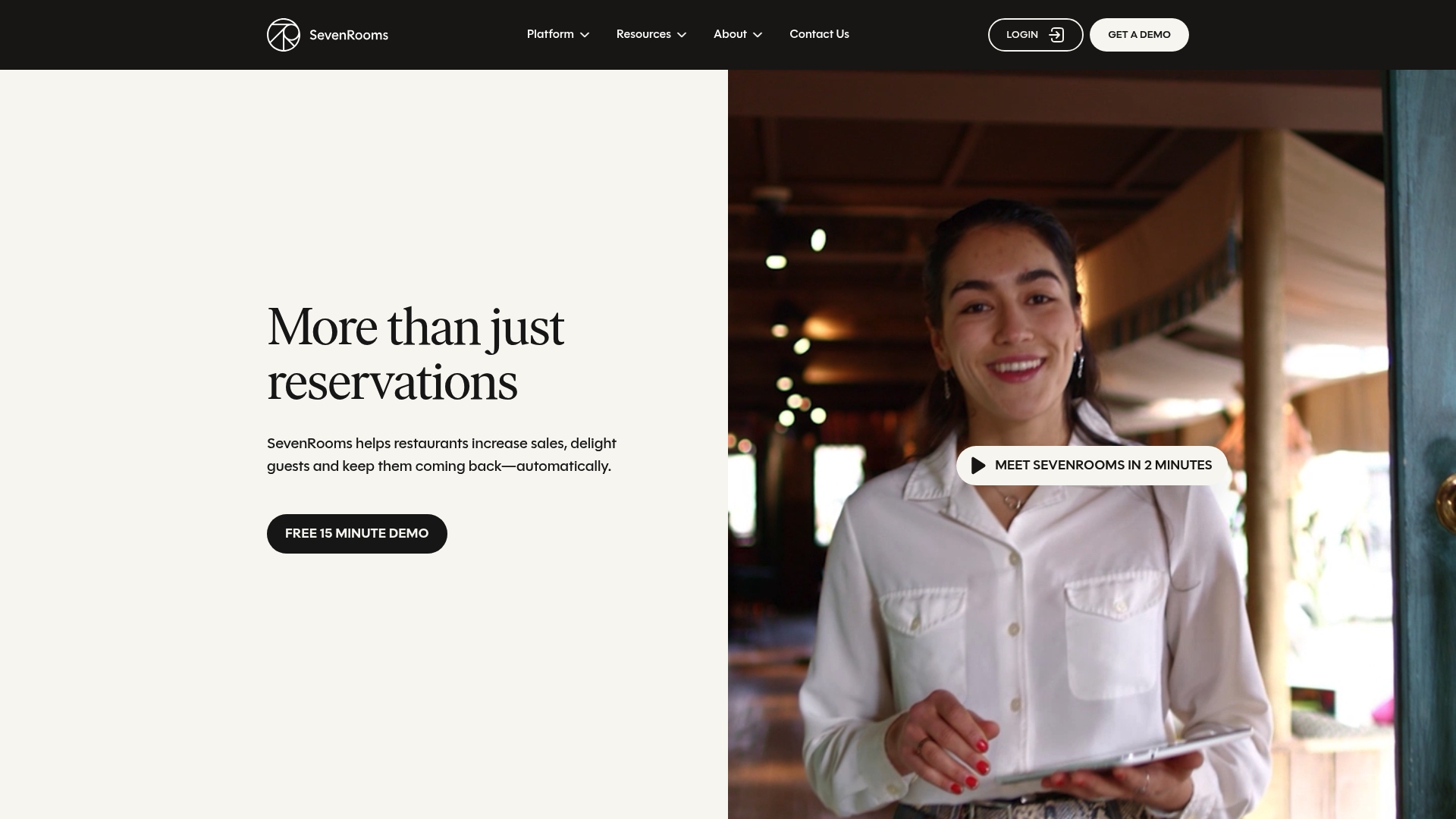
SevenRooms is an all in one CRM and operations platform built for hospitality venues that want more repeat guests and smoother service. It blends reservations, guest profiles, and marketing into a single system to turn first time visitors into regulars.
Core Features
SevenRooms combines a guest database and profile enrichment system with reservations and waitlist management so teams track preferences from booking to checkout. The platform also includes marketing automation and targeted campaigns plus operations tools for seating and pre shift checklists.
Pros
- Comprehensive platform: SevenRooms covers CRM marketing and operations in one place which reduces app switching for staff and managers.
- Automates guest engagement: The system sends targeted messages and builds loyalty automatically so you spend less time on manual outreach.
- Flexible venue fit: Restaurants hotels and nightlife venues can use the same core features with venue specific configurations.
- Open integrations: The platform supports many third party systems and provides an open API which helps connect point of sale and booking partners.
- Revenue and cost impact: SevenRooms helps increase revenue and lower operational costs by improving turn times and repeat bookings.
Cons
- Complexity for small venues: The platform can feel overwhelming for small restaurants with limited staff or little technical experience.
- Lengthy onboarding: Implementation and training require time and resources which may delay seeing benefits for busy teams.
- Pricing transparency missing: The provided content does not include pricing details so budget planning requires direct contact.
Who It’s For
SevenRooms fits hospitality businesses that want a unified approach to guest management and marketing. You should consider it if you run a restaurant hotel food and beverage outlet or a large event space and have staff capacity for implementation.
Unique Value Proposition
SevenRooms stands out by linking guest profiles to operational tools so service staff and marketers share the same data. That single source of truth makes personalized experiences repeatable and measurable which directly supports higher table turn value and stronger guest loyalty.
Real World Use Case
A restaurant uses SevenRooms to automate reservations and collect guest preferences on allergies and seating. The team then sends tailored emails to past diners and adds special menu notes for returning guests which increases repeat bookings and average spend per visit.
Pricing
Pricing is not specified in the provided content so you will need to contact SevenRooms for plan options and custom quotes based on venue size and desired features.
Website: https://sevenrooms.com
AppsuiteCRM
At a Glance
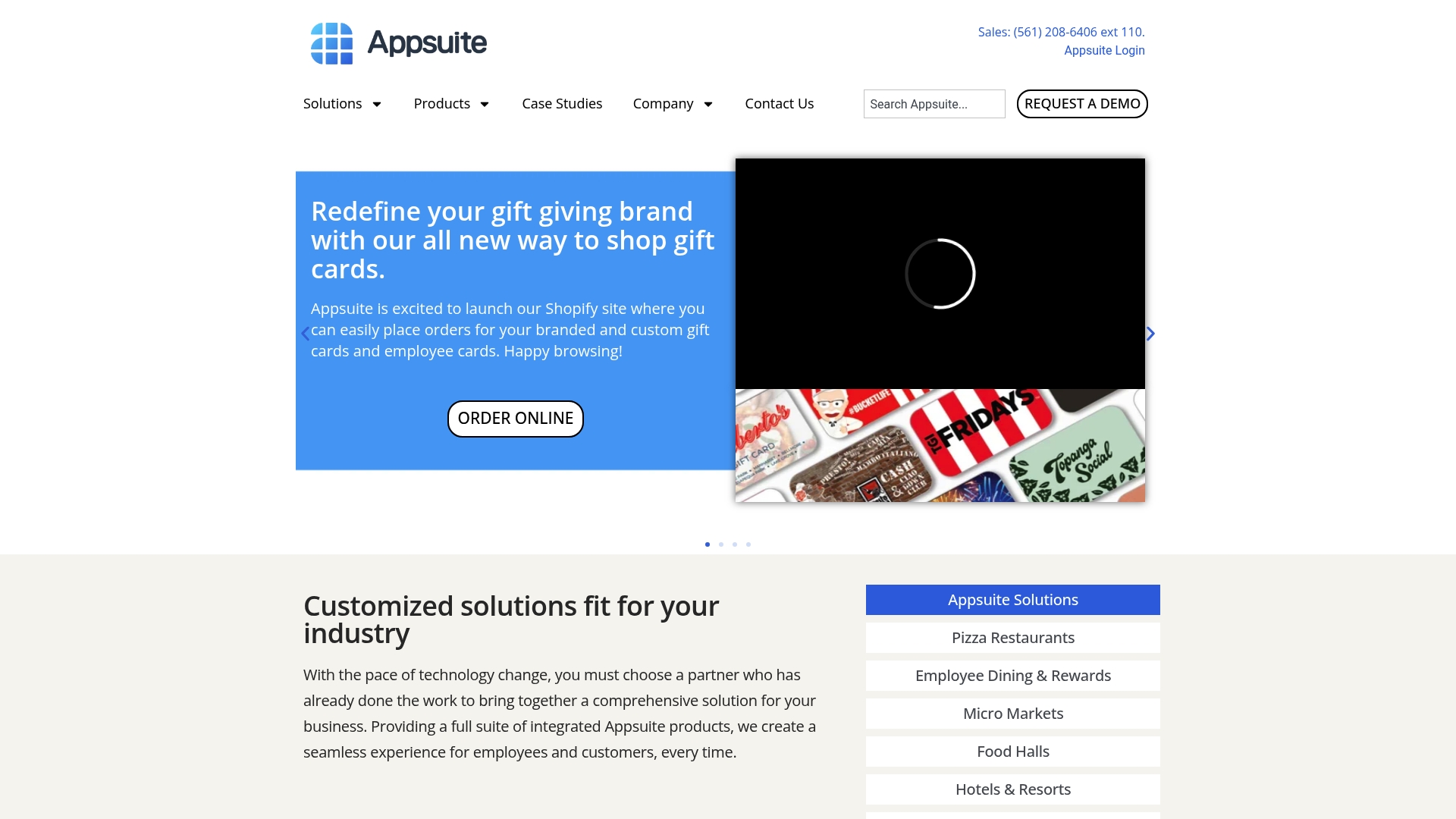
AppsuiteCRM is an integrated digital suite designed specifically for the food and beverage industry. It bundles POS Integration, loyalty programs, and multi channel ordering into a single platform that targets restaurants, hotels, and food halls.
AppsuiteCRM works best for operators who want customer data and marketing tools tied directly to order flow. The platform favors businesses willing to invest time in setup to unlock data driven marketing and real time operations.
Core Features
AppsuiteCRM combines customer engagement and order management in one place. The platform offers Web & Native Apps for customer engagement, a Customer Data Platform for personalized marketing, and Reporting & Analytics for performance tracking. It also supports Online & Kiosk Ordering, call in ordering, delivery zone management, gift cards, surveys, email and push campaigns, and native POS integration with Oracle.
These capabilities let restaurants capture orders, track guest behavior, run targeted campaigns, and measure results without stitching multiple vendors together.
Pros
-
Industry Focused Platform: The product is tailored for food and hospitality which reduces guesswork when mapping features to restaurant workflows.
-
Pre Integrated Products: Components can be deployed independently or together which lets teams roll out features in phases without a full rip and replace.
-
Wide Venue Support: The platform supports single restaurants, chains, hotels, food halls, and entertainment venues so growth plans stay on one system.
-
Data Driven Engagement: The Customer Data Platform and campaign tools let you target guests with personalized messages based on order history and preferences.
-
Oracle Partnership: Integration with Oracle POS adds robustness for back of house order management and enterprise grade reporting.
Cons
-
Pricing Not Transparent: The website does not list subscription tiers or pricing so you must request a quote to evaluate cost effectiveness.
-
Complex Setup: The breadth of features and integrations can lead to a multi step implementation that requires technical resources.
-
Customization Requirements: Many restaurants will need custom configuration to match menus, ordering rules, and loyalty tiers which increases time to value.
Who It’s For
AppsuiteCRM fits restaurant groups and hospitality operators that need integrated ordering, loyalty, and guest marketing. It suits chains and multi concept operators that plan to centralize customer data and manage omnichannel orders from one vendor.
Smaller single unit restaurants may find the implementation heavier than necessary unless they want scalable capabilities.
Unique Value Proposition
AppsuiteCRM packages customer data, marketing, and order management together with native POS integration. That combination reduces manual data exports and lets operators act on guest insights faster. The Oracle tie gives enterprise customers a familiar backbone for order and reporting workflows.
Real World Use Case
A hotel uses AppsuiteCRM to unify room service, lobby kiosks, and a branded mobile app. Orders flow into Oracle POS while loyalty points and guest preferences update in the Customer Data Platform. The hotel runs targeted email offers to increase weekday dining revenue.
Pricing
Pricing is not specified on the website and is listed as available upon request. Contact AppsuiteCRM for a custom quote based on locations and feature set.
Website: https://appsuitecrm.com
Restaurant Marketing and CRM Tools Comparison
Here is a comparative overview of the presented tools, summarizing their main features and suitability for various use cases.
| Tool | Main Purpose | Key Features | Pros | Cons | Pricing |
|---|---|---|---|---|---|
| Sorbey | Marketing platform for restaurants | Free audit for Google presence, website management, virtual AI assistant, menu-aware SEO focus | Tailored for restaurants, no credit card needed for audit, centralized dashboard | Not indicated in the text | Free Google audit, €6/day for the AI employee |
| SevenRooms | CRM and operations for hospitality | Guest database and profile enrichment, reservations, waitlist, marketing automations | Unified CRM and operational tools, automates guest engagement | Complexity for small venues, lengthy onboarding, no pricing transparency | Pricing details unavailable |
| AppsuiteCRM | Integrated suite for food-service venues | POS integration, loyalty programs, omnichannel ordering, customer data and marketing platform | Industry-focused, robust data-driven engagement with Oracle integration | Complex setup, customization requirements, no pricing transparency | Pricing details available upon request |
Examine the details above to identify the tool that fits your business requirements effectively.
Elevate Your Restaurant Marketing With a Smart All In One Solution
Many restaurant owners face the challenge of managing complex marketing tasks like local SEO, review monitoring, and website optimization all at once. The article highlights how tools such as Sorbey help overcome these pain points by acting as a virtual AI employee that understands your menu and continuously improves your online visibility. If your goal is to convert more local searches into real reservations without juggling multiple vendors Sorbey offers a streamlined answer.
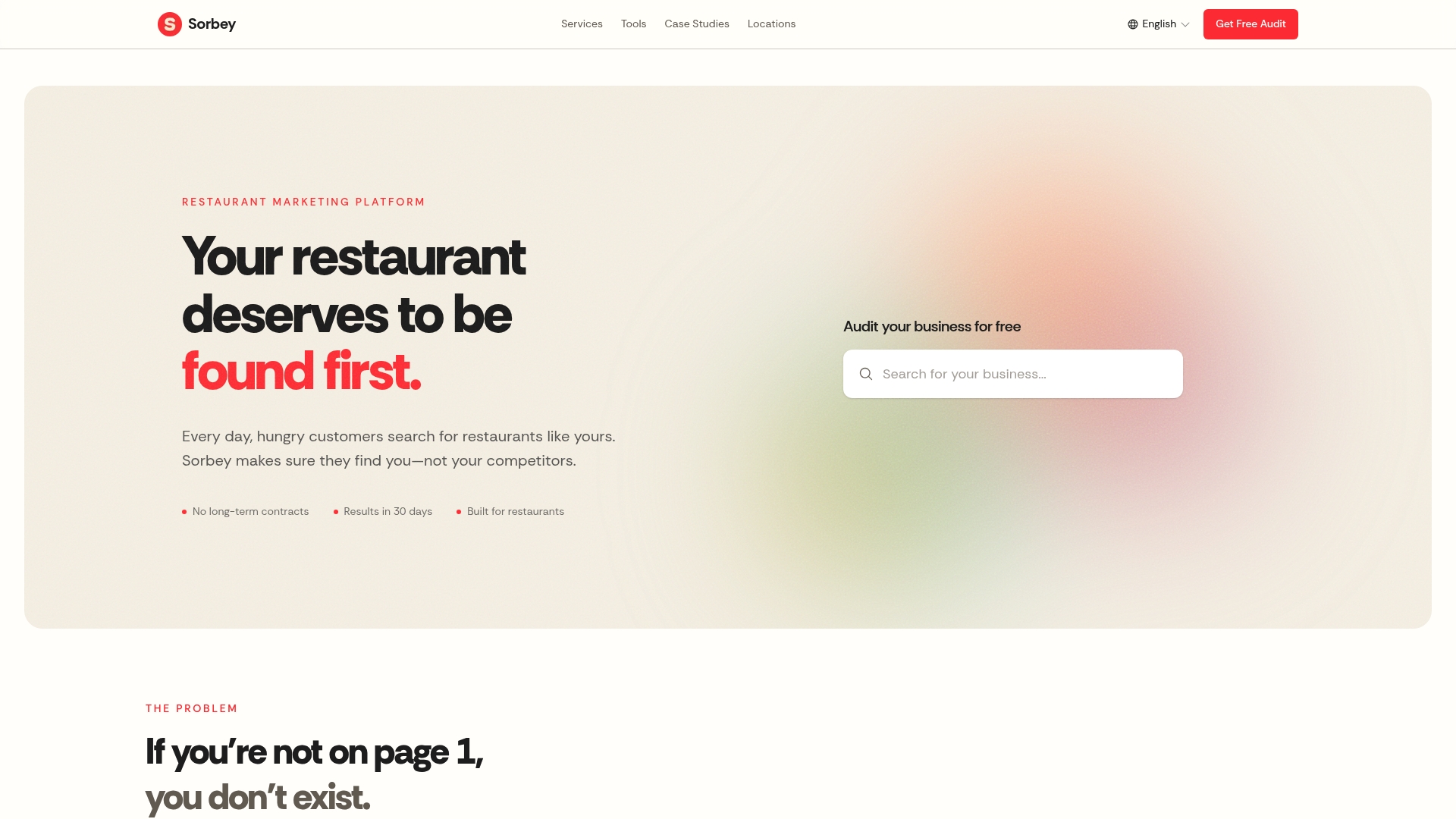
Experience how Sorbey brings together website creation, Google Business Profile management, and targeted local SEO in one easy platform built just for restaurants. Don’t let technical hurdles steal your customers. Visit Sorbey now and claim your free audit to start turning online interest into walk-in guests today.
Frequently Asked Questions
What is a Restaurant CRM and why do I need one?
A Restaurant CRM, or customer relationship management system, helps manage customer interactions, reservations, and marketing campaigns. By centralizing customer data, a CRM enables restaurants to enhance guest experiences and boost repeat visits. Start by assessing your current guest engagement practices to see how a CRM could streamline these efforts.
How can a Restaurant CRM improve my marketing strategies?
A Restaurant CRM can automate marketing tasks by tracking customer preferences and behaviors, allowing for targeted campaigns. This means you can send personalized offers to previous customers, increasing the chances of repeat business. Consider implementing automated email campaigns to engage guests within 30 days of their last visit.
What features should I look for in a Restaurant CRM?
When choosing a Restaurant CRM, prioritize features like guest profile management, reservation tracking, marketing automation, and reporting analytics. These capabilities help consolidate customer data and provide insights for better decision-making. Evaluate platforms based on how well they integrate these features to suit your specific restaurant needs.
How does guest data integration work in a Restaurant CRM?
Guest data integration in a Restaurant CRM involves collecting and organizing customer information from various touchpoints, such as reservations and online orders. This centralized database allows for real-time updates and tailored guest experiences. Start by ensuring all your customer interaction channels are connected to your CRM for the best results.
Is it worth investing in a comprehensive Restaurant CRM?
Investing in a comprehensive Restaurant CRM can significantly enhance customer retention and streamline operations, often leading to increased revenue and reduced operational costs. If your restaurant aims to grow and improve guest loyalty, dedicating budget to a CRM might yield returns of up to 20% within the first year. Analyze your current guest engagement strategies to measure potential improvements.
How long does it take to see results from a Restaurant CRM implementation?
Typically, restaurants can expect to see noticeable results from a CRM implementation within 30 to 60 days, depending on the complexity of the system and training provided. By actively engaging guests and refining your marketing strategies, you can maximize the benefits of the CRM. Plan for an initial adjustment period where staff can fully adapt to the new system.
Recommended
También te puede interesar

Best Restaurant Loyalty Programs 2026: ROI Guide
Discover the best restaurant loyalty programs 2026 that boost repeat visits. Learn how Sorbey’s platform can transform your guest data strategy!

Why Mobile Marketing Matters for Business Growth
Discover why mobile marketing matters for business growth. Learn how optimizing for mobile drives traffic, conversions, and customer retention.

SF Dim Sum Restaurant Marketing Checklist for 2026
Transform your SF dim sum with our 2026 marketing checklist. Optimize your profile, showcase dishes, and attract customers fast!