
Blog
Why Mobile Marketing Matters for Business Growth
Discover why mobile marketing matters for business growth. Learn how optimizing for mobile drives traffic, conversions, and customer retention.

Why Mobile Marketing Matters for Business Growth
Mobile marketing matters because mobile now controls the discovery, conversion, and retention moments that determine revenue. By early 2026, mobile devices account for more than two-thirds of global digital traffic, and in mobile-native verticals this share often exceeds 80%. Google’s mobile-first indexing means your mobile experience is what Google actually ranks, not your desktop site. Ignore mobile and you lose organic visibility, miss the moment a nearby customer searches for you, and hand retention to competitors who show up faster.
Table of Contents
- Why mobile marketing matters: the scope and channels you need to own
- What are the key mobile marketing channels, and when should you use each?
- What is the actual business case for mobile marketing?
- How does mobile-first SEO affect your search rankings?
- How do you measure mobile marketing success?
- How do you get started with mobile marketing in 30–90 days?
- A practical mobile playbook for local restaurants
- Key Takeaways
- The part most mobile strategies get wrong
- Sorbey helps restaurants put this into practice
- Further reading and useful sources
Why mobile marketing matters: the scope and channels you need to own
Mobile marketing covers every touchpoint a customer has with your brand on a phone or tablet: your website, SMS campaigns, push notifications, in-app messages, paid social ads, and location-based triggers like geofencing. That is a wider surface than most teams manage.
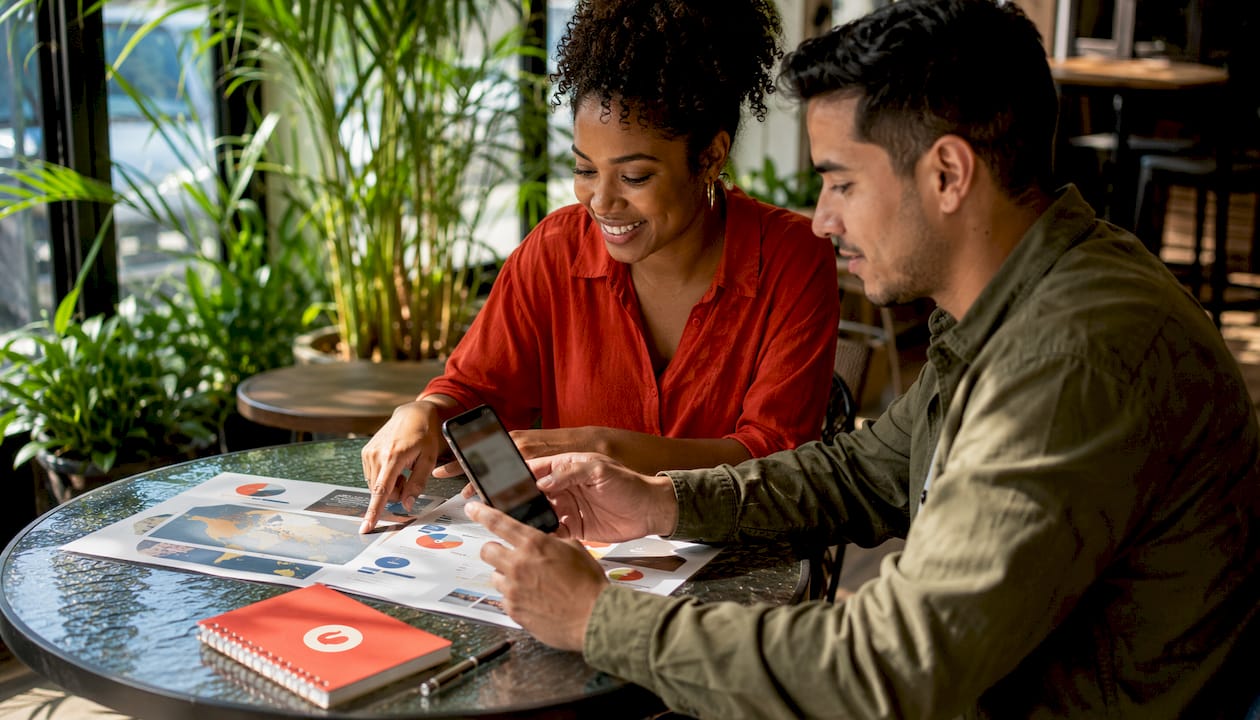
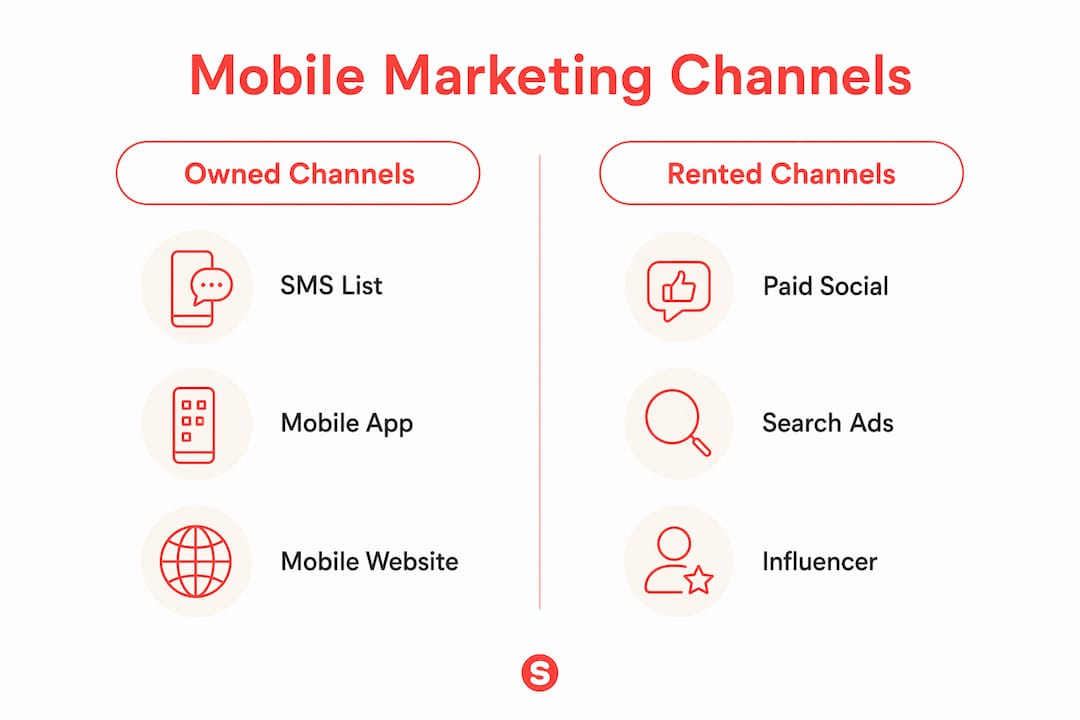
The most useful frame is owned vs. rented channels. Owned channels are the ones you control: your SMS list, your app’s push notification audience, your CRM. Rented channels are placements you pay for: Google search ads, Meta social placements, TikTok. Rented channels scale fast but disappear the moment you stop paying. Owned channels compound. A permissioned SMS list you built over 12 months keeps delivering even when ad costs spike.
This distinction matters equally for B2B and B2C. A B2B buyer checking a vendor’s pricing page on their phone at 7 PM is just as mobile-native as a diner searching “best tacos near me.” Both expect a fast, frictionless experience, and both will leave if they don’t get one.
What are the key mobile marketing channels, and when should you use each?
Choosing the right channel depends on your goal: awareness, conversion, or retention. Here is a practical map:
- Mobile web / responsive site: Your primary discovery surface. Prioritize it for SEO and first-visit conversion. Every campaign lands here first.
- Apps and in-app messaging: Best for retention and personalization once a customer has committed. Apps let you track behavior, trigger lifecycle messages, and build long-term value.
- Push notifications and SMS: High-attention, time-sensitive channels. Use them for flash offers, order confirmations, and re-engagement. SMS open rates far outpace email for urgent messages.
- Paid mobile ads and social: Fast reach, but rented. Use for acquisition campaigns with a clear cost-per-acquisition target, then move converted customers to owned channels.
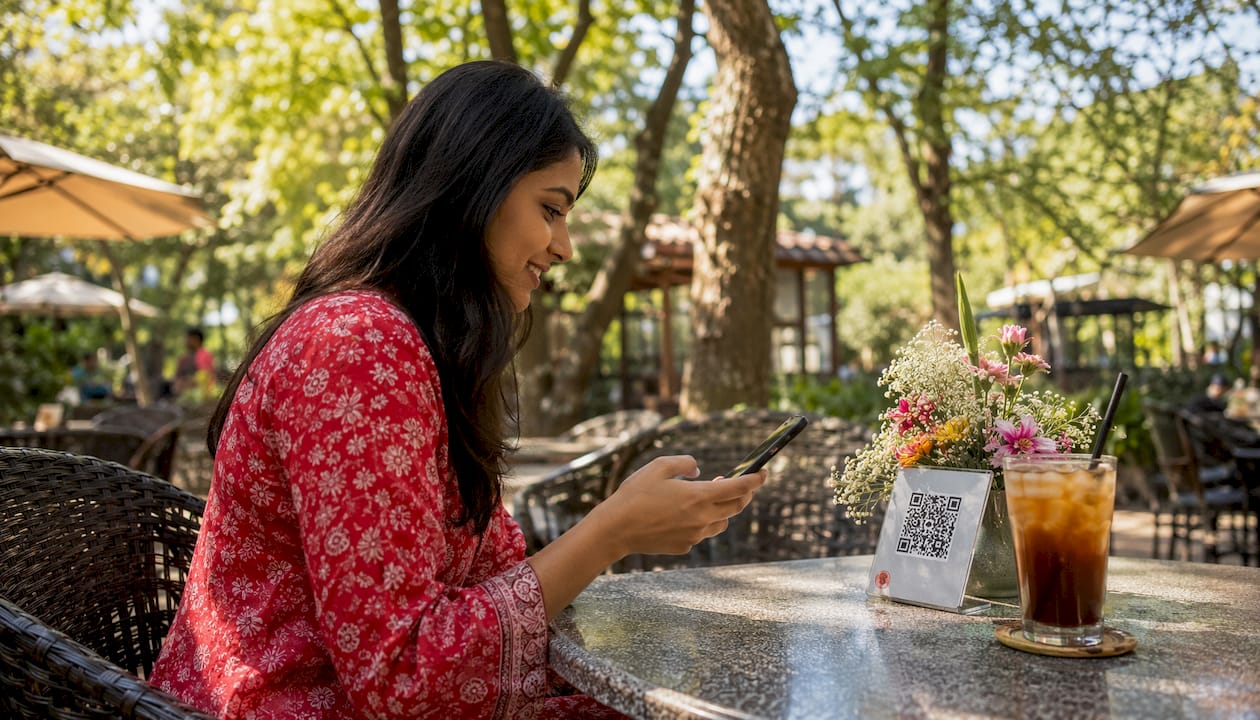
- Location-based tactics and QR codes: Geofencing lets you trigger an offer when a potential customer is physically nearby, which is particularly effective for restaurants and retail. QR codes bridge physical spaces (menus, signage, receipts) to digital experiences without requiring an app download.
Mobile marketing strategies for food and beverage brands show that combining SMS with QR-initiated loyalty programs consistently outperforms single-channel approaches for repeat visits.
What is the actual business case for mobile marketing?
The evidence is hard to argue with. Mobile users generated nearly 80% of all retail traffic in 2024. That is not a trend to watch; it is the current baseline. Brands that have not optimized for mobile are already losing conversions to competitors who have.

Beyond traffic share, mobile’s advantage is proximity. People reach for their phones dozens of times per day, making it the most personal channel available for timely, contextual messages. A push notification sent at the right moment, tied to a customer’s location or recent behavior, performs in a way a weekly email newsletter simply cannot.
The retention angle is where the real ROI lives. Mobile acts as an amplification layer on top of your organic traffic: it converts one-time visitors into repeat customers through re-engagement at the right moment. Brands that coordinate push, SMS, and in-app messages around lifecycle events, rather than sending generic blasts, see meaningfully better results. Campaigns built on first-party behavioral data consistently outperform broadcast-style sends.
For local businesses, the localization benefit is just as significant. A customer who searches “restaurants open now” on their phone is ready to act. Showing up in that moment, with accurate hours and a direct booking link, is a conversion that costs almost nothing once your local SEO is in order.
How does mobile-first SEO affect your search rankings?
Google indexes and ranks your site based on its mobile version. If your mobile pages load slowly, have unclickable elements, or serve less content than your desktop pages, your rankings suffer across all devices, not just phones.
The technical checklist every team should run through:
- Page speed: Use PageSpeed Insights to identify load-time issues on your top landing pages. Slow pages kill conversions before any campaign can work.
- Responsive design: Content, images, and navigation must adapt cleanly to any screen size.
- Core Web Vitals: Google’s LCP (Largest Contentful Paint), CLS (Cumulative Layout Shift), and INP (Interaction to Next Paint) scores directly influence rankings.
- Thumb-friendly UX: Buttons and tap targets need to be large enough to use one-handed. Small tap targets are one of the most common mobile UX failures.
- Reliable event tracking: Verify that conversion events and in-app postbacks are firing correctly before you spend on campaigns. Broken tracking means wasted media spend.
Pro Tip: Run PageSpeed Insights on your three highest-traffic mobile landing pages right now, not your homepage. Most teams audit the homepage and ignore the pages where conversions actually happen. Fix the slowest one first.
For restaurants, mobile-first SEO also means keeping your Google Business Profile accurate and complete, since that is often the first result a nearby searcher sees.
How do you measure mobile marketing success?
Tracking the right metrics separates teams that improve from teams that just report. Here is what to monitor and for whom:
- For executives: Mobile conversion rate, mobile revenue share, customer lifetime value (LTV), and return visit rate. These connect directly to revenue.
- For operations teams: Mobile sessions, session length, app DAU/MAU ratio, push/SMS click-through rate, and page speed scores. These flag problems before they hit the top-line numbers.
Attribution is harder than it used to be. Privacy changes have reduced the reliability of third-party tracking, which means first-party data is now the most durable signal you have. Build your measurement stack around in-app events, CRM data, and consented SMS/push engagement rather than relying on third-party pixels.
| KPI | What it tells you | Review cadence |
|---|---|---|
| Mobile conversion rate | Whether your mobile experience converts visitors | Weekly |
| Push / SMS CTR | Whether your messages are relevant and timely | Per campaign |
| Return visit rate | Whether mobile re-engagement is working | Monthly |
| App DAU / MAU | Depth of app engagement over time | Monthly |
| LTV (mobile cohort) | Long-term revenue impact of mobile customers | Quarterly |
Report mobile conversion rate and LTV to executives. Track push CTR and session data internally. Keep the two audiences separate or you will spend meetings explaining metrics that do not connect to decisions.
How do you get started with mobile marketing in 30–90 days?
A realistic starter plan, broken into three phases:
Days 1–30: Audit and fix
- Run PageSpeed Insights on your top five landing pages and fix the largest speed issues.
- Confirm your site is fully responsive and that all forms and CTAs work on a phone.
- Set up or verify mobile conversion tracking in Google Analytics 4 or your analytics platform.
- Audit your Google Business Profile: accurate hours, photos, and a direct booking or ordering link.
- Identify your highest-traffic mobile pages and prioritize them for UX improvements.
Days 31–60: Build owned channels
- Launch a permission-based SMS or push notification pilot with a clear opt-in offer.
- Build one mobile-optimized campaign (a landing page, an SMS sequence, or a push series) around a single goal.
- Set up basic segmentation: new visitors vs. returning customers, at minimum.
Days 61–90: Test and expand
- Test two or three message variations to identify what resonates with your audience.
- Add a location-based trigger or QR code touchpoint if you have a physical location.
- Review your 90-day mobile conversion rate and return visit rate, then set targets for the next quarter.
On budget: small businesses can run a meaningful mobile program for a few hundred dollars a month if they focus on owned channels (SMS, push, mobile web) rather than paid placements. Growth-stage brands investing in paid mobile ads should set a clear cost-per-acquisition target before scaling spend.
A practical mobile playbook for local restaurants
Restaurants sit in one of the highest-intent mobile categories. A customer searching for a place to eat is usually within minutes of making a decision, which means the gap between showing up and not showing up is a real table.
The highest-impact tactics for local restaurants, in priority order:
- Google Business Profile optimization: Accurate hours, menu link, photos, and a direct reservation or ordering link. This is the single most-visited mobile touchpoint for most restaurants.
- SMS offers for nearby customers: A short, permission-based SMS list lets you fill slow nights with a targeted offer. Keep messages short, specific, and infrequent enough to stay welcome.
- App-free mobile ordering: A mobile-optimized ordering page on your website removes the friction of an app download. Most diners will not download a restaurant app for a first visit, but they will order from a fast mobile web page.
- QR-initiated loyalty: A QR code on the table or receipt that links to a simple loyalty sign-up captures repeat customers without requiring a dedicated app.
Illustrative scenario: A neighborhood restaurant optimizes its Google Business Profile, adds a mobile ordering page, and launches a 200-person SMS list with a monthly offer. Within 90 days, the expected outcomes are more direct bookings from mobile search, measurable SMS redemptions, and a higher return visit rate among opted-in customers. The single metric to watch in the first 90 days: mobile conversion rate on the ordering or reservation page.
The local search investment that supports this playbook compounds over time. Every review, every accurate listing update, and every mobile-optimized page makes the next customer easier to win.
Pro Tip: Set up a QR code on your receipt that links to a Google review prompt. It takes 20 minutes to build and generates a steady stream of reviews that improve your local search ranking for every future mobile searcher.
Key Takeaways
Mobile marketing is the primary growth lever for any business where customers discover, decide, and return via their phones, which now accounts for more than two-thirds of global digital traffic.
| Point | Details |
|---|---|
| Mobile owns the funnel | By early 2026, mobile devices account for more than two-thirds of global digital traffic; in mobile-native categories this share often exceeds 80%. Ignoring it means losing discovery, conversion, and retention. |
| Google ranks your mobile site | Mobile-first indexing means your mobile page speed and UX directly determine your search rankings. |
| Owned channels compound | SMS and push lists you build with consent outperform rented ad placements over time and survive privacy changes. |
| Measure what executives care about | Track mobile conversion rate and LTV for leadership; use push CTR and session data for operations. |
| Sorbey for restaurants | Sorbey’s all-in-one platform covers mobile-optimized ordering, SMS automation, Google Business Profile optimization, and local SEO in a single subscription. |
The part most mobile strategies get wrong
Most teams treat mobile as a delivery format rather than a relationship layer. They make the site responsive, run some mobile ads, and call it a mobile strategy. What they miss is the compounding value of owned mobile channels.
The shift that actually changes revenue is moving from renting attention on ad platforms to building a permissioned audience you can reach directly. An SMS list of 500 loyal customers who opted in for offers is worth more than 50,000 impressions on a platform that can change its algorithm tomorrow. Privacy changes have accelerated this: third-party tracking becomes less reliable every year, and the brands that built first-party data early are now the ones with a durable advantage.
For restaurant owners specifically, the opportunity is unusually clear. Your customers are already on their phones when they decide where to eat. The question is whether your restaurant shows up at that moment with a fast page, accurate information, and a frictionless way to book or order. If it does, mobile becomes your most cost-efficient acquisition channel. If it does not, you are paying for marketing that loses the customer at the last step.
Sorbey helps restaurants put this into practice
Restaurants that want to act on this plan without building it from scratch have a direct path. Sorbey is an all-in-one marketing platform built specifically for independent restaurants and local dining venues. It covers the exact capabilities this article describes: an instant Google presence audit, mobile-optimized website and ordering pages, SMS campaign automation, Google Business Profile management, review collection, and local SEO, all in a single subscription.
Where most restaurants spend months stitching together separate tools, Sorbey delivers the full mobile-first stack from day one. The audit alone shows you exactly where your mobile presence is losing customers before you spend a dollar on campaigns. If you run a restaurant and want to see where you stand, start with a free audit and have a clear picture of your mobile gaps within minutes.
Further reading and useful sources
- Google Mobile-First Indexing Documentation — Official guidance on how Google crawls and ranks mobile pages.
- PageSpeed Insights — Free tool to audit mobile page speed and Core Web Vitals.
- Shopify: Mobile Marketing Examples — Practical channel examples and real-world mobile marketing cases.
- Pew Research: Mobile Fact Sheet — U.S. mobile ownership and usage data.
- Statista: Mobile Internet Advertising Revenue — Global mobile ad spend trends.
- Moburst: State of Mobile Marketing Strategy — Strategic overview of mobile marketing priorities and owned-channel shifts.
- Forbes Tech Council: Why Mobile Marketing Is Vital for Brands — Executive-level case for mobile as a brand touchpoint.
- Braze: Customer Engagement Platform — Guidance on first-party data, lifecycle messaging, and cross-channel mobile campaigns.
- Wendy’s App: Mobile Ordering and Digital Strategy — Case study on how a major restaurant brand built a direct mobile channel and loyalty loop.
Recommended
También te puede interesar

Best Restaurant Loyalty Programs 2026: ROI Guide
Discover the best restaurant loyalty programs 2026 that boost repeat visits. Learn how Sorbey’s platform can transform your guest data strategy!

SF Dim Sum Restaurant Marketing Checklist for 2026
Transform your SF dim sum with our 2026 marketing checklist. Optimize your profile, showcase dishes, and attract customers fast!
QR Code Menu Benefits Every Restaurant Owner Should Know
Unlock the la restaurant QR code menu benefits: enhance customer experience, save costs, and boost revenue with real-time updates!