
Blog
The Role of Customer Reviews in Restaurant Success
Discover the role of customer reviews in restaurant success. Learn how positive feedback can attract diners and enhance your reputation.

The Role of Customer Reviews in Restaurant Success
TL;DR:
- Customer reviews are a vital trust signal for restaurants and influence over 96% of consumers before their first visit.
- Managing reviews effectively boosts online visibility, builds authenticity, and drives more patronage through timely responses and detailed feedback.
Customer reviews are the single most powerful trust signal a restaurant can own. Over 96% of consumers check reviews before visiting a business for the first time. That number makes the role of customer reviews less a marketing consideration and more an operational necessity. For restaurant owners and managers, reviews function as a public record of every guest experience, shaping reputation before a single table is set. Positive feedback fills seats. Negative feedback, left unmanaged, empties them.
How do customer reviews influence trust and buying behavior?

Reviews build what researchers call social proof. Potential diners validate their choices by reading about others’ experiences before committing to a reservation. For restaurants, this makes your review profile the digital front door, and most guests decide whether to walk through it before they ever see your physical one.
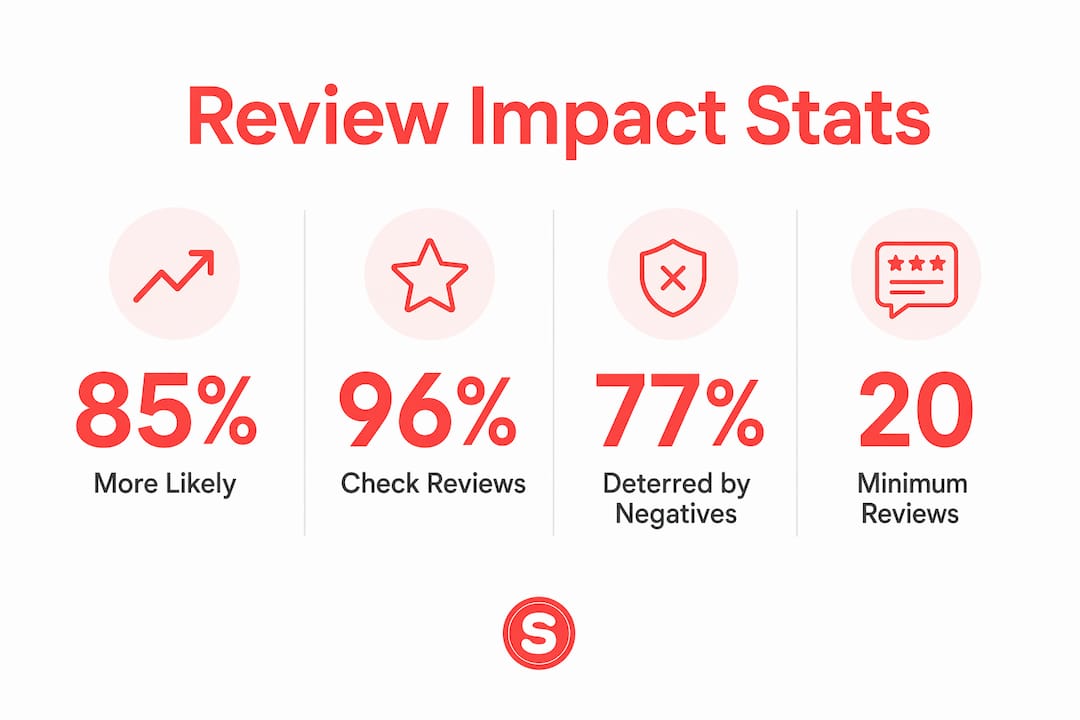
The numbers behind this behavior are striking. Displaying customer reviews can boost sales conversion rates by approximately 19.8%, with peak conversion occurring at a 4.9-star rating rather than a perfect 5.0. That last detail matters. Diners interpret a flawless score with suspicion, reading it as curated or fake. A 4.9 reads as earned.
Star ratings alone do not tell the full story of how reviews influence buying decisions. Three additional factors carry significant weight:
- Volume: A business with fewer than 20 reviews loses consumer trust regardless of its star rating. Diners treat a thin review count as a warning sign.
- Recency: Reviews older than three months erode confidence. Guests want to know what the experience is like now, not a year ago.
- Response behavior: Restaurants that reply to reviews, both positive and negative, signal that management is engaged and accountable.
The impact of customer testimonials on actual patronage is direct and measurable. 85% of consumers are more likely to visit a restaurant after reading positive reviews, while 77% are deterred by negative ones. That asymmetry is the core argument for treating review management as a revenue function, not a reputation afterthought.
Using customer feedback to improve restaurant operations
Customer feedback is an early-warning system. Restaurants that treat it as one catch service problems before those problems cost revenue. A pattern of comments about slow drink refills or inconsistent portion sizes tells you exactly where to focus training, long before a bad review goes viral.
Treating feedback as an operational tool rather than a popularity score is the mindset shift that separates high-performing restaurants from reactive ones. The most effective operators build feedback loops into their weekly management rhythm, reviewing comment patterns alongside labor costs and food waste data.
The emerging priority in 2026 is predictive guest experience management. Personalization and proactive engagement using customer feedback are key strategies for 60% of businesses this year. That means using review insights to anticipate what guests want before they ask, not just responding after they complain.
Specific operational areas where feedback drives improvement include:
- Menu calibration: Repeated praise or criticism of specific dishes signals what to feature, refine, or remove.
- Service timing: Comments about wait times reveal bottlenecks in kitchen flow or floor staffing.
- Atmosphere: Noise level, lighting, and seating comfort appear consistently in detailed reviews and are often fixable at low cost.
- Staff recognition: Named positive mentions of servers or hosts give managers data for performance reviews and retention conversations.
Pro Tip: Ask for feedback at the table immediately after a guest’s best moment, such as right after dessert or a cocktail they praised. That timing produces more detailed, positive responses than a follow-up email sent 24 hours later.
Best practices for managing and leveraging reviews effectively
The customer feedback significance of a well-managed review profile goes beyond reputation. It directly affects search visibility, with Google’s local ranking algorithm factoring in review quantity, recency, and response rate. A restaurant that actively manages its reviews ranks higher in local search results, which means more discovery before a competitor even enters the picture.
Authentic, detailed written reviews and photos from real guests build stronger trust than aggregate star scores alone. Encourage guests to describe their experience in their own words. A review that mentions the duck confit, the candlelit corner table, and the sommelier’s recommendation does more conversion work than five stars with no text.
A practical framework for review management follows four steps:
- Request at the right moment. Timing feedback requests immediately after peak positive dining moments produces higher quality and higher volume responses than automated post-visit emails.
- Respond within 24 hours. Quick, personalized responses build trust. Generic replies or silence erode it. Address the guest by name when possible and reference a specific detail from their review.
- Showcase user-generated content. Repost guest photos and detailed written reviews on your website and social channels. This amplifies the benefits of customer ratings without asking for anything new.
- Monitor for patterns, not just scores. A single 2-star review is noise. Five reviews in one month mentioning the same issue is a signal. Track themes, not individual incidents.
Pro Tip: Create a simple weekly review log. Assign one manager to read every new review and tag it by category, such as food, service, or atmosphere. After four weeks, patterns become impossible to ignore.
The role of testimonials in marketing extends to your owned channels. Quotes from real guests, displayed on your menu, website, or reservation page, convert browsers into bookings. This is user-generated content working as paid advertising, at zero cost.
Common misconceptions about interpreting customer reviews
The most damaging misconception in restaurant review management is that a perfect 5.0 rating is the goal. It is not. Research shows that conversion peaks at 4.9 stars, and scores that appear too clean raise authenticity concerns among experienced diners. A handful of thoughtfully handled negative reviews actually strengthens credibility.
A second misconception is that review volume reflects the full range of guest opinion. Reviews skew toward extremes. Guests who had a remarkable experience or a genuinely bad one are far more motivated to write than guests who had a solid, unremarkable meal. The middle of your guest experience, which is likely the majority, is chronically underrepresented in your review profile.
| Misconception | Reality |
|---|---|
| A perfect 5.0 rating builds the most trust | Conversion peaks at 4.9 stars; perfect scores read as inauthentic |
| More reviews always means better reputation | Volume without recency or detail loses consumer confidence |
| Negative reviews should be ignored or disputed | Prompt, personal responses to negative reviews rebuild trust publicly |
| Star ratings are the primary trust signal | Written detail and photos carry more weight than aggregate scores |
“The restaurants that grow fastest are not the ones with the most stars. They are the ones that listen the hardest.”
Fake or incentivized reviews present a real risk. Platforms like Google actively filter suspicious review patterns, and a sudden spike in 5-star reviews from accounts with no history can trigger suppression of your entire review profile. The benefits of customer ratings only materialize when those ratings are earned through genuine guest experiences. Shortcuts backfire.
Key takeaways
Customer reviews are a direct revenue driver for restaurants, not a passive reputation metric. Managing them with the same discipline as food costs or labor scheduling produces measurable results.
| Point | Details |
|---|---|
| Reviews drive decisions before the visit | Over 96% of consumers check reviews before a first-time visit, making your profile a pre-visit sales tool. |
| 4.9 stars outperforms 5.0 | Peak conversion happens at 4.9 stars; perfect scores reduce perceived authenticity among diners. |
| Recency and volume both matter | Fewer than 20 reviews or reviews older than three months erode trust regardless of star rating. |
| Timing your request changes quality | Asking for feedback immediately after a peak positive moment produces richer, more useful responses. |
| Responses are public trust signals | Quick, personal replies to reviews show accountability and build confidence in prospective guests. |
What I’ve learned about reviews after years of working with restaurants
Most restaurant owners I talk to think of reviews as something that happens to them. A guest leaves a comment, the score goes up or down, and the owner either feels good or frustrated. That framing costs money.
The restaurants that use reviews well treat them as a management tool. They read every comment looking for operational data, not validation. When three guests in two weeks mention that the bread arrived cold, that is a kitchen timing issue, not a bad luck streak. The review told you what your line check did not catch.
The timing insight is one I keep coming back to. Automated post-visit emails generate reviews, but they rarely generate the kind of detailed, story-driven feedback that actually converts new guests. The best reviews I have seen come from servers who asked at the right moment, face to face, after a guest said something like “this is the best meal I’ve had in months.” That conversation produces a review that reads like a recommendation from a friend, which is exactly what it is.
One more thing worth saying plainly: do not chase a perfect score. A 4.9 with 200 reviews and a mix of thoughtful responses to the occasional critical comment is a stronger asset than a 5.0 with 40 reviews and no owner engagement. Authenticity is the product. Reviews just make it visible.
— Barthelemy
How Sorbey helps restaurants turn reviews into results
Managing reviews manually across Google, social platforms, and booking sites takes time most restaurant managers do not have. Sorbey handles that work as part of its all-in-one marketing platform built specifically for local restaurants.
Crème Restaurant in Paris 18 saw a 162% increase in Google Maps views after working with Sorbey on its review and visibility strategy. That kind of result comes from consistent solicitation, fast response management, and making sure every review works as hard as possible for the restaurant’s online presence. If you want a clear picture of what a structured review management approach looks like in practice, Sorbey’s resources are built for exactly that.
FAQ
How do reviews influence a restaurant’s buying decisions?
Positive reviews increase patronage likelihood by 85%, while negative reviews deter 77% of potential guests. Reviews are the primary factor most diners consult before choosing a restaurant.
What star rating converts the most new customers?
Conversion peaks at a 4.9-star rating, not a perfect 5.0. Diners view near-perfect scores as more authentic and trustworthy than flawless ones.
How many reviews does a restaurant need to build trust?
A restaurant needs at least 20 reviews to maintain consumer confidence, and those reviews should be recent. Reviews older than three months significantly reduce trust even when the star rating is high.
Should restaurants respond to negative reviews?
Responding quickly and personally to negative reviews rebuilds trust publicly and shows prospective guests that management takes feedback seriously. Generic or absent responses have the opposite effect.
Does asking for reviews actually work?
Timing the request immediately after a peak positive moment, rather than sending an automated follow-up email, produces higher quality and more detailed responses. In-person requests at the right moment outperform digital prompts consistently.
Recommended
- Why local reviews matter: unlock success for your restaurant | Sorbey Blog | Sorbey
- Benefits of online reviews for restaurants in 2026 | Sorbey Blog | Sorbey
- How to Boost Online Reviews for Restaurants | Sorbey Blog | Sorbey
- Review Management Checklist: Boost Restaurant Reputation | Sorbey Blog | Sorbey
Vous pourriez aussi aimer

What Is Proximity Marketing? A Guide for Restaurants
Discover what proximity marketing is and how it can boost foot traffic for your restaurant. Unlock personalized offers to attract customers!

Why Digital Presence Matters for Your Restaurant
Discover why digital presence matters for your restaurant. Boost visibility, attract diners, and ensure your restaurant thrives online.

The Role of Analytics in Marketing: 2026 Guide
Discover the role of analytics in marketing and learn how data insights drive revenue growth and enhance campaign effectiveness in 2026.