
Blog
What is upselling in digital marketing for restaurants
Discover what is upselling in digital marketing for restaurants. Learn how smart strategies can boost revenue and enhance customer satisfaction.
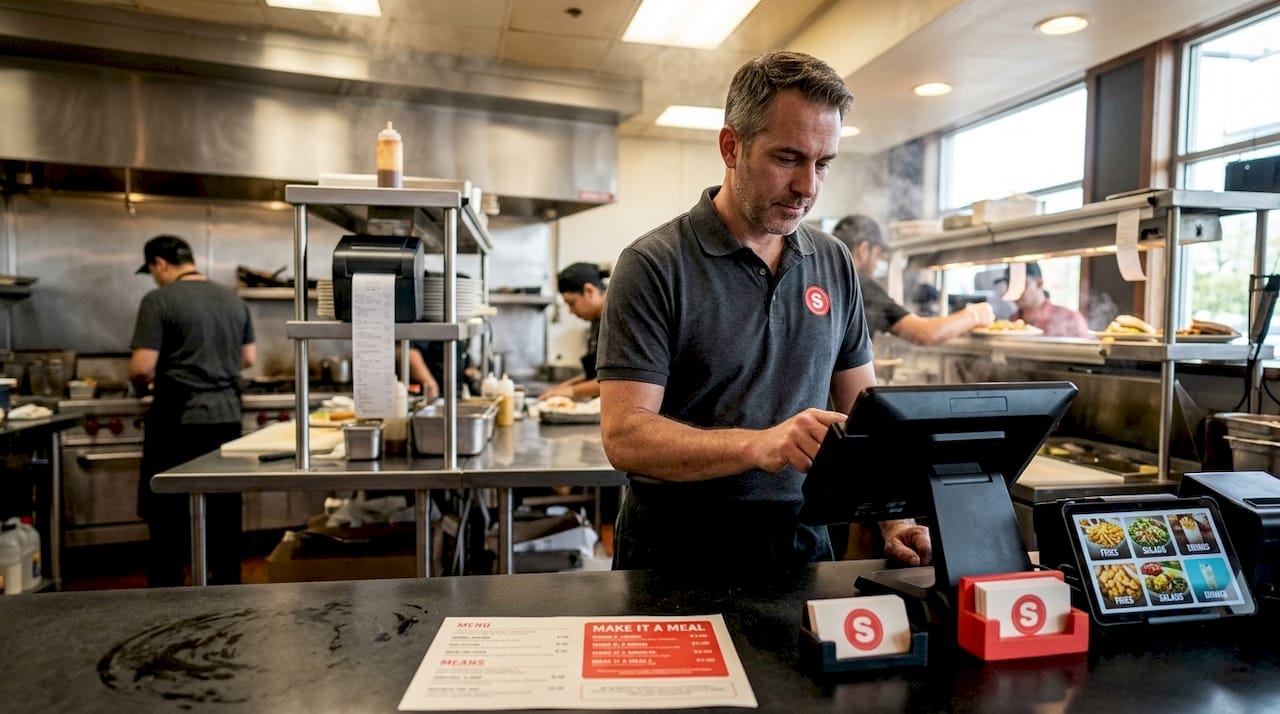
What is upselling in digital marketing for restaurants
TL;DR:
- Digital upselling uses personalized offers at key online touchpoints to increase revenue and customer satisfaction.
- Automated, ongoing testing and optimization are essential for effective digital upselling strategies in restaurants.
- Most small restaurants benefit from continuous iteration and data-driven adjustments rather than relying on complex technology.
Upselling gets a bad reputation in restaurants because most owners picture an overly eager server pushing the most expensive item on the menu. Digital upselling is nothing like that. When done right, it uses customer data, smart timing, and personalized recommendations to offer genuinely better choices at the right moment in the ordering journey. The result is higher check averages, happier customers, and a revenue lift that compounds over time, especially when orders happen off-premise through delivery apps, online ordering platforms, or SMS campaigns.
Table of Contents
- Understanding upselling in digital marketing for restaurants
- Upselling vs. cross-selling: The restaurant angle
- Digital upselling channels and best practices
- Maximizing ROI: Automation and off-premise upselling
- Common pitfalls and optimization tips for digital upselling
- Why most restaurant upselling advice falls short
- Supercharge your restaurant’s digital upselling
- Frequently asked questions
Key Takeaways
| Point | Details |
|---|---|
| Upselling vs. Cross-selling | Upselling means bigger upgrades, while cross-selling is about add-ons; both strategies drive profits. |
| Best digital channels | Online menus, apps, and automated emails are top places for effective restaurant upselling. |
| Maximize off-premise ROI | Focusing upsells on delivery and takeout boosts returns and avoids relying on staff performance. |
| Personalization matters | Using customer data and limiting frequency makes digital upselling more effective and less intrusive. |
Understanding upselling in digital marketing for restaurants
Upselling, in the digital restaurant context, means prompting a customer to choose a higher-value version of what they already want. It happens at a touchpoint in your digital ecosystem, not at a table. Think of a customer building an online order and seeing a pop-up that says, “Add a large for $2 more.” That is a digital upsell. It is seamless, automatic, and requires zero staff involvement.
Digital touchpoints where upselling naturally fits include:
- Online ordering platforms (your website or third-party apps)
- Mobile apps connected to your loyalty program
- Email campaigns triggered by past order behavior
- SMS messages sent to opted-in customers
- Social media retargeting ads showing items a customer previously viewed
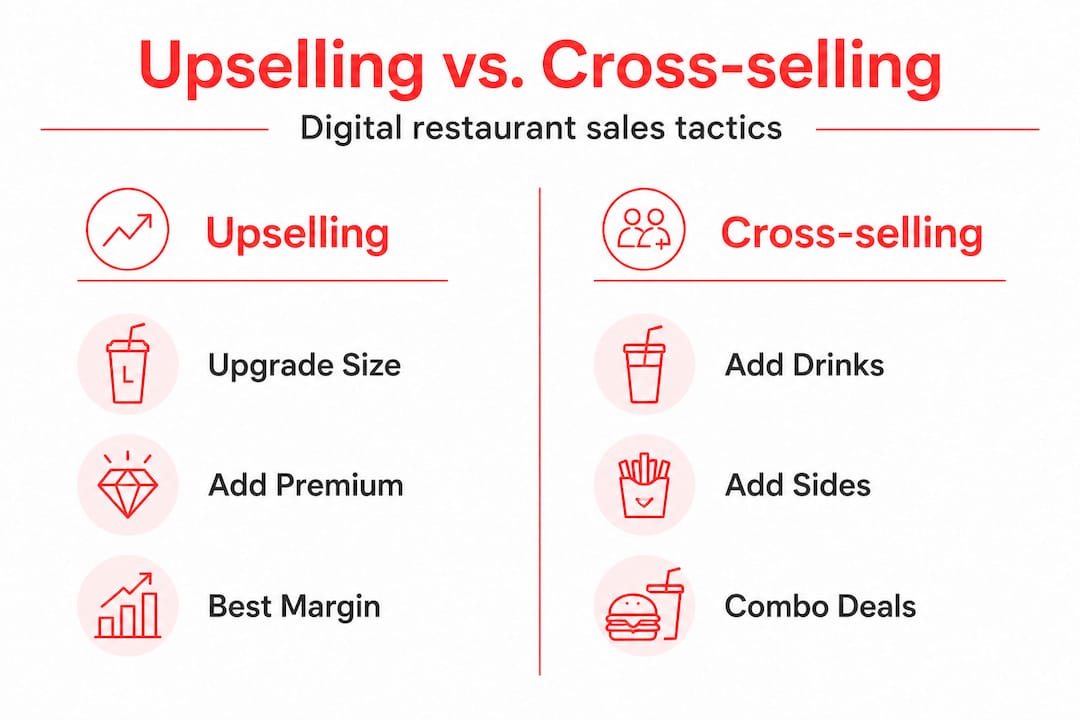
One distinction worth clarifying early: upsells upgrade within a category (think small pizza to large pizza), while cross-sells add something complementary (pizza plus a soda). Upsells tend to yield higher margins per item because you are selling more of what the customer is already committed to buying. That margin difference is the main reason smart restaurant operators prioritize upsell offers before reaching for cross-sell suggestions.
“The most effective digital upselling is invisible to the customer. It feels like a helpful suggestion, not a sales tactic.”
Personalization is what separates effective digital upselling from random pop-ups. When your system knows a customer always orders a medium burger, it can confidently suggest the premium version with bacon and guac. Generic “would you like to upgrade?” prompts convert far less than targeted offers built from actual order history. Investing in digital menus and upselling tools that track this data is the foundation of a profitable strategy.
Upselling vs. cross-selling: The restaurant angle
Both tactics drive revenue, but they serve different moments in the customer journey. Understanding the practical difference helps you deploy each one where it delivers maximum return.
| Scenario | Digital upsell example | Digital cross-sell example |
|---|---|---|
| Online pizza order | “Upgrade to XL for $2.50 more” | “Add a 2-liter for $3.99” |
| Burger delivery app | “Make it a double for $1.75 more” | “Add fries and a drink for $4.99” |
| Email campaign | “Try our premium steak vs. your usual chicken” | “Pair your entrée with our new house wine” |
| SMS promotion | “Upgrade to our chef’s special for tonight” | “Add our seasonal dessert to your next order” |
| Loyalty app offer | “Go from Silver to Gold meal plan” | “Earn bonus points by adding a side” |
For dine-in, cross-selling tends to feel more natural because a server can read body language and timing. For delivery and takeout, upselling is king because the customer is already committed to a specific item and a small price upgrade is easy to accept with one tap.
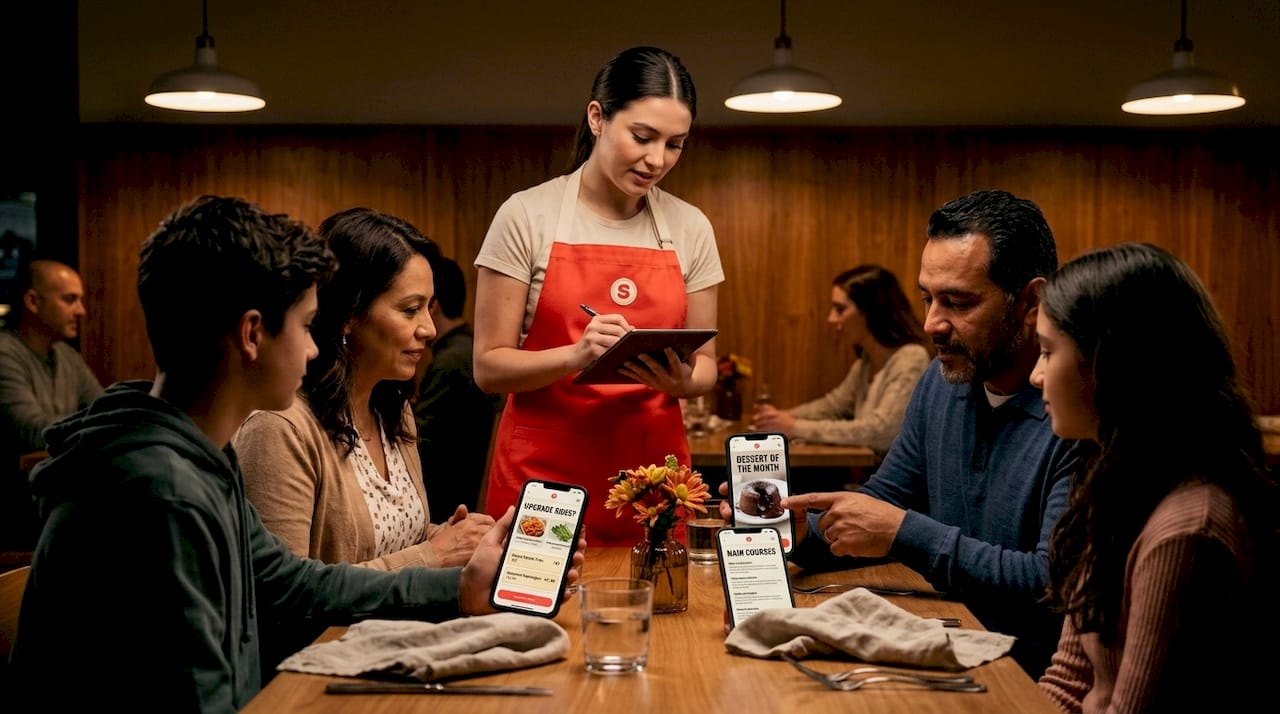
Pro Tip: Focus your highest-margin upsells on the items where the cost of goods barely changes between tiers. A large coffee versus a medium coffee costs almost nothing more to produce but sells for noticeably more. That gap is pure profit.
Menu optimization for upselling starts with identifying those high-margin items and placing them prominently in your digital ordering flow. If your platform allows item spotlighting or “popular choice” badges, those are your upsell anchors.
Digital upselling channels and best practices
Knowing where to upsell is just as important as knowing what to offer. Each channel has its own behavior patterns, conversion rates, and best practices.
Top 5 digital upselling channels for restaurants:
- Online ordering menu: The highest-intent moment. A customer mid-order is already ready to spend. Pop-up or inline upgrade prompts here convert well with minimal friction.
- Email marketing: Ideal for re-engaging past customers with personalized upgrade offers based on order history. Automated flows triggered by past behavior outperform broadcast emails.
- SMS messaging: High open rates (often above 90%) make SMS powerful, but also risky if overused. Targeted, timely messages perform best.
- Loyalty and rewards apps: Customers in your loyalty program are already invested in your brand. Tier upgrades and bonus rewards tied to higher-value orders are natural upsell vehicles.
- Delivery app integrations: Third-party platforms like DoorDash and Uber Eats have built-in upsell mechanics. Optimizing your item descriptions and photos on these platforms boosts upgrade acceptance.
Research-backed best practices to follow:
- Keep upsell pricing 25% above the original item for the best customer acceptance rate. Beyond 25%, resistance rises sharply.
- Mobile conversions run lower (18 to 20%) versus desktop (28 to 30%), so simplify your mobile upsell prompts to one clear choice rather than multiple options.
- Limit SMS upsell messages to 2 to 4 per month. Exceeding this threshold drives opt-outs at a rate that permanently shrinks your audience.
- Personalize every offer to the individual customer’s history. A vegan customer should never see a beef upgrade prompt.
Pro Tip: Run A/B tests on your upsell copy across different channels. The phrase “Make it a meal” converts differently than “Upgrade for $2.” Test one variable at a time over a 30-day period to get clean data.
Your digital channel checklist should include a review of every customer touchpoint where an upgrade prompt could be inserted without disrupting the order flow. Most restaurants are missing at least two or three of these opportunities. Staying current with restaurant digital trends helps you spot new channel opportunities before your competitors do.
Maximizing ROI: Automation and off-premise upselling
Here is where the numbers get interesting. Manual upselling through staff is inconsistent. One server is great at it; another forgets entirely. Digital automation removes that variability and delivers the right offer every single time, without payroll overhead.
| Approach | Consistency | Cost per upsell | ROI potential |
|---|---|---|---|
| Staff upselling (manual) | Variable | High (labor cost) | Low to moderate |
| Digital popup (semi-manual) | Good | Low | Moderate |
| Fully automated flow | Excellent | Minimal | High ($18 to $28 per $1 spent) |
| AI-personalized automation | Best | Minimal | Highest |
Off-premise digital upselling is especially powerful because delivery and takeout sales have seen 300% growth in recent years, and each of those transactions happens entirely through a digital interface. That means every upsell opportunity can be automated, tracked, and optimized without relying on a human touch.
Benefits of automating your upsell strategy include:
- Consistency: Every customer sees the right offer at the right moment, regardless of staffing levels
- Scalability: The same system handles 10 orders or 1,000 orders without additional cost
- Trackability: You know exactly which offers converted, which ones were ignored, and what your revenue lift was
- Speed: Offers appear instantly at the moment of highest purchase intent
- Data accumulation: Each transaction enriches your customer profiles for smarter future offers
“Restaurants using automated digital upselling see returns of $18 to $28 for every $1 invested in the system, a return that compounds as the customer database grows.”
Use your restaurant ROI calculator to model what even a modest upsell conversion rate improvement would mean for your monthly revenue. For a restaurant processing 500 online orders per week, a 15% upsell acceptance rate at an average upgrade value of $3 adds up to roughly $11,700 in additional annual revenue from one simple prompt.
The impact of online menus on off-premise upselling cannot be overstated. A well-structured digital menu with clear item tiers, compelling descriptions, and strategic positioning does the selling for you. Pair that with restaurant remarketing sequences that follow up after an order and you create a repeating revenue cycle that grows with every transaction.
Common pitfalls and optimization tips for digital upselling
Even with the right tools and channels in place, restaurants frequently undermine their own results. Awareness of these mistakes is the first step toward avoiding them.
Common digital upselling mistakes to watch out for:
- Over-messaging via SMS: Sending upsell texts more than 4 times per month consistently drives opt-outs, shrinking the very audience you need to generate revenue
- Non-personalized offers: Sending the same upsell to every customer segment signals to your customers that you do not know them, and it tanks conversion rates
- Price jumps that are too aggressive: Offering a $12 upgrade on a $10 item (a 120% increase) triggers immediate resistance. Stay within the 25% guideline
- Ignoring the mobile conversion gap: If you design your upsell prompts for desktop and never optimize for mobile, you are leaving a significant portion of your audience under-served
- Set-and-forget campaigns: Launching an automated upsell sequence and never reviewing its performance lets declining offers drain customer goodwill without generating revenue
Avoiding over-frequency in SMS is not just about preventing opt-outs. It is about maintaining the trust that makes any future message credible. A customer who feels spammed will tune out even genuinely valuable offers.
Pro Tip: Set a monthly calendar reminder to audit your active upsell campaigns. Pull your opt-out rates, click-through rates, and conversion rates by channel. If any metric moves in the wrong direction for two consecutive months, pause that campaign and test a new approach before restarting.
Menu engineering plays a critical supporting role here. If the item you are upselling to is not positioned clearly on your digital menu, the prompt loses credibility. Customers who cannot quickly verify what they are upgrading to will abandon the offer. Keep your upsell remarketing tips library updated with fresh creative every quarter to prevent offer fatigue.
Why most restaurant upselling advice falls short
Here is the hard truth: most upselling guides assume you are running a national chain with a full marketing team, a proprietary app, and a dedicated data analyst. Independent restaurants and regional operators face a completely different reality, and the standard playbook was not written for them.
Generic advice says “personalize your offers.” But personalization requires data infrastructure, customer profiles, and a platform that connects those dots automatically. Most small restaurant operators do not have that set up, which means they either skip personalization entirely or do it manually, which does not scale.
The other problem is that “automation” gets treated as a one-time setup. You install the tool, configure a few prompts, and assume the work is done. In practice, offers go stale. Customers who accepted an upsell three months ago are not going to keep accepting the same one. The menu changes. Seasonal items come and go. An upsell system that is not actively maintained becomes invisible noise.
What actually works for independent restaurants is a continuous iteration cycle: test a new offer, measure its performance over 30 days, keep what converts, replace what does not. This approach requires less budget than a full technology overhaul and delivers better results because it is grounded in your specific customers’ actual behavior.
“The restaurant operators who win with digital upselling are not the ones with the most sophisticated technology. They are the ones who review their data every month and make one small improvement at a time.”
Practical menu tactics that support this iteration cycle include rotating your upsell anchor items monthly, testing different price point thresholds, and comparing performance across your most active digital channels. Small, consistent improvements compound into substantial revenue gains over a full year.
Supercharge your restaurant’s digital upselling
Ready to stop leaving upsell revenue on the table? Knowing the theory is one thing, but putting it into practice across your online ordering, email, SMS, and loyalty channels is where most restaurant owners get stuck.
Sorbey’s restaurant marketing solutions are built specifically for local restaurants that want to automate and optimize digital upselling without hiring a full marketing team. From setting up personalized upsell prompts on your online menu to building automated email and SMS sequences that convert, the platform handles the complexity so you can focus on running your kitchen. Explore AI-powered marketing tools designed to grow your average check size, increase repeat visits, and deliver measurable ROI from your digital marketing investment. Request a demo and see what a tailored upselling strategy looks like for your specific restaurant.
Frequently asked questions
What is the difference between upselling and cross-selling in a restaurant?
Upselling upgrades within a category (like moving from a small to a large pizza), while cross-selling adds a complementary product (like adding a soda to a pizza order). Upsells typically generate higher margins per transaction.
What is the ideal price increase for a restaurant upsell?
Keep your upsell 25% above the original item price for the best customer acceptance. Going beyond that threshold tends to trigger resistance and reduces conversion rates noticeably.
How often should I send digital upsell offers to restaurant customers?
Limit SMS messages to 2 to 4 per month and always personalize the content. Sending more frequently than that risks driving opt-outs, which permanently reduces your reachable audience.
Is digital upselling better for delivery or dine-in restaurant sales?
Digital upselling performs best for off-premise orders (delivery and takeout), where automation ensures consistency and the ROI from automated systems runs between $18 and $28 for every $1 invested.
Recommended
Vous pourriez aussi aimer
Best Restaurant Loyalty Programs 2026: ROI Guide
Discover the best restaurant loyalty programs 2026 that boost repeat visits. Learn how Sorbey’s platform can transform your guest data strategy!
Why Mobile Marketing Matters for Business Growth
Discover why mobile marketing matters for business growth. Learn how optimizing for mobile drives traffic, conversions, and customer retention.

SF Dim Sum Restaurant Marketing Checklist for 2026
Transform your SF dim sum with our 2026 marketing checklist. Optimize your profile, showcase dishes, and attract customers fast!