
Blog
7 Key Restaurant SEO Trends in 2026 for Urban Managers
Discover 7 essential restaurant SEO trends in 2026. Learn how marketing managers can boost visibility and customer engagement with actionable strategies.

7 Key Restaurant SEO Trends in 2026 for Urban Managers
Urban restaurant managers in 2026 face the challenge of capturing attention in a world dominated by smart search algorithms and shifting customer behaviors. Traditional SEO tricks alone will not put your restaurant in front of hungry diners searching nearby. You need an approach that works with AI, responds to natural language, and prioritizes mobile interactions—because your digital choices now directly impact foot traffic and bookings.
This list will show you exactly how to adapt your restaurant’s online presence to meet new search demands. From creating AI-friendly content and mastering voice search to delivering fast mobile experiences and using structured data, each tactic gives you actionable steps for real-world improvement. Get ready to discover insider strategies that help you stay visible and become the first choice for your local customers.
Table of Contents
- 1. Embracing AI-Driven Local Search Optimization
- 2. Leveraging Voice Search for Restaurant Queries
- 3. Optimizing for Mobile-First User Experience
- 4. Using Structured Data for Enhanced Listings
- 5. Maximizing Customer Reviews for Better Rankings
- 6. Integrating Social Media Signals With SEO
- 7. Adapting to Zero-Click Search Trends
Quick Summary
| Takeaway | Explanation |
|---|---|
| 1. Prioritize AI-Driven Local Search | Optimize your restaurant’s online presence for AI by updating business profiles and engaging with customers effectively. |
| 2. Optimize for Voice Search | Create content that answers common voice search queries to enhance discoverability among potential diners. |
| 3. Ensure Mobile-First Design | Deliver a responsive, fast-loading mobile experience, as most restaurant searches occur on smartphones. |
| 4. Implement Structured Data | Use schema markup to help search engines convey your restaurant’s information more effectively in search results. |
| 5. Maximize Customer Reviews | Actively manage and respond to reviews, as they play a critical role in search engine rankings and credibility. |
1. Embracing AI-Driven Local Search Optimization
The restaurant landscape is undergoing a radical transformation with AI-powered local search becoming the critical differentiator for urban dining establishments. Restaurants that master AI-driven local search optimization will capture significantly more customer attention and foot traffic in 2026.
AI is fundamentally reshaping how restaurants appear in local search results by analyzing complex behavioral signals and personalization cues. These advanced algorithms now prioritize restaurants that provide:
- Consistently updated Google Business Profiles
- Hyper-local, neighborhood-specific content
- Real-time menu and availability information
- High-quality, location-tagged images
- Responsive digital engagement signals
Successful local search optimization requires restaurants to deliver AI-readable content with precision. This means structuring online information to help AI algorithms quickly understand your restaurant’s relevance, location, and unique value proposition.
AI search algorithms now reward restaurants that demonstrate authentic local connections and provide comprehensive, immediately actionable information.
Restaurant managers must think beyond traditional SEO tactics and create rich, contextually relevant digital experiences. This involves developing neighborhood-based location pages, ensuring data consistency across platforms, and crafting content that directly responds to user search intent.
To excel in this new environment, urban restaurant managers should invest in tools and strategies that help them:
- Map local search intent patterns
- Optimize digital presence for AI understanding
- Create hyperlocal content ecosystems
- Track and adapt to algorithmic changes
Pro tip: Regularly audit your online restaurant profiles to ensure 100% accuracy in location data, hours, menu items, and contact information.
2. Leveraging Voice Search for Restaurant Queries
Voice search is revolutionizing how diners discover and engage with restaurants in urban environments. By 2026, more than half of all restaurant searches will be conducted through voice-activated assistants, transforming digital discovery strategies for urban dining establishments.
The voice search landscape demands a completely new approach to restaurant digital marketing. Users now employ conversational queries like “Where can I find gluten-free pasta near me?”, requiring restaurants to adapt their online content accordingly.
Key strategies for voice search optimization include:
- Creating natural language content
- Developing comprehensive FAQ sections
- Implementing local-specific schema markup
- Optimizing for mobile search experiences
- Securing featured snippet positions
Voice search optimization techniques require restaurants to think beyond traditional keyword strategies. The goal is crafting content that directly answers potential customer questions with precision and local relevance.
Voice assistants prioritize restaurants that provide clear, immediate answers to user queries.
Restaurants must develop multilingual SEO strategies that capture conversational search intent. This means structuring online content to match how real people ask questions about dining options, meal preferences, and local recommendations.
To succeed in the voice search era, restaurant managers should:
- Analyze conversational search patterns
- Create question-based content
- Update Google Business Profiles regularly
- Implement structured data markup
Pro tip: Conduct voice searches for your restaurant to understand exactly how your current online presence appears and sounds to potential customers.
3. Optimizing for Mobile-First User Experience
Mobile-first design is no longer optional for restaurants in 2026 - it is the absolute foundation of digital success. With the majority of restaurant searches and interactions happening on smartphones, your digital presence must deliver an exceptional mobile experience.
Mobile optimization has transformed from a nice-to-have feature to a critical competitive advantage. Google now exclusively uses mobile versions of websites for indexing and ranking, making responsive design non-negotiable.
Key mobile SEO priorities for restaurants include:
- Sub-3-second page load times
- Fully responsive web design
- Easy navigation with thumb-friendly menus
- Clear call-to-action buttons
- Optimized images and media
- Local schema markup
- Mobile ordering capabilities
Mobile-first indexing strategies require restaurants to completely reimagine their digital approach. Your mobile site is now your primary storefront in the digital world.
Mobile visitors make split-second decisions. Your website must provide immediate value and crystal-clear navigation.
Restaurant managers should focus on creating mobile experiences that provide instant gratification. This means enabling quick reservations, showcasing menu highlights, and making contact information prominently visible.
To excel in mobile SEO, urban restaurant managers must:
- Conduct mobile usability audits
- Optimize site speed relentlessly
- Implement touch-friendly design
- Streamline booking and ordering processes
- Test across multiple device types
Pro tip: Use real smartphones to personally test your restaurant’s mobile website, experiencing exactly what your potential customers encounter.
4. Using Structured Data for Enhanced Listings
Structured data has become the secret weapon for restaurants seeking maximum visibility in AI-powered search results. By implementing strategic schema markup, urban restaurant managers can dramatically improve their digital presence and searchability.
Structured data transforms how search engines understand and present restaurant information. It helps language models interpret content with precision, enabling rich search results that capture potential diners’ attention.
Key benefits of structured data include:
- Enhanced search result appearances
- Improved AI content interpretation
- Higher likelihood of featured snippets
- More accurate local search visibility
- Increased click-through rates
- Better mobile search presentation
Structured data optimization strategies require restaurants to think beyond traditional keyword approaches. The goal is creating machine-readable content that communicates your restaurant’s unique value proposition.
Rich, well-structured data turns ordinary search listings into compelling digital storefronts.
Restaurants should focus on implementing schema.org vocabulary using JSON-LD format. This approach allows AI systems to understand context beyond simple keywords, presenting your restaurant’s information more comprehensively.
To maximize structured data effectiveness, restaurant managers should:
- Implement comprehensive schema markup
- Use JSON-LD formatting
- Include detailed business information
- Update content regularly
- Test markup using Google’s structured data testing tools
Pro tip: Treat your structured data like a precise digital business card that speaks directly to search algorithms.
5. Maximizing Customer Reviews for Better Rankings
Customer reviews have transformed from simple feedback into a powerful SEO strategy that can make or break a restaurant’s digital reputation. In 2026, reviews are no longer just opinions but critical signals that search engines and AI use to assess business credibility.
Review optimization drives search visibility by providing behavioral evidence of customer satisfaction. Search algorithms now interpret review quality, frequency, and restaurant responsiveness as key ranking factors.
Key strategies for review management include:
- Encouraging authentic customer feedback
- Responding professionally to all reviews
- Creating seamless review submission processes
- Maintaining review diversity and balance
- Highlighting positive customer experiences
- Managing negative feedback constructively
Customer review impact strategies reveal that detailed, balanced reviews with owner engagement significantly improve local search rankings.
Reviews are the digital word-of-mouth that transform casual searches into dining decisions.
Restaurants must view reviews as an ongoing conversation with their community. This means actively soliciting feedback, responding thoughtfully to both positive and negative comments, and using insights to improve service.
To excel in review-driven SEO, restaurant managers should:
- Implement review generation systems
- Train staff on customer experience
- Create multiple review platform profiles
- Develop a systematic response protocol
- Use review insights for continuous improvement
Pro tip: Treat every review as an opportunity to showcase your restaurant’s commitment to customer satisfaction and continuous improvement.
6. Integrating Social Media Signals With SEO
In 2026, social media has become far more than a marketing channel - it is now a critical component of search engine optimization for restaurants. Social platforms function like search engines, with posts now directly ranking in Google and AI-driven search results.
The synergy between social media and SEO has transformed digital marketing strategies for urban restaurant managers. Social signals now provide real-time feedback that enriches keyword research and content planning, creating a more dynamic approach to online visibility.
Key strategies for social media SEO integration include:
- Coordinating content across platforms
- Creating shareable, engagement-driven posts
- Utilizing platform-specific SEO techniques
- Tracking social media performance metrics
- Generating high-quality backlinks
- Amplifying brand recognition
- Building customer trust through consistent messaging
Social media SEO collaboration techniques demonstrate how interconnected digital strategies can dramatically expand a restaurant’s online reach.
Social media interactions are now powerful signals that search engines use to determine content relevance and business credibility.
Restaurant managers must develop integrated workflows that align social media content with SEO objectives. This means creating posts that are not just engaging but also strategically designed to improve search visibility.
To maximize social media SEO impact, restaurants should:
- Develop a cross-platform content strategy
- Optimize social media profiles
- Use relevant hashtags strategically
- Encourage user-generated content
- Monitor and respond to social interactions
Pro tip: Treat each social media post as a potential entry point for customers, crafting content that is both search-friendly and genuinely engaging.
7. Adapting to Zero-Click Search Trends
The digital search landscape has fundamentally transformed with zero-click searches becoming the new norm for restaurant discovery. In 2026, most search queries now end without users clicking through to a traditional website, instead consuming information directly on search result pages.
Zero-click search represents a critical shift in how potential diners interact with restaurant information. AI Overviews and featured snippets now deliver immediate answers, requiring restaurants to completely reimagine their visibility strategies.
Key priorities for zero-click search optimization include:
- Creating highly structured content
- Implementing comprehensive schema markup
- Developing entity-based SEO approaches
- Optimizing for featured snippets
- Designing content for AI comprehension
- Focusing on brand recognition
- Prioritizing information clarity
Zero-click search adaptation strategies demonstrate the importance of visibility beyond traditional website traffic.
Success in zero-click environments means becoming the most authoritative information source, not just the most clickable link.
Restaurants must now think about SEO as a brand exposure strategy rather than a click generation tactic. This means crafting content that is so precise and valuable that search engines want to feature it prominently.
To excel in zero-click search environments, restaurant managers should:
- Develop extremely concise information
- Use clear, structured data formats
- Create comprehensive Google Business Profiles
- Optimize for voice and AI search
- Track brand mentions and impressions
Pro tip: View your restaurant’s search results from a user’s perspective and ensure the information displayed is compelling enough to drive immediate interest.
Below is a table that comprehensively summarizes strategies and principles for enhancing restaurant digital visibility and engagement discussed in the article.
| Topic | Strategies | Outcomes |
|---|---|---|
| Embracing AI-Driven Local Search Optimization | Update Google Business Profiles, create local and real-time content, and ensure responsive digital engagement | Improved local search visibility and relevance |
| Leveraging Voice Search | Optimize for natural language, provide FAQ sections, and use local schema markup | Enhanced discoverability for voice-based interactions |
| Optimizing for Mobile-First User Experience | Implement responsive design, ensure fast load times, and prioritize ease of navigation | Superior mobile usability, aligning with current user trends |
| Using Structured Data for Enhanced Listings | Employ JSON-LD format for schema markup and maintain accurate content | Higher search result prominence with detailed, structured listings |
| Maximizing Customer Reviews | Encourage authentic reviews, respond to feedback, and highlight positive experiences | Elevated credibility through evidence of customer satisfaction |
| Integrating Social Media Signals With SEO | Align social media activities with SEO goals and promote engagement-driven content | Strengthened digital presence via amplified social and search interactions |
| Adapting to Zero-Click Search Trends | Optimize for featured snippets and prioritize structured content | Increased visibility and relevance in non-click search results |
Stay Ahead With All-In-One Marketing Tailored for Urban Restaurants
The challenge urban restaurant managers face in 2026 revolves around mastering AI-driven local search optimization, voice search, mobile-first user experience, and managing digital reputations through structured data and customer reviews. These complex SEO trends call for a solution that simplifies execution while maximizing impact. If you want to transform your restaurant’s online presence with precision and stay competitive, embracing an integrated marketing platform is essential.
At Sorbey, we understand how critical it is to keep your digital profiles accurate, optimize for voice and mobile search, and leverage customer reviews effectively. Our all-in-one marketing platform is designed specifically for local businesses like restaurants to help you create AI-readable content, maintain consistent business information, and amplify social media signals that enhance your SEO strategies.
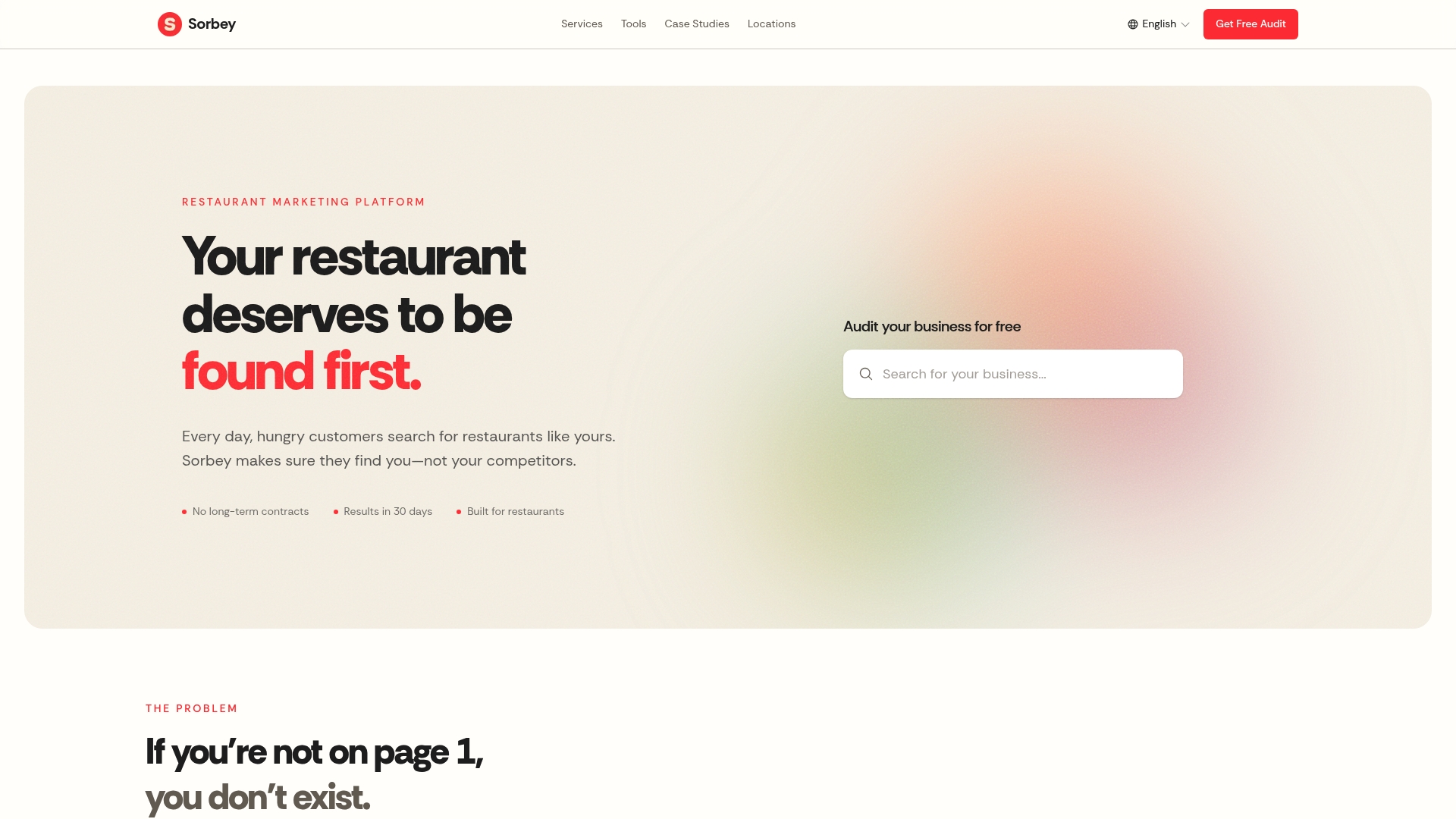
Boost your restaurant’s visibility today by partnering with experts who simplify these new SEO demands. Explore how our solutions empower you to build a hyperlocal content ecosystem and seamlessly manage your online reputation. Visit Sorbey now and start turning complex restaurant SEO trends into clear opportunities for growth.
Frequently Asked Questions
How can I optimize my restaurant for AI-driven local search in 2026?
To optimize your restaurant for AI-driven local search, ensure your Google Business Profile is consistently updated with accurate information. Regularly audit your online profiles for accuracy and create hyper-local content that resonates with your community.
What are the best practices for voice search optimization for my restaurant?
To enhance voice search optimization, focus on crafting content using natural language that answers potential customer questions. Create a comprehensive FAQ section and ensure your Google Business Profile is fully updated with relevant information to improve visibility.
What specific mobile-first strategies should I implement for my restaurant?
Implementing a mobile-first strategy requires ensuring your website loads within three seconds and has a responsive design. Focus on easy navigation with thumb-friendly menus and clear call-to-action buttons to enhance the user experience.
How do I effectively use structured data to improve my restaurant’s search visibility?
Utilize structured data by implementing comprehensive schema markup in JSON-LD format for your restaurant’s information. This method enhances how search engines interpret your content, leading to improved visibility and potentially higher click-through rates.
What steps can I take to manage customer reviews for better search rankings?
To manage customer reviews effectively, encourage authentic feedback and respond professionally to all reviews. Create a streamlined process for submitting reviews and use insights from customer interactions to enhance your service continuously.
How can I adapt my restaurant’s strategy to address zero-click search trends?
To adapt to zero-click search trends, focus on creating clear, structured content that answers common inquiries directly. Implement comprehensive Google Business Profiles to deliver valuable information that captures interest without requiring a click.
Recommended
- Blog - Sorbey | Restaurant Marketing Insights | Sorbey
- Step by Step Local SEO for Restaurants Made Easy | Sorbey Blog | Sorbey
- Menu Optimization: Boosting Restaurant Profits and Engagement | Sorbey Blog | Sorbey
- Menu Optimization: Boosting Restaurant Profits and Engagement | Sorbey Blog | Sorbey
- 7 Essential Restaurant Cleanliness Tips for 2025 - Probe IT
Potrebbe interessarti anche

Best Restaurant Loyalty Programs 2026: ROI Guide
Discover the best restaurant loyalty programs 2026 that boost repeat visits. Learn how Sorbey’s platform can transform your guest data strategy!

Why Mobile Marketing Matters for Business Growth
Discover why mobile marketing matters for business growth. Learn how optimizing for mobile drives traffic, conversions, and customer retention.

SF Dim Sum Restaurant Marketing Checklist for 2026
Transform your SF dim sum with our 2026 marketing checklist. Optimize your profile, showcase dishes, and attract customers fast!