
Blog
Why Customer Engagement Is Important for Restaurants
Discover why customer engagement is important for restaurants. Learn how meaningful connections can drive loyalty and boost retention.
Why Customer Engagement Is Important for Restaurants
TL;DR:
- Customer engagement is crucial because even a single negative interaction can lead to long-term customer loss. Restaurants that prioritize responsive, personalized communication see increased loyalty, higher spending, and better brand reputation. Ignoring follow-through and reliance solely on food quality often result in missed opportunities for sustained growth.
Most restaurant owners assume price and food quality are what keep diners coming back. The research tells a different story. Customer engagement is important because over half of customers leave after a single bad experience, and no amount of great food will retain someone who felt ignored, forgotten, or undervalued. In a market where diners have endless options and zero patience for indifference, how you connect with guests between visits matters just as much as what’s on the menu. This guide breaks down exactly what’s at stake and what you can do about it.
Table of Contents
- Key takeaways
- Why customer engagement is important in the dining industry
- The real cost of ignoring engagement
- Loyalty programs as a growth lever, not just a perk
- Practical ways to boost customer engagement
- Measuring what actually matters
- My take on what most restaurants get wrong
- How Sorbey helps restaurants build lasting guest loyalty
- FAQ
Key takeaways
| Point | Details |
|---|---|
| Engagement drives retention | Even one poor interaction can cost you a customer permanently, making proactive engagement non-negotiable. |
| Loyalty programs deliver real ROI | Restaurants using structured loyalty programs report an average 5.3x return on their investment. |
| Personalization beats discounts | Guests respond more to relevant, personalized offers than to blanket price cuts. |
| Measurement closes the loop | Tracking repeat visit frequency and program participation tells you what engagement efforts are actually working. |
| AI reduces churn risk | AI tools can identify at-risk guests before they disappear and trigger the right outreach at the right time. |
Why customer engagement is important in the dining industry
Customer engagement, in the restaurant context, is every meaningful interaction a guest has with your brand outside of simply eating a meal. It includes how you respond to a review on Google, whether you remember a guest’s dietary preference, the birthday message you send through your loyalty app, and how quickly you handle a complaint on social media.
Most operators think of service as something that happens in the dining room. Engaged customers experience your brand long before they walk in and long after they leave. That extended relationship is where loyalty is built or broken.
The benefits of engaging customers go well beyond warm feelings. There are direct business outcomes at stake:
- Repeat visits: Guests who feel recognized return more often. Recognition signals that their business matters.
- Higher average spend: Engaged diners are more willing to try new menu items, add beverages, and order dessert because they trust your recommendations.
- Word-of-mouth referrals: A customer who feels connected to your brand becomes a recruiter. They post photos, leave reviews, and bring friends.
- Customer lifetime value: The more visits a guest makes over time, the more revenue they generate. You can estimate that number using a lifetime value calculator to understand just how much a retained guest is worth in dollars.
Engagement also creates an emotional connection that pricing alone cannot replicate. A competitor can always offer a lower price. They cannot easily replicate the feeling a guest gets when your team greets them by name.
The real cost of ignoring engagement
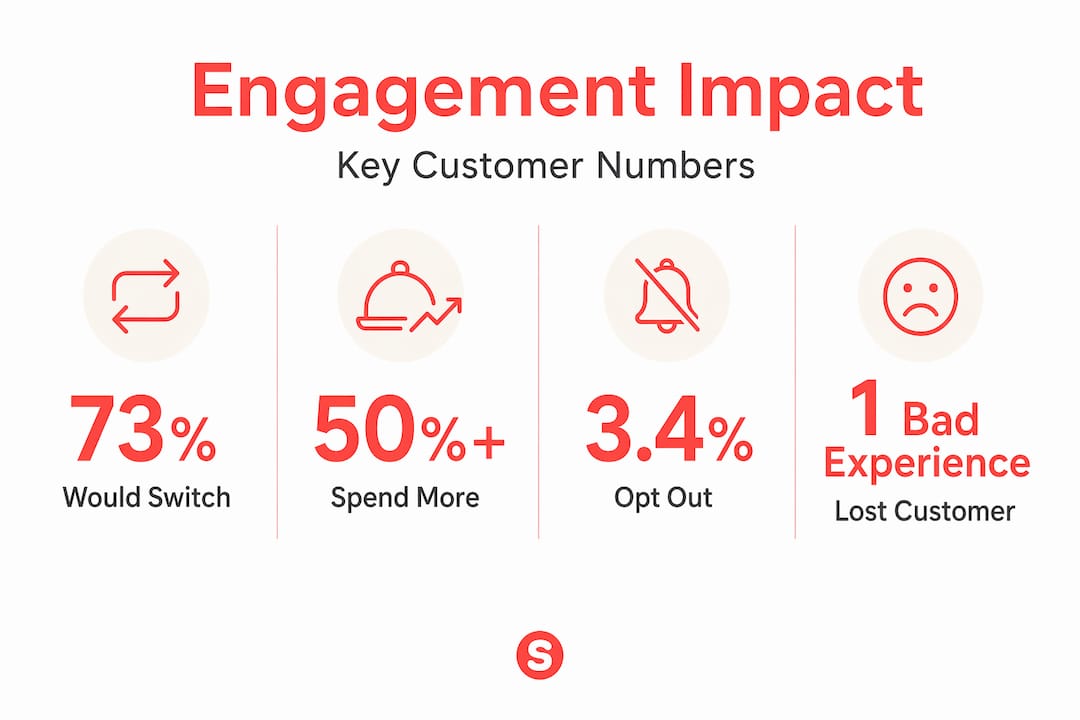
Here is a number that should get your attention. 73% of customers would switch to a competitor after multiple bad experiences, and more than half leave after just one. In a restaurant with a high volume of covers, that is not a small leak in the bucket. That is a flood.
The frustrating part is that most of the experiences driving customers away are not catastrophic. They are ordinary failures in follow-up. A guest leaves a two-star review and no one responds. Someone emails about a catering inquiry and hears nothing for three days. A loyal regular visits for the twentieth time and is treated like a first-timer. These are the moments that quietly kill retention.
The impact of customer engagement failures is also cumulative. One ignored review does not just lose the reviewer. It signals to every future reader that your restaurant does not take feedback seriously.
Pro Tip: Set up Google alerts and activate notifications on your review platforms so you respond to every review within 24 hours. Guests who see prompt, thoughtful responses are more likely to give you a second chance and more likely to choose you in the first place.
Your local competitors are operating in the same neighborhood, often with similar menus and similar price points. Engagement is less about the volume of communication and more about responsiveness across the customer journey. The restaurant that answers the DM, follows up after a complaint, and surprises a regular with a birthday reward is the restaurant that wins the neighborhood, not necessarily the one with the best pasta.
Loyalty programs as a growth lever, not just a perk
For a long time, loyalty programs were seen as a nice extra. A punch card here, a points system there. The 2026 data makes the case that they are a core business strategy. 83% of loyalty program owners report satisfaction with their program, and 92.7% report positive ROI with an average return of 5.3x.
Loyalty programs rank as a strategic growth lever just behind price, value, and food quality when it comes to driving brand loyalty. That means your program is competing on the same level as your prices in the mind of the consumer.
Here is what actually makes a loyalty program drive engagement rather than just collect sign-ups:
| Feature | Why it drives engagement |
|---|---|
| Easy reward redemption | Friction kills participation. When guests can redeem rewards in seconds, they use them and return sooner. |
| Omnichannel access | Guests want to earn and redeem whether they order in-person, online, or through an app. |
| Personalized offers | Sending a “free dessert on your birthday” to someone who never orders dessert is wasted noise. Relevant offers convert. |
| Experiential rewards | Early access to new menu items or chef events creates emotional connection that a free appetizer cannot match. |
More than half of consumers increase their spending because of loyalty programs. The key insight here is that the value is perceived, not just transactional. Guests are not simply redeeming points. They are enjoying the feeling of being part of something.
Pro Tip: Audit your current loyalty program for redemption friction. If guests need more than three steps to claim a reward, you are losing participation at each step. Simplify the flow and watch active membership climb.
Practical ways to boost customer engagement
Knowing why customer engagement is important is the starting point. Acting on it is where restaurants actually separate themselves from the competition. Here are the highest-impact tactics in order of priority.
-
Collect and respond to feedback systematically. After every visit, send a short follow-up message. Use the responses to identify patterns, not just individual complaints. A guest who says “the wait time felt long” is giving you operational data. One who says “felt rushed” is telling you about your floor management.
-
Use a CRM to personalize communication. Generic email blasts perform poorly. A restaurant CRM system lets you segment your guest list by visit frequency, order history, and preferences. You can send a re-engagement message to guests who haven’t visited in 60 days with an offer tied to something they actually ordered before.
-
Integrate AI tools to identify at-risk guests. AI tools can reduce churn by 25% by predicting who is about to disengage and triggering targeted outreach automatically. These tools assign health scores to customers based on behavior patterns, so your team focuses attention where it counts.
-
Add self-service options. 70% of customers expect self-service portals, such as online reservations, order tracking, and FAQ chatbots. Giving guests these options reduces friction and frees your staff to deliver better in-person service.
-
Build community through experiential moments. Host a cooking class. Invite your top loyalty members to a preview night for a new menu. These experiences deepen emotional investment in ways a discount never will. Food businesses that use events to drive connection, like snack-focused engagement formats used at corporate gatherings, show that shared food experiences are a proven driver of brand attachment.
The methods above work best when they are coordinated. Sending an AI-triggered re-engagement text to a guest who just left a review you responded to personally is a different experience than running any one of those tactics in isolation.
Measuring what actually matters
You cannot improve engagement without knowing what is working. Most restaurants track sales and covers. Few track the signals that predict future sales and covers.
The metrics that matter most for engagement are:
- Repeat visit frequency: How often does the average guest return within 90 days? If this number drops, engagement is breaking down somewhere in the experience.
- Loyalty program participation rate: What percentage of your guests are active in your program, meaning they have engaged at least once in the last 60 days?
- Review response rate and sentiment trend: Are your ratings improving over time? Is the language in reviews shifting toward words like “welcoming” and “remembered us”?
- Churn rate by segment: Which guest segments are leaving and not coming back? First-time visitors who never return represent a specific engagement failure, often in the post-visit experience.
Most loyalty program disengagement is reversible with the right outreach. Only 3.4% of disengaged members actually opt out permanently. That means the vast majority of guests who have gone quiet are still reachable with the right message at the right time. The data you collect from your loyalty program and CRM is what makes that targeting possible.
Avoid the common mistake of measuring engagement by email open rates alone. Opens are a vanity metric. Repeat visits and increased average spend are the proof that engagement is translating into revenue.
My take on what most restaurants get wrong
I’ve worked with enough restaurant operators to spot a pattern. The ones who struggle with retention are almost never failing on food quality. They’re failing on follow-through. A guest has a great first visit, leaves feeling genuinely happy, and then hears nothing. No message, no invitation to return, no acknowledgment that they were ever there. Weeks later, a competitor sends them a “we’d love to see you” offer and that’s where they go for their next birthday dinner.
The conventional wisdom says engagement is about marketing frequency. More emails, more posts, more push notifications. In my experience, that’s backwards. What I’ve found actually works is treating each guest as an individual with a memory. When your messaging references something real about their behavior, they notice. When it’s generic, they delete it without reading.
I’ve also seen restaurants invest heavily in acquiring new guests while completely ignoring the ones they already have. The math on this never works out. Keeping a guest costs a fraction of what it takes to find a new one. The restaurants I’ve watched grow consistently are the ones who made engagement a system, not an afterthought. They built processes for follow-up, used data to personalize outreach, and kept the experience consistent whether a guest was dining in, ordering online, or responding to a text. That consistency is what earns long-term loyalty. Not just good food.
— Barthelemy
How Sorbey helps restaurants build lasting guest loyalty
If you’ve read this far, you already understand why engage with customers has to be a deliberate strategy, not a happy accident. Sorbey’s restaurant marketing services are built specifically for local dining businesses that want to turn one-time visitors into regulars.
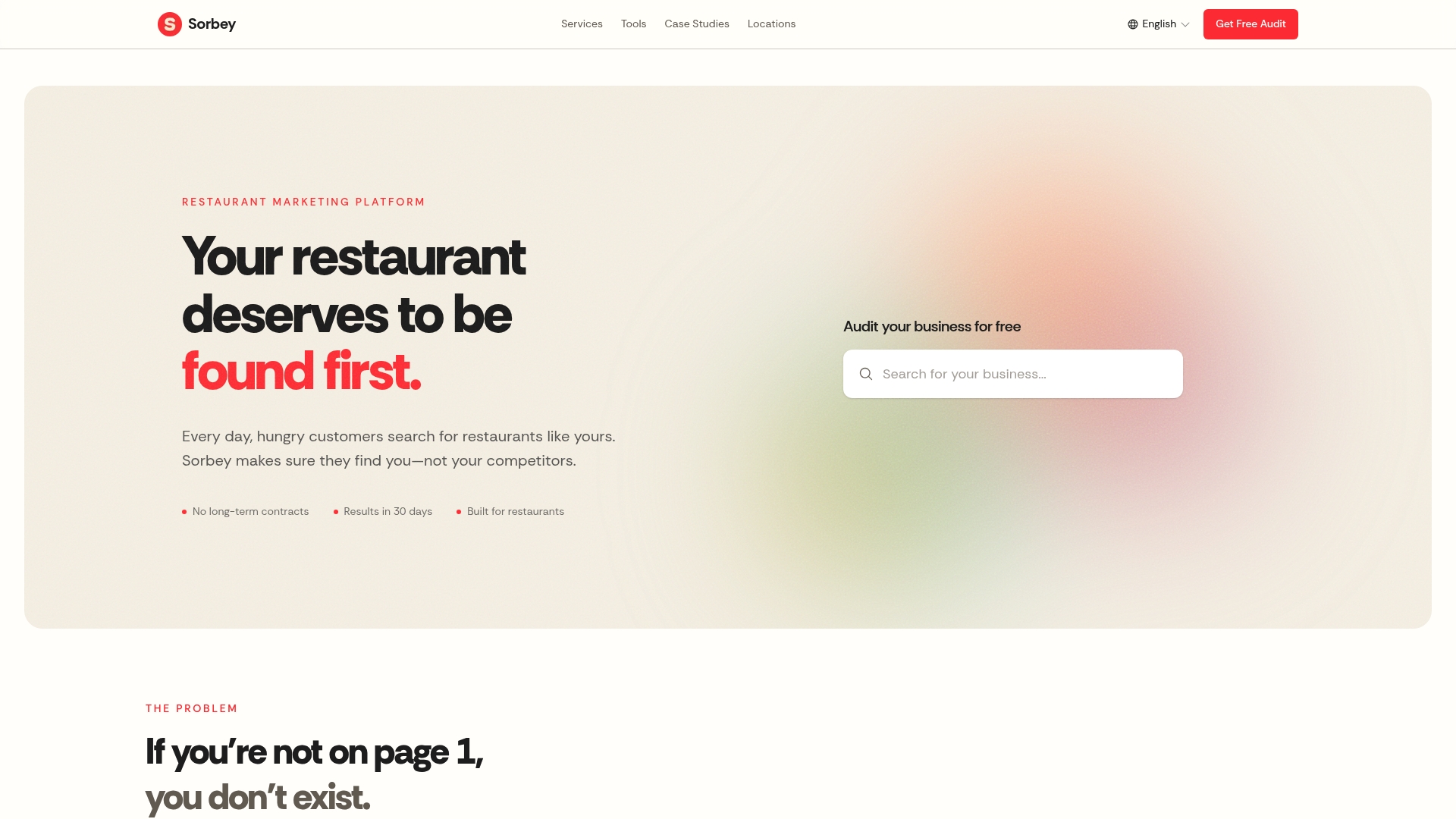
From loyalty program setup to automated follow-up campaigns and CRM integration, Sorbey handles the systems so you can focus on the food. You can also use the free SMS campaign ROI calculator to see exactly what a single well-targeted campaign could return for your restaurant. The tools are free, the impact is real, and getting started takes less time than your next staff meeting.
FAQ
Why is customer engagement important for restaurants?
Customer engagement directly affects retention, revenue, and loyalty. Restaurants that engage guests consistently see higher repeat visit rates, stronger word-of-mouth, and greater customer lifetime value compared to those that rely on food quality alone.
What are the biggest benefits of engaging customers?
The main benefits include increased repeat visits, higher average spend per guest, lower churn rates, and stronger brand loyalty. Engaged customers also refer others more often, reducing the cost of acquiring new diners.
How do loyalty programs improve customer engagement?
Personalized loyalty programs with easy redemption and omnichannel access consistently drive higher participation and repeat visits. Research shows programs average a 5.3x ROI when structured to deliver genuine perceived value.
How can restaurants measure the impact of customer engagement?
Track repeat visit frequency, loyalty program participation rates, review sentiment trends, and churn rate by guest segment. These indicators reveal whether your engagement efforts are translating into actual revenue growth.
What is a practical first step to boost customer engagement?
Start by auditing your post-visit communication. If you’re not sending a follow-up message within 48 hours of a guest’s visit, you’re missing the highest-impact window for re-engagement and review collection. Explore proven restaurant engagement tips to build a full follow-up system.
Recommended
Potrebbe interessarti anche

Best Restaurant Loyalty Programs 2026: ROI Guide
Discover the best restaurant loyalty programs 2026 that boost repeat visits. Learn how Sorbey’s platform can transform your guest data strategy!

Why Mobile Marketing Matters for Business Growth
Discover why mobile marketing matters for business growth. Learn how optimizing for mobile drives traffic, conversions, and customer retention.

SF Dim Sum Restaurant Marketing Checklist for 2026
Transform your SF dim sum with our 2026 marketing checklist. Optimize your profile, showcase dishes, and attract customers fast!