
Blog
Why Digital Ads Work: A Guide for Marketers
Discover why digital ads work and how they target your audience effectively. Learn how tailored advertising saves consumers time and money.

Why Digital Ads Work: A Guide for Marketers
TL;DR:
- Digital advertising leverages data to target audiences precisely, outperforming traditional media in efficiency and results. It combines behavioral, demographic, and location targeting with real-time measurement and personalization, increasing conversions and reducing waste. Small businesses benefit most from local, tailored ad campaigns that deliver measurable ROI and better customer engagement.
Digital advertising works because it delivers the right message to the right person at the right moment, using data that traditional media never had. Unlike a billboard or a TV spot, a digital ad knows who you are, what you searched for last Tuesday, and whether you live within three miles of a restaurant. That precision is the core reason online ads outperform older channels. The Network Advertising Initiative reports that tailored digital advertising saves consumers an average of $176 annually by reducing the time and effort spent searching for relevant products. That figure reflects a system working exactly as designed.
Why digital ads work: the role of precise audience targeting
Precise targeting is the single biggest reason digital advertising succeeds where traditional media falls short. A TV commercial reaches everyone watching a channel, including millions who will never buy the product. A digital ad reaches only the people most likely to act.
Modern paid advertising platforms give you targeting options that would have seemed impossible two decades ago:
- Behavioral targeting: Reaches people based on past browsing, purchase history, and app activity
- Interest targeting: Aligns ads with declared or inferred interests, such as cooking, fitness, or local dining
- Demographic targeting: Filters by age, income, household size, and education level
- Location targeting: Serves ads to people within a defined radius of a physical business
Each layer you add reduces media waste. A local restaurant running ads only to adults aged 25–55 within five miles, who have shown interest in dining out, spends its budget on the most likely customers. Paid advertising platforms enable this through real-time bidding and first-party pixel data, which tracks user actions on your website and feeds that information back into the algorithm.
Pro Tip: Install your ad platform’s pixel on your website before you launch any campaign. Without it, you are bidding blind. With it, the algorithm learns from every visit, add-to-cart, and purchase.
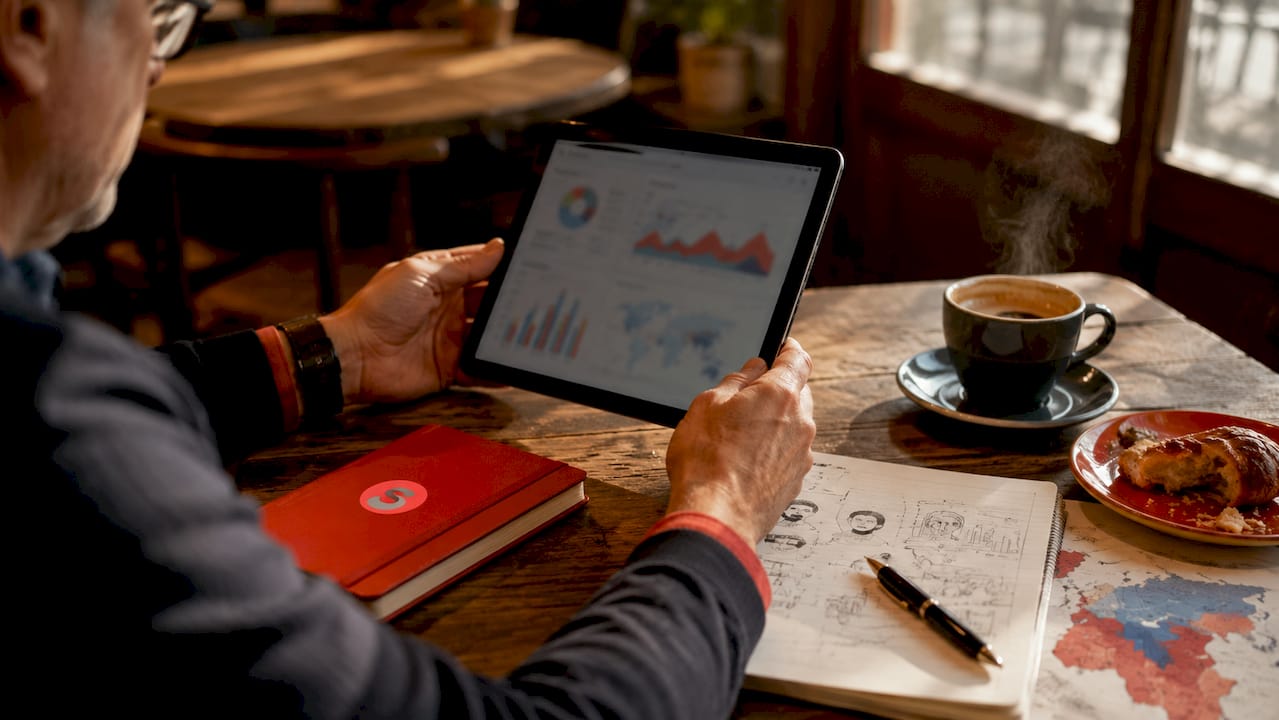
The result is a self-improving system. The more data the algorithm collects, the better it gets at finding people who convert. That feedback loop is why campaigns often improve in performance over the first 30–60 days without any manual changes.
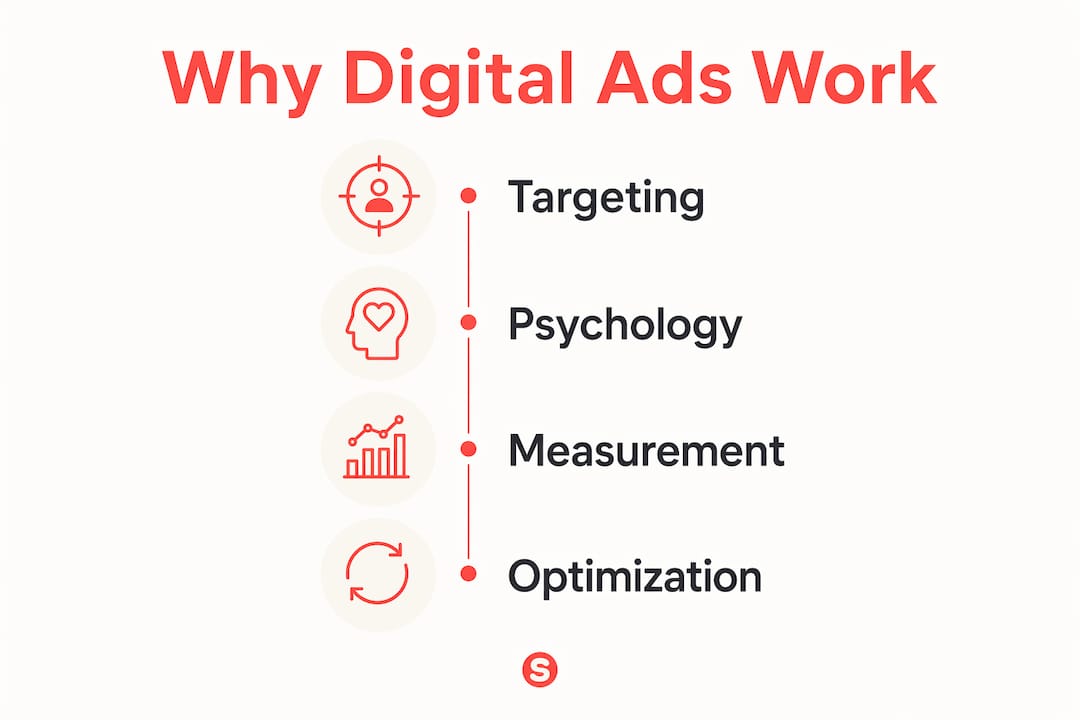
How psychology explains why online ads are effective
The human brain receives thousands of messages every day and ignores most of them. Digital ads work by exploiting the brain’s own filtering system rather than fighting it.
Psychologists call this the cocktail party effect. At a loud party, you tune out dozens of conversations until someone says your name. Your brain filters for personal relevance automatically, without conscious effort. Digital ads trigger the same mechanism by showing content that matches your recent behavior, stated interests, or location.
The sequence of attention works in two stages:
- Bottom-up salience: A visually striking image, bold color, or motion captures involuntary attention before the viewer consciously decides to look
- Top-down engagement: Once attention is captured, the viewer’s goals and interests determine whether they keep reading or scroll past
- Relevance filtering: Personalized copy and offers pass through the brain’s relevance filter because they feel directly applicable to the viewer’s situation
- Interaction and response: A clear call to action converts that engaged attention into a measurable click, form fill, or purchase
A systematic review of 118 studies on human-computer interaction confirmed this dual-pathway model. Initial visual salience draws the eye, and then goal-directed processing determines whether the ad converts. This is why creative quality and targeting must work together.
“Personalization works because it engages the brain’s natural selective attention, cutting through the noise by delivering content that feels personally relevant.”
Generic ads fail at the second stage. They may capture attention with a flashy image, but if the message does not match the viewer’s current needs, the brain discards it instantly. Personalization solves this by making the message feel like it was written for one person, even when it reaches millions.
How to measure and optimize digital ad performance
Measurement is what separates digital advertising from every other marketing channel. You can know, with precision, which ad drove a sale, which headline outperformed another, and which audience segment converted at the lowest cost.
The core practices that make campaigns predictable include:
- A/B testing: Run two versions of an ad simultaneously, changing one variable at a time (headline, image, or call to action) to identify what drives better results
- Conversion tracking: Use platform pixels and UTM parameters to trace every sale or lead back to the specific ad that generated it
- Algorithm training: Feed conversion signals back into the platform so the bidding algorithm prioritizes users who look like your best customers
- Cost-per-result monitoring: Track cost per click, cost per lead, and cost per acquisition weekly to catch underperforming campaigns before they drain budget
Systematic testing and measurement transform campaigns from inconsistent guesses into predictable revenue drivers. The principle is simple: you cannot improve what you do not measure.
Pro Tip: When running A/B tests, change only one variable per test. Testing a new headline and a new image at the same time makes it impossible to know which change caused the result.
The average Facebook CPM in 2026 sits around $13.75, meaning you pay roughly $13.75 for every 1,000 impressions. That benchmark matters because it gives you a baseline for evaluating whether your campaign is efficient or overpriced for your industry. A restaurant targeting a tight local radius may pay less. A national brand competing in a crowded category may pay more. Knowing the benchmark lets you ask the right questions.
For local businesses, the mobile marketing strategies that drive the best results in 2026 combine location-based targeting with conversion tracking tied directly to foot traffic or online orders.
How does digital advertising compare to traditional media?
Digital advertising outperforms traditional media on every dimension that matters for small businesses: targeting, measurement, and cost control. Traditional channels like print, radio, and broadcast TV deliver broad reach but no precision.
| Feature | Digital advertising | Traditional media |
|---|---|---|
| Audience targeting | Behavioral, demographic, location-based | Broad demographic estimates |
| Performance measurement | Real-time, conversion-level data | Estimated reach and recall surveys |
| Budget control | Set daily or lifetime caps, pause anytime | Fixed contracts, no mid-flight changes |
| Personalization | Dynamic creative adapts to user behavior | Static message for all viewers |
| Speed to market | Live within hours | Weeks of production and placement |
Digital advertising outperforms traditional media due to real-time interaction, precision targeting, and AI-driven personalization that adapts to consumer behavior as it happens. A print ad is frozen the moment it goes to press. A digital ad can change its headline, image, and audience in real time based on what the data shows.
The consumer experience also improves. Tailored advertising funds free internet content by increasing publisher revenue by as much as 52%, which means relevant ads are part of what keeps the open web accessible. Consumers see fewer irrelevant ads and more offers that match their actual interests. That is a better experience for the buyer and a more efficient spend for the advertiser.
For restaurants and local businesses, the gap is even wider. A radio ad for a restaurant reaches commuters across an entire metro area. A digital ad for the same restaurant reaches only people within walking distance who searched for “dinner near me” in the last 24 hours. The importance of digital ads for local businesses comes down to that single fact: you stop paying to reach people who will never walk through your door.
Key Takeaways
Digital ads work because they combine precise targeting, psychological relevance, and real-time measurement into a system that traditional media cannot replicate.
| Point | Details |
|---|---|
| Targeting reduces waste | Behavioral, demographic, and location filters direct budget toward the most likely buyers. |
| Psychology drives engagement | The cocktail party effect means personalized ads pass the brain’s relevance filter where generic ads fail. |
| Measurement enables improvement | A/B testing and conversion tracking turn campaigns into predictable, improvable revenue systems. |
| Digital beats traditional on control | Real-time budget caps, live creative changes, and conversion-level data give advertisers control that print and broadcast cannot match. |
| Local businesses gain the most | Tight geographic and behavioral targeting means local ad spend reaches only the people most likely to convert. |
What I have learned from watching digital ads succeed and fail
The biggest mistake I see marketing professionals and small business owners make is treating targeting and creative as separate problems. They spend weeks perfecting an ad’s design and then point it at the wrong audience. Or they nail the targeting and run a generic image that the algorithm cannot do anything with. The two have to work together.
The second mistake is measuring the wrong thing. Click-through rate feels satisfying to watch, but it does not pay rent. I have seen campaigns with a 5% CTR that generated zero sales, and campaigns with a 0.4% CTR that drove consistent revenue. The metric that matters is cost per acquisition, and you only know that number if your conversion tracking is set up correctly before the campaign goes live.
The trend worth watching in 2026 is AI-driven personalization at the creative level. Platforms now generate dynamic ad variations based on user signals, which means the gap between a well-structured campaign and a poorly structured one is widening. The algorithm rewards advertisers who feed it clean data and clear conversion goals.
The uncomfortable truth about digital advertising is that creativity still matters enormously. Data tells you what is working. It does not tell you why, and it cannot generate the original idea that stops someone mid-scroll. The best campaigns I have seen blend creative art and scientific measurement in equal parts. Neglect either one and performance suffers.
— Barthelemy
Sorbey’s free ROI calculator puts your ad spend in focus
Understanding the effectiveness of digital marketing is one thing. Knowing exactly what your ad spend is returning in dollars is another. Sorbey built a free tool specifically for local businesses and restaurants that want a clear answer to that question.
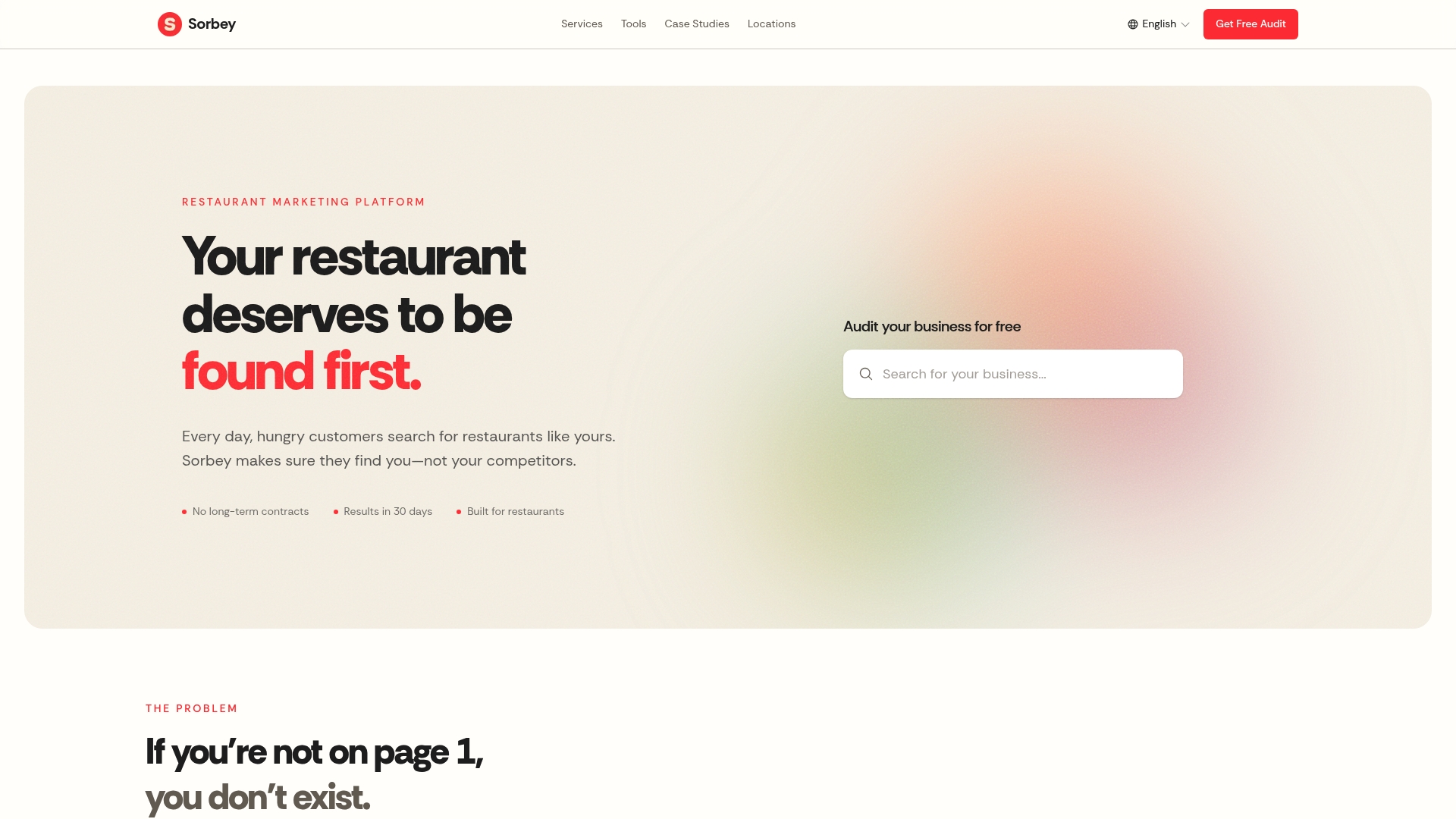
The marketing ROI calculator takes your campaign spend, revenue data, and customer metrics and returns a clear picture of what each dollar is generating. For small business owners who are deciding whether to increase their ad budget or shift channels, that number changes the conversation. Sorbey also offers a marketing budget calculator for businesses that are still figuring out how much to allocate across channels. Both tools are free and require no account to use.
FAQ
Why do digital ads outperform TV and print ads?
Digital ads outperform traditional media because they target specific audiences by behavior, location, and demographics, and they measure results at the conversion level. TV and print deliver broad reach with no ability to track who bought as a result.
What makes a digital ad actually convert?
Conversion depends on matching the right creative to the right audience at the right moment. A visually strong ad pointed at a precisely targeted audience, with a clear call to action, consistently outperforms generic creative served to a broad group.
How much does digital advertising cost for a small business?
Costs vary by platform, industry, and audience size. The average Facebook CPM in 2026 is approximately $13.75 per 1,000 impressions, but local businesses targeting tight geographic areas often pay less due to lower competition.
How does targeting reduce wasted ad spend?
Targeting filters out users who are unlikely to buy, so your budget concentrates on people who match your customer profile. Behavioral and location targeting are especially effective for local businesses because they eliminate impressions outside your service area.
Does personalization in digital ads really make a difference?
Personalization triggers the brain’s selective attention mechanism, making ads feel relevant rather than intrusive. Research confirms that personally relevant content passes through the brain’s relevance filter where generic messages are ignored.
Recommended
- Why Digital Marketing Matters for Your Business Growth | Sorbey Blog | Sorbey
- Top Benefits of Digital Marketing for Business Growth | Sorbey Blog | Sorbey
- Digital Advertising How to Get More Restaurant Customers | Sorbey Blog | Sorbey
- Digital marketing checklist for restaurants: boost visibility | Sorbey Blog | Sorbey
Potrebbe interessarti anche

What Is Content Marketing? A 2026 Strategy Guide
Discover what is content marketing and how to use it effectively. Learn strategies and benefits for building a successful content program.

What Is Event-Based Marketing? A 2026 Strategy Guide
Discover what event-based marketing is and how it boosts engagement and revenue. Learn to react in real-time and enhance your strategies.

Menu Design Tips That Drive Restaurant Sales
Discover effective menu design tips to boost restaurant sales, enhance customer choices, and transform your dining experience. Start improving today!