
Blog
Digital marketing checklist for restaurants: boost visibility
Discover the essential digital marketing checklist for restaurants. Learn proven tactics to boost online visibility, attract more customers, and maximize ROI with data-driven strategies.

Digital marketing checklist for restaurants: boost visibility
Choosing the right digital marketing strategies can feel overwhelming when you’re managing a busy restaurant. With countless platforms, tactics, and tools competing for your attention and budget, how do you know where to invest your time and money? This article delivers a practical, data-driven checklist that cuts through the noise and helps you prioritize the digital marketing tactics that actually drive online visibility and customer growth. You’ll discover which strategies deliver the highest return, how to allocate your marketing budget effectively, and actionable steps to implement a winning digital marketing plan for your restaurant.
Table of Contents
- Key takeaways
- Key criteria for an effective digital marketing checklist
- Essential digital marketing tactics for restaurants
- Comparison of digital marketing strategies for restaurants
- Implementing your restaurant digital marketing checklist effectively
- Boost your restaurant’s marketing with Sorbey’s AI-powered solutions
- Frequently asked questions
Key Takeaways
| Point | Details |
|---|---|
| Retention ROI | Retention marketing through email and SMS anchors your strategy, with email marketing delivering $36 in return for every $1 spent. |
| Digital budget share | Established restaurants should allocate 60 to 70 percent of marketing budget to digital channels to maximize online visibility. |
| Organic plus paid | A balanced approach combines long term organic tactics like SEO and social content with paid ads to deliver faster results. |
| TikTok engagement | TikTok engagement is higher at 4.2 percent than Instagram at 1.65 percent, underscoring the value of visual content and behind the scenes and user generated content. |
Key criteria for an effective digital marketing checklist
Before diving into specific tactics, you need a framework for evaluating which strategies deserve your attention. The most effective restaurant digital marketing checklist starts with smart budget allocation. Established restaurants should dedicate 3-6% of revenue to marketing, with 60-70% directed toward digital channels. New restaurants entering competitive markets may need to push that to 7-8% initially.
Your checklist must prioritize retention over acquisition. Why? The math is simple: acquiring new customers costs five times more than keeping existing ones, and repeat customers spend more per visit. When you focus on building relationships with guests who already know and trust your restaurant, you create a sustainable growth engine that doesn’t drain your budget.
Data-driven decision making separates successful restaurant marketers from those wasting money on ineffective tactics. Use industry benchmarks to set realistic expectations and measure your performance. Track metrics like email open rates, social media engagement, website traffic sources, and conversion rates to identify what’s working and what needs adjustment.
Balance is critical. Your checklist should include both organic strategies that build long-term value and paid tactics that deliver immediate results:
- Organic tactics like SEO, social media content, and email list building require time but cost less and compound over months
- Paid advertising delivers faster visibility but requires ongoing investment to maintain results
- The sweet spot combines both approaches, using paid ads to amplify your best organic content
- Always test small before scaling any paid campaign to ensure positive return on investment
For more comprehensive guidance on promoting your restaurant effectively, explore proven strategies to boost your online presence and stay current with the latest restaurant marketing insights.
Essential digital marketing tactics for restaurants
Now that you understand the criteria, let’s examine the specific tactics that belong on every restaurant’s digital marketing checklist. These strategies consistently deliver results when implemented correctly.
Retention marketing through email and SMS should anchor your entire digital strategy. Building customer lists generates $36 in return for every dollar spent on email marketing, and repeat business represents your cheapest path to growth. Start collecting phone numbers and email addresses at every customer touchpoint: online orders, reservations, loyalty programs, and in-person visits. Send targeted campaigns featuring exclusive offers, menu updates, and personalized recommendations based on past orders.
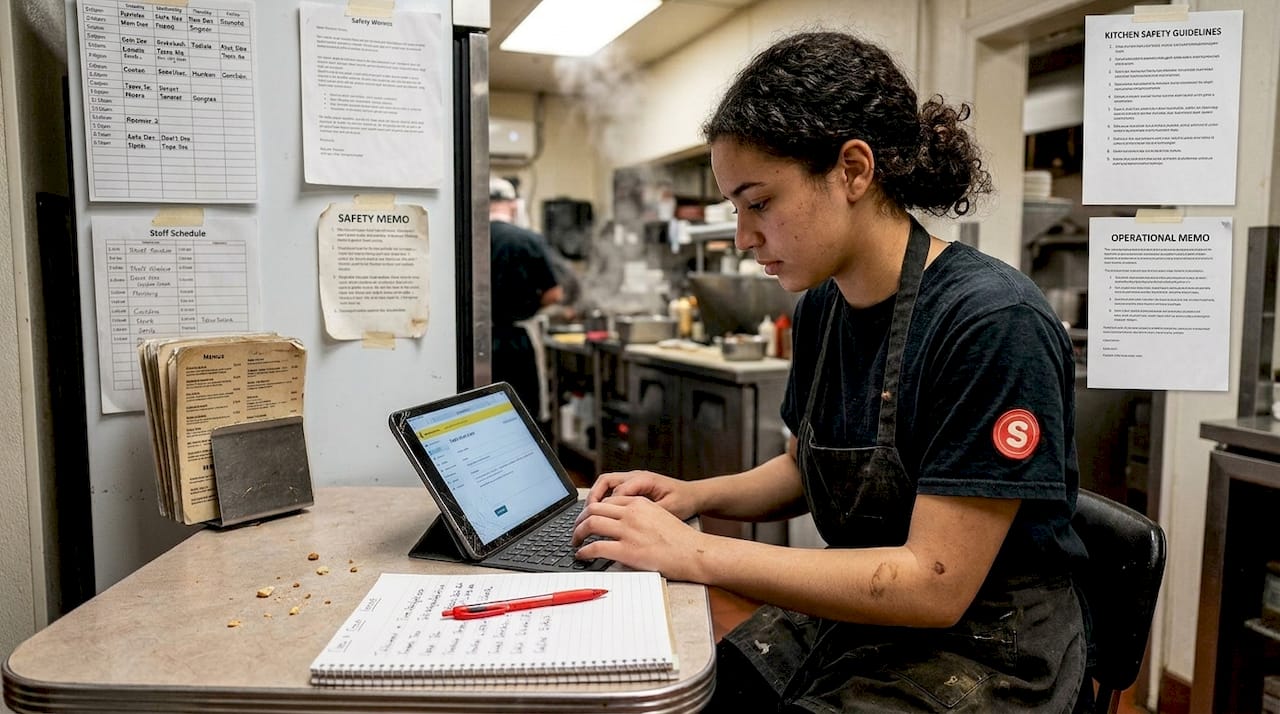
Social media engagement requires a visual-first approach that showcases your food, atmosphere, and brand personality. Post reels and user-generated content to capitalize on TikTok’s 4.2% engagement rate compared to Instagram’s 1.65%. Don’t just post pretty food photos. Share behind-the-scenes content, chef tips, customer testimonials, and interactive polls that encourage comments and shares. Respond quickly to comments and messages to build community around your restaurant.
Search engine optimization captures the largest share of restaurant website traffic and delivers qualified leads actively searching for dining options. Focus on local SEO tactics that help you appear in “restaurants near me” searches and Google Maps results. Optimize your Google Business Profile with accurate hours, photos, menu links, and consistent responses to reviews. Create location-specific content that answers common questions potential diners ask. Learn more about emerging SEO trends that will impact your visibility.
AI adoption is no longer optional for restaurants that want to compete effectively. Intelligent tools now automate campaign optimization, personalize customer communications, and predict which offers will resonate with specific segments. Use AI to analyze customer data, schedule social posts at optimal times, generate email subject lines that improve open rates, and create chatbots that answer common questions instantly.
Pro Tip: Start with one tactic and master it before adding more. Restaurants that excel at email marketing first, then layer in social media and SEO, outperform those trying to do everything at once poorly.
These core tactics work together synergistically. Your social media content drives email signups, your email campaigns boost social engagement, and both channels support your SEO efforts by increasing branded searches and website traffic. For additional tactics and implementation guidance, review this complete guide on promoting your restaurant online.
Comparison of digital marketing strategies for restaurants
Understanding how different marketing channels perform helps you allocate resources wisely and set realistic expectations. Here’s how the major digital marketing strategies stack up based on industry data:
| Strategy | Traffic Share | Engagement Rate | Conversion Rate | Cost |
|---|---|---|---|---|
| Organic Search | 48% of visits | Medium | High | Low (time investment) |
| Mobile Traffic | 78% of visits | High | Medium | Low (optimization) |
| Email Marketing | 24.8% open rate | Medium | Very High | Very Low |
| Social Media (TikTok) | Variable | 4.2% engagement | Medium | Low to Medium |
| Social Media (Instagram) | Variable | 1.65% engagement | Medium | Low to Medium |
| Paid Advertising | Variable | Low | 6.8% conversion | High |
Organic search and mobile optimization deliver the foundation of your digital presence. Nearly half of your website visitors will find you through search engines, and the overwhelming majority will use mobile devices. This makes mobile-responsive website design and local SEO non-negotiable investments. The good news? Once you’ve optimized your site and built authority, organic traffic continues flowing without ongoing ad spend.
Email marketing offers the best return on investment despite moderate open rates. Retention-focused email campaigns generate 30% of revenue for restaurants that build substantial lists and send relevant, timely messages. The key is segmentation: sending the same generic message to everyone produces poor results, while targeted campaigns based on customer preferences and behavior drive significant sales.
Social media performance varies dramatically by platform and content type. Video content, especially short-form reels showcasing food preparation or customer experiences, outperforms static images across all platforms. TikTok’s higher engagement rate makes it particularly valuable for reaching younger diners and building brand awareness, while Instagram remains strong for visual storytelling and influencer partnerships.
Paid advertising converts at lower rates than organic channels but provides speed and targeting precision. Use paid campaigns strategically:
- Launch promotions for new menu items or special events
- Retarget website visitors who didn’t complete reservations
- Compete for high-intent keywords during peak dining seasons
- Test messaging and offers before investing in larger organic campaigns
The most successful restaurants don’t choose between organic and paid strategies. They build strong organic foundations through SEO, content, and email marketing, then use selective paid campaigns to accelerate results and fill gaps. For deeper insights into optimizing your search presence, explore this guide on why restaurants must prioritize search engine optimization.
Implementing your restaurant digital marketing checklist effectively
Having the right checklist means nothing without proper execution. Follow this structured approach to implement your digital marketing strategy and start seeing results within weeks.
First, adopt AI-powered marketing tools that automate repetitive tasks and optimize campaign performance. 69% of restaurants now use AI to streamline their marketing efforts and improve targeting accuracy. These tools handle email scheduling, social media posting, customer segmentation, and performance analysis, freeing you to focus on strategy and creative content. Start with platforms that integrate with your existing point-of-sale and reservation systems for seamless data flow.
Second, prioritize retention marketing as your foundation. Build your email and SMS lists aggressively through every customer interaction. Offer a compelling incentive like a discount on the next visit or exclusive access to special menu items in exchange for contact information. Create automated welcome sequences that introduce new subscribers to your brand story, signature dishes, and loyalty program benefits.
Follow this five-step implementation plan to launch your digital marketing checklist systematically:
- Audit your current digital presence and identify the biggest gaps in your strategy
- Set up tracking for key metrics including website traffic sources, email open rates, social engagement, and reservation conversions
- Launch one core tactic completely before adding others, starting with either email marketing or local SEO based on your current strengths
- Create a content calendar that ensures consistent posting across all active channels without overwhelming your team
- Review performance data monthly and reallocate budget toward tactics delivering the strongest return on investment
Measure what matters. Track these essential KPIs weekly: email list growth rate, email open and click rates, website traffic from organic search, social media engagement rate, online reservation conversion rate, and customer lifetime value. These metrics tell you whether your marketing drives actual business results or just vanity metrics that look good but don’t increase revenue.
Pro Tip: Block two hours every Monday morning for marketing review and planning. Consistency matters more than perfection when building digital marketing momentum.
Adjust your approach based on data, not assumptions. If email campaigns to lunch customers convert better than dinner promotions, shift your focus accordingly. When certain social content formats generate significantly more engagement, produce more of that content type. Digital marketing rewards restaurants that test, learn, and optimize continuously. Stay informed about emerging trends and tactics by regularly checking restaurant marketing insights and updates.
Boost your restaurant’s marketing with Sorbey’s AI-powered solutions
Implementing a comprehensive digital marketing checklist takes time, expertise, and the right tools. Sorbey specializes in AI-powered marketing solutions designed specifically for restaurants like yours. Our platform helps you optimize email and SMS campaigns, automate customer segmentation, and maximize return on every marketing dollar you spend.
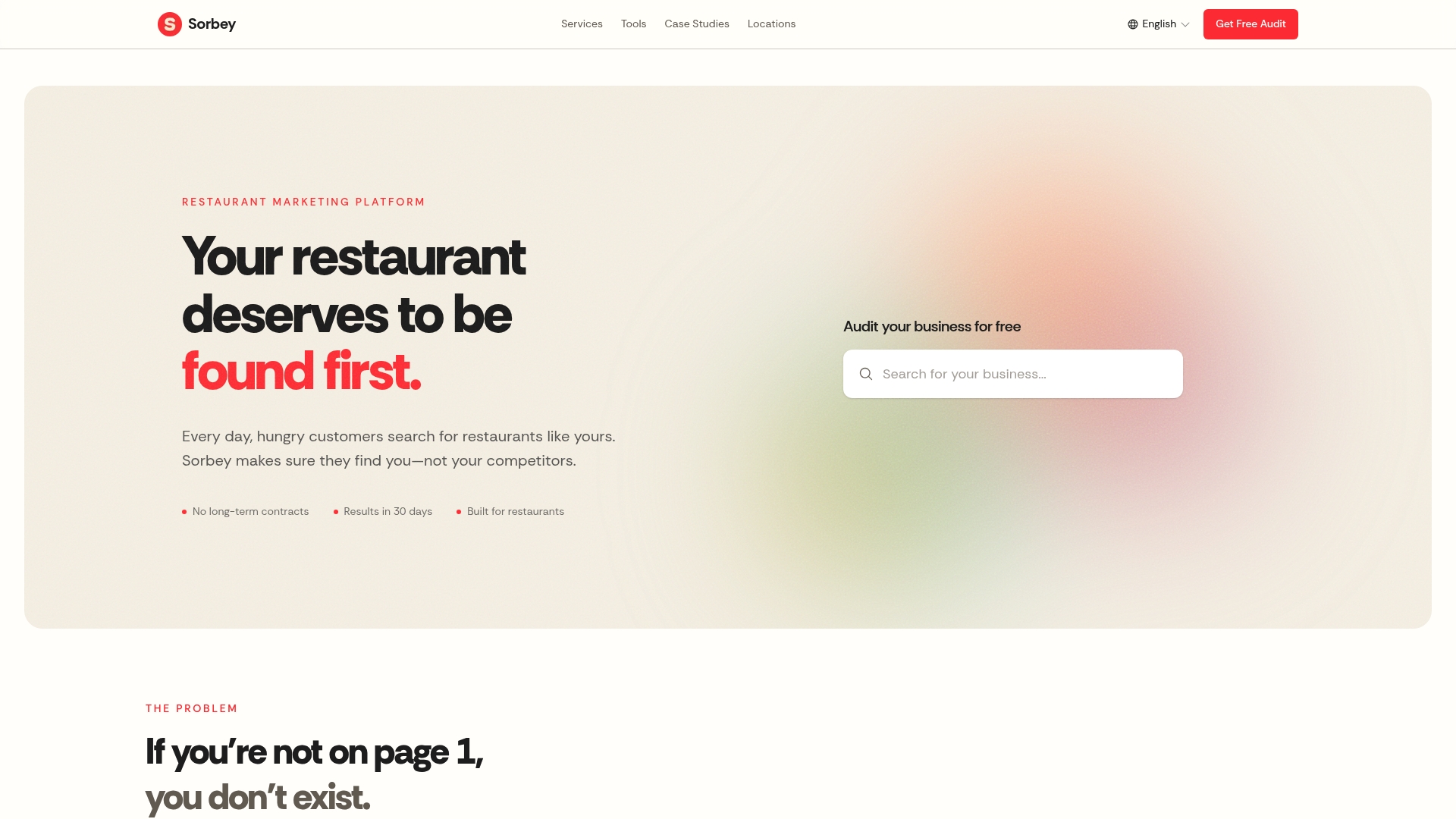
Discover how our innovative tools streamline your marketing operations and drive measurable results. Explore our complete suite of restaurant marketing services tailored to your unique needs. Use our free SMS campaign ROI calculator to estimate potential returns before investing, and leverage our customer lifetime value calculator to understand the true worth of your retention marketing efforts. Let us help you turn your digital marketing checklist into a growth engine that consistently fills tables and builds loyal customer relationships.
Frequently asked questions
What is the best digital marketing tactic for restaurants?
Retention marketing through email and SMS campaigns delivers the highest return on investment for restaurants. Email marketing generates up to $36 for every dollar spent, making it far more cost-effective than paid advertising or other acquisition channels. Building a loyal customer list and communicating regularly with personalized offers creates sustainable revenue growth without the high costs of constantly attracting new diners.
How much should restaurants allocate to digital marketing?
Established restaurants should dedicate 3-6% of revenue to marketing, with 60-70% of that budget directed toward digital channels. New restaurants entering competitive markets may need to invest 7-8% initially to build brand awareness and customer base. The key is maintaining consistency rather than sporadic large investments, as digital marketing compounds results over time through improved search rankings, larger email lists, and stronger social media followings.
Which social media platform is most effective for restaurants?
TikTok currently delivers the strongest engagement for restaurant content, with a 4.2% engagement rate compared to Instagram’s 1.65%. Short-form video content showcasing food preparation, behind-the-scenes moments, and customer experiences performs exceptionally well on TikTok. However, the best platform for your restaurant depends on your target demographic and content creation capabilities. Instagram remains valuable for visual storytelling and reaching millennials, while Facebook works well for local community engagement and event promotion.
How is AI changing digital marketing for restaurants?
Artificial intelligence automates campaign optimization, personalizes customer communications, and predicts which marketing messages will resonate with specific audience segments. 69% of restaurants now adopt AI tools to improve their digital marketing effectiveness. AI analyzes customer data to identify patterns, schedules social media posts at optimal times, generates email subject lines that improve open rates, and creates chatbots that answer common questions instantly. This technology levels the playing field, allowing independent restaurants to compete with larger chains that have bigger marketing teams and budgets.
Recommended
Potrebbe interessarti anche

Best Restaurant Loyalty Programs 2026: ROI Guide
Discover the best restaurant loyalty programs 2026 that boost repeat visits. Learn how Sorbey’s platform can transform your guest data strategy!

Why Mobile Marketing Matters for Business Growth
Discover why mobile marketing matters for business growth. Learn how optimizing for mobile drives traffic, conversions, and customer retention.

SF Dim Sum Restaurant Marketing Checklist for 2026
Transform your SF dim sum with our 2026 marketing checklist. Optimize your profile, showcase dishes, and attract customers fast!