
Blog
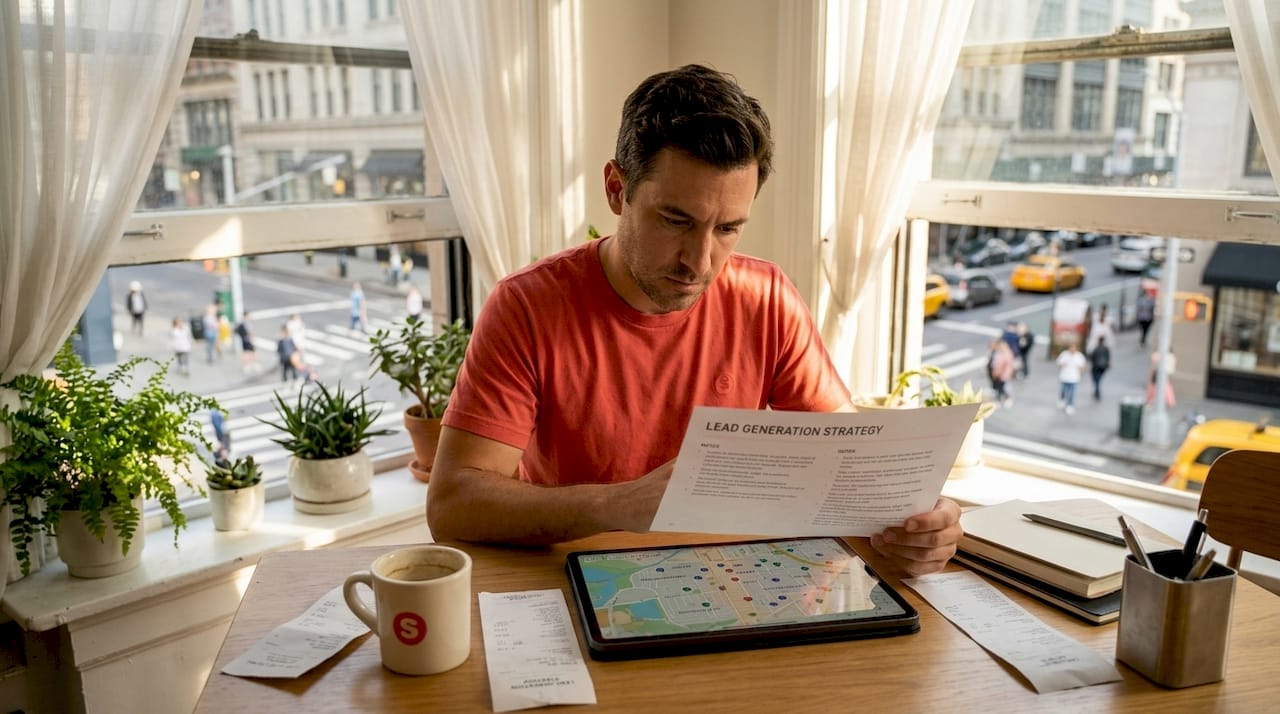
Lead Generation Strategies for Urban Restaurants in 2026
Discover effective lead generation strategies for urban restaurants in 2026. Boost bookings and fill your dining room with smart tactics!
Lead Generation Strategies for Urban Restaurants in 2026
TL;DR:
- Urban restaurant owners face intense competition where effective lead generation distinguishes full dining rooms from empty tables. Simplifying contact forms, rapid personalized outreach, hyper-local SEO, and AI-driven reputation management are proven strategies in 2026 to boost bookings and build trust. Combining inbound and outbound marketing while focusing on scalable, resource-appropriate tactics ensures long-term growth and efficient occupancy.
Urban restaurant owners face one of the most punishing competitive environments in business. A new spot opens across the street, delivery apps compete for the same diners, and attention spans shrink by the season. Smart lead generation strategies are no longer optional. They are the difference between a full dining room and a table of empty chairs. This guide covers exactly what works in 2026: from how you capture contact information without friction, to hyper-local SEO that pulls in foot traffic from three blocks away, to AI tools that turn one good review into twenty.
Key Takeaways
| Point | Details |
|---|---|
| Simplify your lead forms | Limiting form fields to 3-5 significantly lifts conversion rates for new diner inquiries. |
| Speed to lead wins bookings | Contacting a new lead within five minutes makes conversion up to 100 times more likely. |
| Hyper-local SEO scales fast | Programmatic pages built around neighborhoods and cuisine types drive high-intent organic traffic. |
| AI reputation tools multiply trust | Automated review responses and review solicitation increase repeat visits and online-to-booking conversion. |
| Mix inbound and outbound | Combining SEO content with targeted paid ads reaches more diners at every stage of the decision journey. |
1. How to evaluate lead generation strategies for restaurants
Not every tactic that works for a B2B SaaS company will work for a taqueria in Chicago’s Wicker Park neighborhood. Before you invest time and money, run any lead generation idea through these five filters.
- Speed and friction. How fast can a diner go from interested to opted-in? Local customer decisions happen quickly, and anything that slows them down kills the conversion.
- Local relevance. Does the tactic target people within a realistic travel radius? Digital lead generation for restaurants lives or dies on proximity.
- Lead quality. Are the contacts you capture actually likely to book a table or place an order? Reservation intent signals, not just email addresses, define a quality restaurant lead.
- Operational fit. Can your CRM, reservation system, or ordering platform absorb and act on leads automatically? Without this, leads sit uncontacted and go cold.
- Reputation impact. Does the tactic build long-term trust, or does it create a one-time transaction? The best lead nurturing approaches turn new diners into regulars.
Pro Tip: Before launching any new lead capture technique, map the full path from first touch to seated guest. If you find more than three manual steps, automate or simplify before you spend a dollar on advertising.
2. Optimizing your lead capture forms for maximum sign-ups
Most restaurant websites bury their sign-up form at the bottom of the page and ask for six pieces of information. That is a guaranteed way to lose 70 percent of interested visitors before they finish typing.
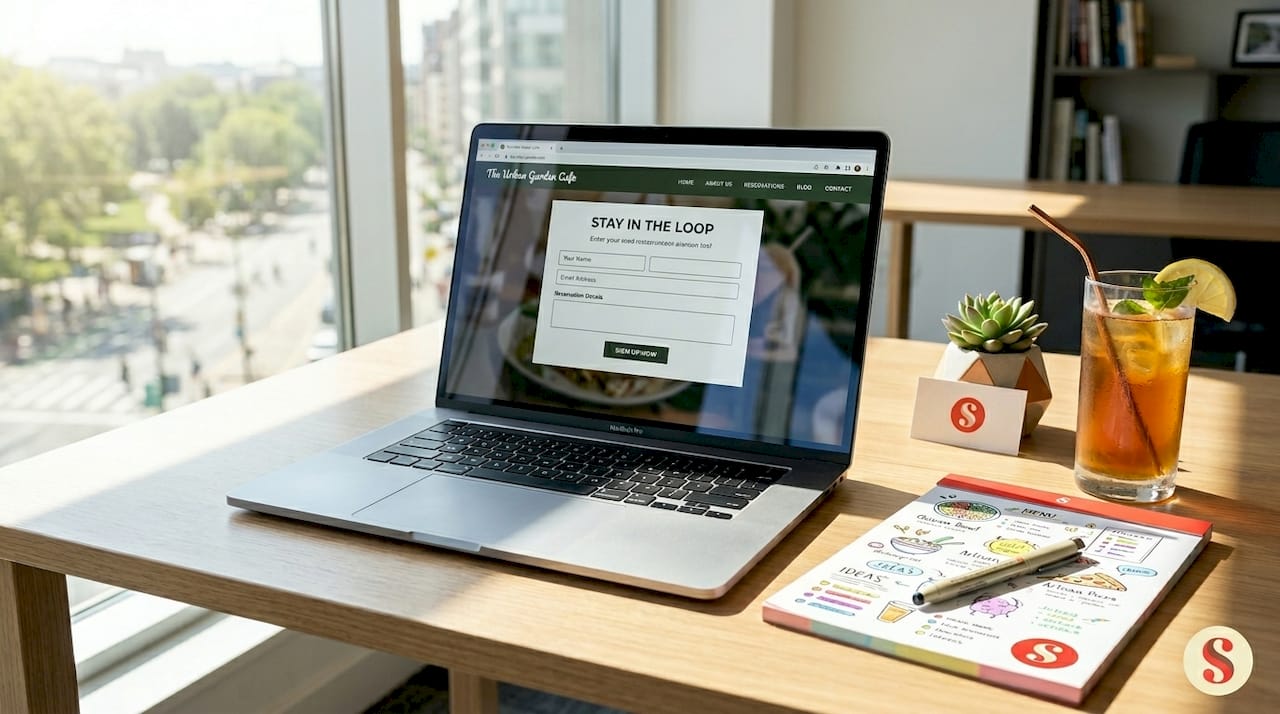
Cutting form fields to the 3-5 that matter most can lift conversions by 30 to 50 percent. For a restaurant, that typically means name, email, phone number, and preferred visit date. That is it. Save the dietary preferences and special requests for the confirmation email.
Your call-to-action also does the heavy lifting. “Get my free birthday dessert” will always outperform “Submit.” The CTA should tell the diner exactly what they receive, not what they are doing. Placing trust signals like a short privacy line directly next to the CTA button, rather than buried at the page bottom, removes a subconscious hesitation that kills conversions.
For more complex offers like private dining or catering inquiries, try a multi-step form. Multi-step forms reach completion rates near 80 percent compared to the low 20s for single-page forms on the same traffic. Breaking the process into two or three short screens feels less overwhelming and keeps the diner engaged.
Pro Tip: Add a confirmation text message within 60 seconds of form submission. A brief “Thanks for reaching out! We’ll confirm your reservation within the hour” message alone reduces no-shows by setting an expectation immediately.
3. Leveraging hyper-local SEO to pull in nearby diners
If a hungry person searches “best wood-fired pizza near Logan Square” and your restaurant does not appear on the first page, you do not exist to that diner. Hyper-local SEO is one of the most cost-effective ways to generate leads because the intent is already there. You are not creating demand. You are intercepting it.
The key is layering your keywords: neighborhood plus cuisine type plus occasion plus amenity. Pages targeting “outdoor seating Italian restaurant River North” attract a more conversion-ready visitor than generic city-level pages. This is where programmatic SEO earns its place.
Scaling programmatic SEO across 50 cities produced a 500 percent increase in organic traffic and a 300 percent increase in app downloads for one restaurant discovery platform. The principle applies equally to independent restaurants building neighborhood-specific landing pages.
| SEO approach | Effort level | Traffic quality | Time to results |
|---|---|---|---|
| Google Business Profile optimization | Low | Very high | 2-4 weeks |
| Neighborhood-specific landing pages | Medium | High | 4-8 weeks |
| Programmatic SEO at scale | High | High | 8-16 weeks |
| Schema markup implementation | Low | Medium-high | 4-6 weeks |
Structured data schemas like Restaurant, LocalBusiness, and AggregateRating tell Google exactly what your page is about and make it eligible for rich snippets in search results. Adding these schemas to your core pages takes a developer a few hours and pays dividends for years. For a step-by-step walkthrough, the local SEO implementation guide from Sorbey covers this in plain language built specifically for restaurant owners.
4. AI-driven reputation marketing and follow-up sequences
Online reviews function as lead generation infrastructure. A diner who reads 15 recent four-star reviews with thoughtful responses is already partially sold before they ever visit your website contact form.
Automated review solicitation via SMS or email after a visit consistently lifts the volume of positive reviews. The timing matters. A message sent 90 minutes after the meal, while the experience is still fresh, performs better than one sent the next morning. Automated systems handle this at scale without requiring a manager to manually track every table.
Automated reputation algorithms analyze review sentiment and generate personalized responses quickly, sustaining positive brand perception and flagging operational issues before they compound. A one-star review about cold food gets escalated to management. A five-star review gets a warm, specific response that makes the reviewer feel seen and encourages a return visit.
The downstream numbers are significant. Multi-channel AI reputation management in a documented restaurant case study produced 6x revenue growth over three years, a 60 percent increase in repeat visits, and a 45 percent lift in conversion from online inquiries to actual bookings.
Once you have a lead in your system, the follow-up sequence matters as much as the initial capture. Nurturing cadences of 3 to 5 touches over 14 to 21 days consistently outperform single-touch follow-up in converting interested contacts into paying guests.
Pro Tip: Do not treat every lead identically. A person who visited your website’s private dining page deserves a different follow-up than someone who signed up for your weekly email. Segment from the start.
5. Combining inbound and outbound marketing for fuller pipelines
Inbound tactics like SEO and content marketing attract people already searching for you. Outbound tactics like paid social ads and targeted email reach people who do not know you yet. Successful lead generation campaigns consistently integrate both, calibrated to the customer’s position in the decision journey.
For restaurants, the practical blend looks like this:
- Inbound: Neighborhood SEO pages, a Google Business Profile with weekly photo updates, a localized blog covering events and seasonal menus, and a loyalty email list built through in-restaurant sign-ups.
- Outbound: Paid Instagram and Facebook ads targeting people within a two-mile radius who match your diner demographic, retargeting campaigns aimed at website visitors who did not book, and direct outreach to local businesses for corporate catering accounts.
- Lead scoring: Not all leads deserve the same follow-up speed. A catering inquiry from a company event planner warrants a phone call within the hour. A general newsletter sign-up can enter an automated email sequence.
The mistake most restaurant marketers make is doubling down on whichever channel produced the last visible win and ignoring the rest. Paid ads can spike covers for a week. SEO compounds quietly for years. You need both. Check out the latest restaurant SEO trends in 2026 to see which inbound channels are gaining traction in urban markets right now.
6. Building the right lead funnel for your restaurant’s size and budget
There is no universal answer to which lead generation mix works best. The right combination depends on your resources, your competitive environment, and where your restaurant sits in its growth curve.
| Strategy | Startup cost | Ongoing effort | Best for |
|---|---|---|---|
| Optimized lead capture forms | Low | Low | All restaurant sizes |
| Google Business Profile + local SEO | Low | Medium | New and established restaurants |
| Programmatic SEO landing pages | Medium | Low after setup | Multi-location or high-competition markets |
| AI reputation management | Medium | Low (automated) | Restaurants with 50+ monthly reviews |
| Paid social ads with retargeting | Medium to high | High | Restaurants with proven conversion rates |
| Multi-touch email and SMS sequences | Low | Medium | Any restaurant with an existing customer list |
Small independent restaurants should start with Google Business Profile optimization and a clean lead capture form on their reservation page. Both cost almost nothing and produce measurable results within weeks. Once those foundations are in place, layering in AI reputation tools and programmatic SEO pages creates a compounding effect that grows without proportional increases in labor.
Larger or multi-location restaurants benefit most from programmatic content scaled across neighborhoods, combined with automated follow-up sequences that handle hundreds of leads simultaneously without adding staff.
Pro Tip: Assign a dollar value to every lead source by tracking which channel produced each booking. After 90 days, the data will tell you exactly where to double your investment and what to cut.
My take on what actually works in urban restaurant marketing
I have seen restaurant owners pour their budgets into beautiful paid ad campaigns while their Google Business Profiles sit unverified and their contact forms ask for eight pieces of information. That mismatch is the single most common failure mode in restaurant lead generation.
The thing most people get wrong is prioritizing reach over conversion. Getting in front of 50,000 people means nothing if your form takes two minutes to complete or no one follows up within the hour. Leads contacted within five minutes are 100 times more likely to convert than those reached after 30 minutes. That number should reset your priorities.
Programmatic SEO sounds technical and intimidating, but the restaurants that commit to it gain a structural advantage their competitors cannot easily reverse. One well-built set of neighborhood landing pages keeps working for years. One paid campaign stops the moment you stop paying.
On AI reputation tools: I was skeptical at first. Automated responses to reviews can feel impersonal. But the data is hard to argue with, and the restaurants I have seen use them well keep their responses human enough to feel genuine while running the system at a scale no human team could match manually.
My honest advice: fix your lead capture first, get your local SEO in order, then add AI reputation management. In that sequence, each layer amplifies the one before it. Reverse the order and you are spending money to drive traffic into a leaky bucket.
— Barthelemy
How Sorbey helps restaurants fill more tables
Running effective lead generation for a restaurant means juggling SEO, reputation management, lead capture, and follow-up automation at the same time. Most restaurant owners do not have the bandwidth to do all of it well.
Sorbey is built specifically for local businesses like restaurants. The platform connects hyper-local SEO, programmatic content, automated review management, and lead capture into a single system. You can learn more about the full range of restaurant marketing solutions Sorbey offers or start by exploring what local SEO means for your restaurant. If you are ready to stop guessing which tactics work and start seeing real bookings, Sorbey gives you the tools and expertise to make it happen.
FAQ
How many form fields should a restaurant lead form have?
Keep your lead capture form to 3 to 5 fields. Fewer form fields lift conversion rates by 30 to 50 percent, and restaurant diners make decisions quickly.
What is the fastest way to convert a new restaurant lead?
Contact the lead within five minutes of sign-up. Leads reached within five minutes are up to 100 times more likely to convert than those contacted after 30 minutes.
Does programmatic SEO work for small restaurants?
Yes, even a single location can build neighborhood-specific landing pages that rank for high-intent local searches. The approach scales up, but the fundamentals work at any size.
How does AI reputation management generate leads?
Automated review solicitation increases the volume of positive reviews, and AI-generated responses build trust with potential diners researching your restaurant online. This directly improves conversion from search results and review platforms to actual bookings.
How do I combine inbound and outbound tactics without overspending?
Start with inbound channels like local SEO and Google Business Profile that compound over time. Add paid outbound ads only after your conversion foundation is solid, so the traffic you pay for has somewhere effective to land.
Recommended
Potrebbe interessarti anche

The Real Role of Event Marketing for Growth in 2026
Discover the vital role of event marketing for growth in 2026! Unlock measurable strategies to boost customer retention and revenue.
Why Customer Engagement Is Important for Restaurants
Discover why customer engagement is important for restaurants. Learn how meaningful connections can drive loyalty and boost retention.

Why Email Marketing Works: Proof and Strategy
Discover why email marketing works and unlock its potential for high conversions. Learn strategies to grow your audience effectively!