
Blog
Why optimize for search engines: a guide for restaurants
Learn why search engine optimization matters for restaurants and how local SEO drives more customers to your door in 2026 with proven strategies.

Why optimize for search engines: a guide for restaurants
Most restaurant owners believe word of mouth and foot traffic drive their business, yet 70% of diners search online before choosing where to eat. If your restaurant doesn’t appear in those searches, you’re invisible to potential customers actively looking for what you serve. Search engine optimization isn’t just for tech companies or retailers. It’s the most cost-effective way for restaurants in major U.S. cities to attract hungry customers who are ready to dine right now. This guide explains exactly how optimizing for search engines works for restaurants, why it matters more than ever in 2026, and how you can start attracting more local customers through strategic digital visibility.
Table of Contents
- What Is SEO And Why Does It Matter For Restaurants?
- How Local Search Optimization Drives More Customers To Your Restaurant
- SEO Trends And Best Practices For Restaurants In 2026
- Measuring SEO Success And Applying Insights To Grow Your Restaurant
- Boost Your Restaurant’s Local Visibility With Expert SEO Services
- Frequently Asked Questions About Restaurant SEO
Key takeaways
| Point | Details |
|---|---|
| SEO increases local visibility | Optimizing your restaurant’s online presence helps customers find you when searching for dining options nearby. |
| Website optimization drives conversions | A well-optimized site improves user experience and turns visitors into paying customers. |
| Staying current with SEO trends matters | Adapting to voice search and mobile optimization keeps you competitive in 2026. |
| Local search is cost-effective marketing | Organic local search delivers targeted customers without ongoing ad spend. |
| Integration amplifies results | Combining SEO with social media and review management maximizes your marketing impact. |
What is SEO and why does it matter for restaurants?
Search engine optimization means improving your restaurant’s visibility when people search for dining options on Google, Bing, or other search engines. When someone types “Italian restaurant near me” or “best brunch in Chicago,” SEO determines whether your establishment appears in those results. For restaurants, this visibility directly translates to customers walking through your door.
Local SEO specifically targets searches from people in your geographic area. Unlike broad SEO that might help a national brand, local optimization focuses on the customers within a few miles of your location. These are people actively looking for a place to eat right now, not researching options for a future trip. SEO helps food and beverage businesses reach and engage potential customers online by making your restaurant discoverable at the exact moment diners are making decisions.
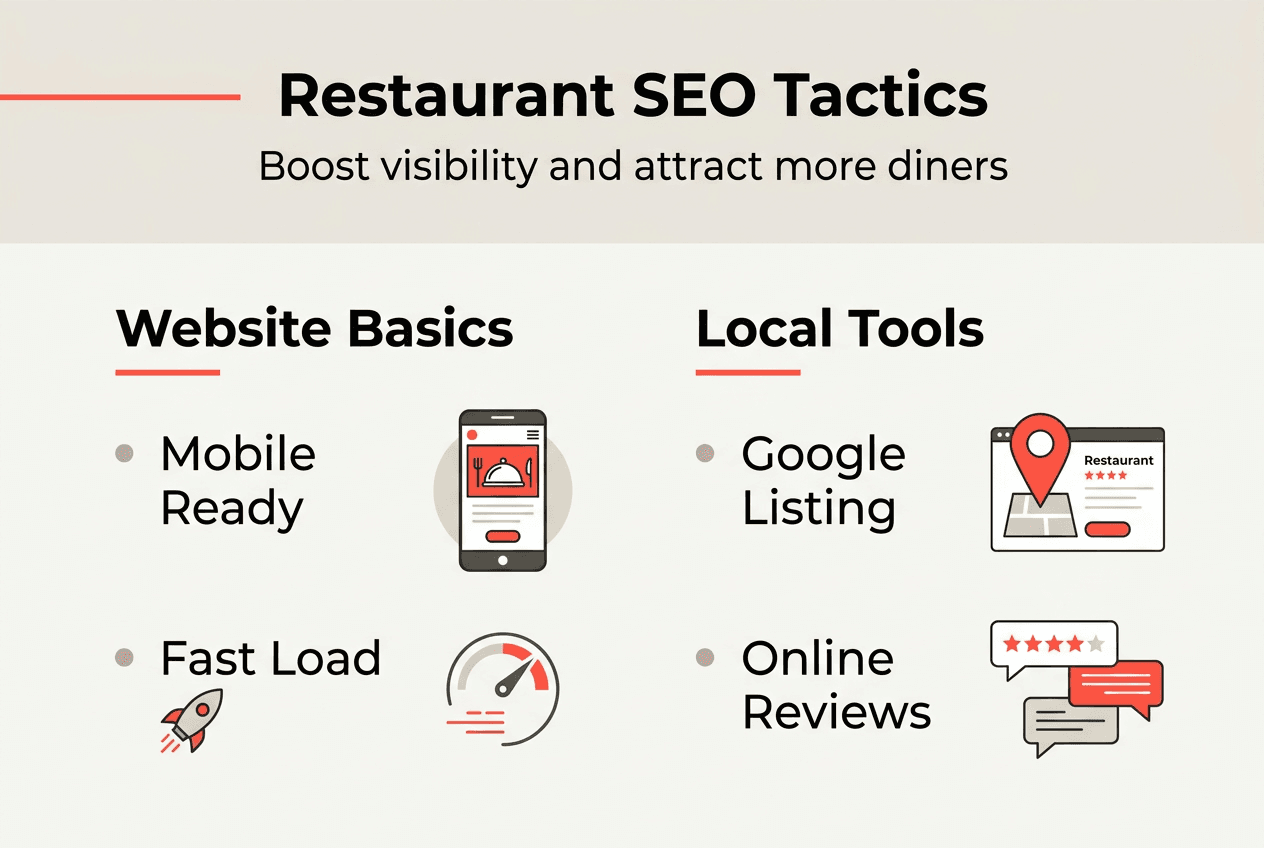
Several key elements work together to improve your search rankings. Keywords are the terms people type when searching, like “seafood restaurant downtown” or “family-friendly dining.” Your website needs to be fast, mobile-friendly, and easy to navigate. Online listings on Google, Yelp, and other platforms must be accurate and complete. Reviews signal to search engines that your restaurant is popular and trustworthy.
Pro Tip: Prioritize mobile optimization since most local restaurant searches happen on smartphones while people are already out looking for a place to eat.
The beauty of SEO for restaurants is that it drives organic traffic without paying for each click like traditional advertising. Once you rank well for relevant searches, you receive a steady stream of potential customers who are specifically interested in what you offer. A diner searching for “vegan tacos in Austin” has clear intent. If your restaurant appears at the top of results, you’ve connected with exactly the right customer at exactly the right time. This targeted approach makes SEO one of the most efficient AI-powered restaurant marketing strategies available.
Unlike paid ads that stop working the moment you stop paying, SEO builds lasting value. Your rankings improve over time as you add content, earn reviews, and strengthen your online presence. The initial effort compounds, creating a marketing asset that continues delivering customers month after month. For restaurant owners focused on sustainable growth rather than short-term promotions, this long-term return makes SEO essential.
How local search optimization drives more customers to your restaurant
Local search optimization differs from general SEO by focusing exclusively on geographic relevance. When you optimize locally, you’re telling search engines exactly where your restaurant is located and what areas you serve. This geographic targeting ensures you appear when nearby customers search for dining options, rather than competing with restaurants across the country.
Google My Business serves as the foundation of local search success. This free listing appears in Google Maps and local search results, showing your restaurant’s location, hours, photos, menu, and reviews. Keeping this profile complete and current directly impacts your visibility. Investing in local search increases visibility to nearby diners actively seeking food options, making it one of the highest-return activities for restaurant marketing.

The difference between local and general SEO becomes clear when you compare their benefits:
| Feature | Local SEO | General SEO |
|---|---|---|
| Target audience | Customers within specific geographic radius | Broad national or global audience |
| Primary platforms | Google My Business, local directories, maps | Website, blogs, national directories |
| Keyword focus | Location-specific terms like “pizza in Brooklyn” | Broad terms like “best pizza recipes” |
| Conversion timeline | Immediate, customers ready to visit now | Longer, customers researching or planning |
| Competition level | Local restaurants in your area | All restaurants nationwide |
| Cost efficiency | Very high, targets ready-to-buy customers | Moderate, broader audience with varied intent |
Several tactics strengthen your local search presence beyond just claiming your Google listing. Use location-specific keywords naturally throughout your website, like mentioning your neighborhood or nearby landmarks. Build citations by ensuring your restaurant’s name, address, and phone number appear identically across all online directories. Actively manage reviews by responding to feedback and encouraging satisfied customers to share their experiences. Create location pages if you have multiple restaurants, with unique content for each.
Pro Tip: Update your menu, hours, and photos on Google My Business monthly to signal that your listing is active and current, which improves your local ranking and builds customer trust.
Local search delivers customers with incredibly high intent. Someone searching “open restaurants near me” on a Friday night is making a decision within minutes. If your restaurant appears prominently with appealing photos, positive reviews, and accurate information, you’ve captured that customer. This immediacy makes local search investment for restaurants far more valuable than marketing channels that target people weeks or months before they’re ready to dine.
SEO trends and best practices for restaurants in 2026
The SEO landscape continues evolving, and restaurants that adapt to current trends gain significant competitive advantages. Voice search has transformed how people find restaurants, with diners asking their phones “where can I get sushi nearby” instead of typing queries. AI-driven content helps search engines better understand what makes your restaurant unique and relevant. Mobile optimization remains critical as smartphone searches dominate local discovery.
Five essential SEO practices will strengthen your restaurant’s search presence in 2026:
- Optimize for voice search by using natural, conversational language and question-based content that matches how people actually speak.
- Ensure your website loads in under three seconds on mobile devices, as page speed directly impacts both rankings and customer experience.
- Create high-quality content like blog posts about your ingredients, recipes, or local food scene to establish expertise and attract organic traffic.
- Build a robust review profile across multiple platforms, responding professionally to all feedback to demonstrate engagement.
- Implement structured data markup on your website so search engines can display rich results like menu items, prices, and reservation options.
Voice search specifically offers remarkable opportunities for restaurants willing to optimize their content. Voice search optimization can extend local reach by up to 50% in 2026 because voice queries tend to be more specific and location-focused than typed searches. When someone asks their phone for restaurant recommendations, they’re often ready to act immediately.
Monitoring your analytics regularly helps you understand what’s working and where to focus efforts. Track which keywords bring traffic, which pages convert visitors into customers, and how people interact with your site. Google Search Console shows exactly which searches trigger your restaurant’s appearance, revealing opportunities to create content around popular queries. This data-driven approach prevents wasted effort on tactics that don’t deliver results.
Social media signals increasingly influence search rankings, though indirectly. While social posts don’t directly boost SEO, they drive traffic to your website and increase brand mentions across the web. Instagram posts featuring your signature dishes, Facebook events for special menus, and TikTok videos showcasing your kitchen all contribute to overall online visibility. Search engines notice when people engage with your brand across multiple platforms, interpreting this activity as a signal of relevance and popularity.
Staying current with 2026 restaurant SEO trends means regularly reviewing and updating your strategy. Algorithm changes happen frequently, and what worked last year might be less effective today. Subscribe to industry newsletters, test new tactics on a small scale, and be willing to adjust based on results. The restaurants that treat SEO as an ongoing practice rather than a one-time project consistently outperform competitors who set and forget their optimization efforts.
Measuring SEO success and applying insights to grow your restaurant
Tracking the right metrics reveals whether your SEO efforts are actually bringing more customers through your door. Organic traffic measures how many people find your website through search engines rather than paid ads or social media. Local ranking shows where your restaurant appears for key search terms in your area. Click-through rate indicates how compelling your search listings are, while conversions track how many visitors take desired actions like making reservations or viewing your menu.
Key metrics to monitor and the tools that track them:
| Metric | What to Track | Tools to Use |
|---|---|---|
| Organic traffic | Visitors from search engines to your website | Google Analytics |
| Local rankings | Position for key searches like “brunch in Seattle” | Google Search Console, local rank trackers |
| Click-through rate | Percentage of searchers who click your listing | Google Search Console |
| Conversion rate | Visitors who make reservations or call | Google Analytics with goal tracking |
| Review volume and rating | Number and quality of customer reviews | Google My Business Insights |
| Page load speed | Time for your website to fully load | Google PageSpeed Insights |
Setting realistic SEO goals keeps your efforts focused and measurable. Start by establishing baseline metrics for your current performance, then set incremental improvement targets. Aim to increase organic traffic by 20% over three months, improve your ranking for three key local searches, or boost your review count by 15 new reviews per month. These specific, achievable goals let you track progress and adjust tactics that aren’t delivering results.
Regularly review your data to identify patterns and opportunities. If certain menu items generate lots of search traffic, feature them more prominently. If mobile users bounce quickly from specific pages, investigate loading speed or navigation issues. If searches for “outdoor dining” spike in your area, update your content to highlight your patio. This responsive approach ensures your SEO strategy evolves with customer behavior and market conditions.
Pro Tip: Focus on customer behavior metrics like time on site and pages per visit, not just rankings, because engaged visitors are far more likely to become paying customers than those who bounce immediately.
Optimizing your restaurant website for engagement leads to higher customer conversion rates because a well-designed site keeps visitors exploring your offerings. Fast load times, clear calls to action, appealing food photography, and easy reservation processes all contribute to turning traffic into revenue. Your restaurant website optimization should prioritize user experience alongside search visibility.
SEO delivers compounding returns over time rather than instant results. Expect to see initial improvements within three to six months, with significant gains building over the first year. This timeline requires patience, but the long-term value far exceeds short-term marketing tactics. A restaurant that invests consistently in SEO builds a durable competitive advantage that continues attracting customers year after year. Unlike paid advertising that stops working when you stop paying, your SEO efforts create lasting assets that generate ongoing returns.
Boost your restaurant’s local visibility with expert SEO services
Implementing comprehensive SEO while running a busy restaurant can feel overwhelming. You’re focused on food quality, staff management, and customer service. That’s where specialized expertise makes the difference. Sorbey delivers customized digital marketing and SEO solutions designed specifically for restaurants in major U.S. cities, helping you improve local search visibility without diverting attention from your core business.
Our restaurant marketing services combine technical SEO, content creation, review management, and local optimization into integrated strategies that drive measurable results. We understand the unique challenges restaurants face in competitive urban markets and tailor our approach to your specific cuisine, location, and customer base. From optimizing your Google My Business profile to building a content strategy that showcases your culinary expertise, we handle the details so you can focus on delivering exceptional dining experiences. Professional AI-powered restaurant marketing saves you time while maximizing your return on marketing investment, turning your digital presence into a reliable source of new customers.
Frequently asked questions about restaurant SEO
What exactly does optimizing for search engines mean for my restaurant?
Optimizing for search engines means making your restaurant more visible when potential customers search online for dining options. This includes improving your website, managing your Google My Business listing, building positive reviews, and creating content that answers questions diners are asking. The goal is appearing prominently in search results when nearby customers look for restaurants like yours.
How much does restaurant SEO typically cost?
SEO costs vary based on your market competitiveness and goals, ranging from a few hundred to several thousand dollars monthly for professional services. Many foundational tasks like claiming your Google listing and optimizing basic website elements cost nothing but time. The investment typically delivers strong returns because organic search traffic converts at higher rates than most paid advertising.
How long before I see results from SEO efforts?
Most restaurants notice initial improvements within three to six months, with substantial gains building over the first year. SEO is a long-term strategy, not a quick fix. Unlike paid ads that deliver immediate but temporary traffic, SEO builds lasting visibility that compounds over time. Patience and consistency are essential for maximizing returns.
Can I do restaurant SEO myself or do I need professional help?
You can handle basic SEO tasks like optimizing your Google listing, encouraging reviews, and improving website speed yourself using free tools and guides. However, competitive markets and technical optimization often benefit from professional expertise. Many restaurants find a hybrid approach works well, handling simple maintenance themselves while partnering with specialists for strategy and complex technical work.
What’s the single most important SEO factor for restaurants?
While many factors matter, maintaining an optimized and current Google My Business profile delivers the biggest impact for most restaurants. This free listing appears in maps and local search results, directly influencing whether nearby customers discover your restaurant. Keep your hours accurate, respond to reviews, post photos regularly, and ensure all information is complete and correct.
Recommended
- Blog - Sorbey | Restaurant Marketing Insights | Sorbey
- Optimize your restaurant website for more customers in 2026 | Sorbey Blog | Sorbey
- 7 Key Restaurant SEO Trends in 2026 for Urban Managers | Sorbey Blog | Sorbey
- 7 Essential Continuing Education Tips for Hospitality Marketers
- Las 8 Mejores Alternativas a oportorestaurante.com en 2026
Potrebbe interessarti anche

Best Restaurant Loyalty Programs 2026: ROI Guide
Discover the best restaurant loyalty programs 2026 that boost repeat visits. Learn how Sorbey’s platform can transform your guest data strategy!

Why Mobile Marketing Matters for Business Growth
Discover why mobile marketing matters for business growth. Learn how optimizing for mobile drives traffic, conversions, and customer retention.

SF Dim Sum Restaurant Marketing Checklist for 2026
Transform your SF dim sum with our 2026 marketing checklist. Optimize your profile, showcase dishes, and attract customers fast!