
Blog
What Is Visual Marketing? A Guide for Business Owners
Discover what is visual marketing and how it can boost your brand recognition. Use compelling visuals to engage and convert customers today!

What Is Visual Marketing? A Guide for Business Owners
TL;DR:
- Visual marketing involves using images, videos, and graphics to communicate brand messages and increase recognition across digital channels.
- It is essential for local businesses and restaurants to create consistent, channel-specific visual content that enhances trust and helps capture attention.
Visual marketing is the strategic use of images, videos, graphics, infographics, and typography to communicate marketing messages and build brand recognition across digital channels. For restaurants and local businesses, it is the difference between a scroll and a stop. Platforms like Instagram, Facebook, and Google Business reward brands that show up visually. Shopify, Forbes, and Canva all confirm that visual content is now the primary language of digital marketing, not a supplement to it.
What is visual marketing and how does it differ from merchandising?
Visual marketing is a digital channel strategy that uses imagery, video, and graphics to support conversions and brand communication across the customer journey. It covers every touchpoint from a first Instagram impression to a landing page that closes a sale. The goal is not decoration. It is persuasion through sight.

The term is sometimes confused with visual merchandising, but the two are distinct disciplines. Visual merchandising focuses on physical product displays in retail environments, think window arrangements and in-store layouts. Visual marketing, by contrast, operates entirely within digital strategy. It governs how your brand looks on social media, in email campaigns, in paid ads, and on your website.
For a restaurant owner or local business, this distinction matters practically. Your menu photos on Google, your Instagram Reels, and your Facebook ad creative are all visual marketing assets. The way you arrange your dining room for a photo shoot is visual merchandising. Both matter, but they require different thinking and different tools.
The core visual assets in a typical visual marketing system include:
- Photography: Product shots, team portraits, behind-the-scenes images, and lifestyle photos
- Video: Short-form social clips, brand stories, tutorials, and testimonials
- Graphics: Branded templates, promotional banners, and social media cards
- Infographics: Data visualizations and process breakdowns that simplify complex information
- Typography: Font choices and text treatments that reinforce brand personality
Each asset type serves a specific role in the customer journey, from awareness through to loyalty.
What are the core visual marketing strategies for digital platforms?
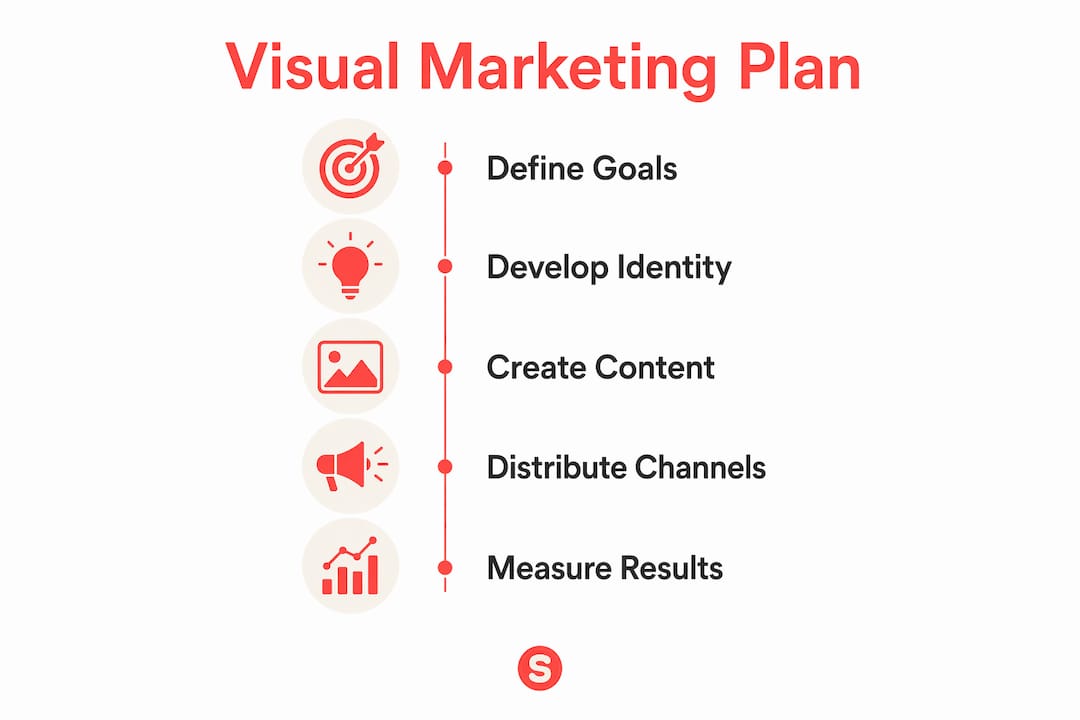
Effective visual marketing starts with a unified visual identity. Your logo, color palette, and font choices must appear consistently across every channel. Consistent visual identity across social media, ads, email, and landing pages directly boosts recognition and recall. When a customer sees your brand’s signature color in a Facebook ad and then lands on your website, that continuity builds trust without a single word being read.
The second strategic layer is channel-specific content. A square photo works on Instagram. A horizontal video works on YouTube. A text-heavy graphic works in email. Treating every platform as identical is one of the most common and costly mistakes in visual marketing. Each channel has its own format requirements, audience behavior, and engagement patterns.
Pro Tip: Design every visual asset so the core message, including your brand name and offer, is readable within one second. Message clarity per second is the standard practitioners use because users decide to engage within fractions of a second. If your ad requires three seconds of reading to understand, you have already lost most of your audience.
Strategic placement of visual content spans five primary channels:
- Social media feeds and Stories: High-frequency, platform-native formats that drive discovery
- Website and landing pages: Conversion-focused visuals that reduce bounce and increase time on page
- Email marketing: Branded headers, product images, and promotional graphics that drive clicks
- Paid advertising: Scroll-stopping creative that communicates the offer before the headline is read
- Google Business Profile: Photos and video that influence local search decisions directly
Asset reuse is an underrated part of visual strategy. A single professional photo shoot can generate content for Instagram posts, email headers, ad creative, and website banners simultaneously. Restaurants that invest in one quarterly shoot often cover three months of content across all channels from that single session.
Why does visual marketing matter for brand recognition and engagement?
Humans extract meaning from pictures faster than from text, which makes visual content the most efficient communication format in crowded digital feeds. This is not a preference. It is a cognitive reality that every marketer must account for. When your restaurant’s food photo competes with a text-only post in a social feed, the photo wins the first glance every time.
Visual marketing also builds the kind of trust that text alone cannot. Custom photo and video content avoids generic stock imagery and strengthens brand recognition by showcasing real products, real teams, and real environments. A photo of your actual kitchen or your actual staff communicates authenticity in a way that a stock photo of a smiling chef never will.
“Visuals convey brand story and value in mere seconds by placing photos, illustrations, and videos throughout the shopping journey.” — Shopify, 2026
The importance of visual marketing extends to memory and recall. Audiences who see consistent visual branding across multiple touchpoints are significantly more likely to remember and recognize a brand when making a purchase decision. This is why brands like Starbucks and Chipotle maintain strict visual guidelines across every piece of content they publish. The repetition of color, style, and composition creates a mental shortcut that works in the brand’s favor.
For small businesses and restaurants, the stakes are equally high. A local competitor with stronger visual content will consistently outperform a better product with weaker visuals in digital environments. Visual marketing is not a luxury for brands with large budgets. It is the baseline expectation of any audience that discovers you online first. You can learn more about how this plays out specifically for food businesses in this breakdown of visual marketing for restaurants.
How to build an effective visual marketing plan
A strong visual marketing plan starts with two foundational questions: what does your brand stand for, and who are you trying to reach? Defining your value proposition and marketing objectives before producing any content prevents the most common failure mode, which is creating visually attractive content that communicates nothing specific.
Once objectives are clear, the next step is understanding your audience’s visual preferences. A restaurant targeting young professionals on Instagram needs a different visual language than one targeting families on Facebook. Research your audience’s behavior on each platform before committing to a visual style.
From there, build your brand visual identity as a documented system. This means:
- Define your primary and secondary color palette with exact hex codes
- Select two to three fonts and specify where each is used
- Establish a photography style guide covering lighting, composition, and subject matter
- Create branded templates for recurring content types like weekly specials or event announcements
- Document the rules in a one-page brand guide your team or any contractor can follow
Pro Tip: Avoid overusing stock imagery and invest in at least one custom photo and video shoot per quarter. Custom visuals connect with audiences at a depth that stock photos cannot replicate, and they give you owned assets that no competitor can duplicate.
The final step is measurement and optimization. Track which visual formats drive the most engagement, click-throughs, and conversions on each platform. Use that data to inform your next content cycle. Visual marketing is not a set-and-forget system. It improves with iteration.
| Step | What it involves |
|---|---|
| Define objectives | Set specific goals: awareness, traffic, conversions, or retention |
| Audience research | Identify visual preferences and platform behavior for your audience |
| Brand identity system | Document colors, fonts, photography style, and templates |
| Content production | Create channel-specific assets from a planned shoot or design session |
| Measure and optimize | Track engagement and conversion data to refine future content |
For restaurants specifically, video content deserves its own focus within the plan. Short-form video on Instagram Reels and TikTok consistently outperforms static images for reach and engagement. A 15-second clip of a dish being plated can generate more new customer interest than a month of static posts. Sorbey’s guide on video for restaurant engagement covers this format in depth.
Key takeaways
Visual marketing works because it communicates brand value faster than any other format, and consistency across channels is what converts that speed into lasting recognition and revenue.
| Point | Details |
|---|---|
| Definition is strategic, not decorative | Visual marketing is a channel strategy that drives conversions, not just aesthetics. |
| Custom visuals outperform stock | Real photos and videos of your brand build trust and engagement that stock imagery cannot match. |
| Consistency drives recognition | A unified visual identity across all platforms accelerates brand recall and customer loyalty. |
| Message clarity is the design standard | Every visual asset must communicate its core message within one second of viewing. |
| Planning precedes production | Define objectives and audience preferences before creating any visual content. |
Visual marketing is a strategy, not a style choice
I have reviewed hundreds of local business marketing accounts over the years, and the pattern is always the same. The businesses that treat visual marketing as a strategic system consistently outperform those that treat it as an afterthought or a creative exercise. The difference is not budget. It is intention.
The most common mistake I see is inconsistency. A restaurant posts a beautifully shot dish on Monday, then a blurry phone photo on Wednesday, then a stock image on Friday. Each post might be individually acceptable, but together they signal to the audience that the brand has no coherent identity. Inconsistency is not neutral. It actively erodes trust.
The second mistake is confusing activity with strategy. Posting frequently without a defined visual identity or clear message is noise, not marketing. I have seen accounts with three posts per week outperform accounts posting daily, simply because those three posts were visually consistent, message-clear, and channel-appropriate.
My honest advice: treat your visual marketing plan the same way you treat your menu. It should be intentional, updated seasonally, and designed to make a specific impression on a specific person. If you would not serve a dish without tasting it first, do not publish a visual without asking whether it communicates exactly what you intend. The branding strategies that drive engagement for restaurants all share this same discipline at their core.
— Barthelemy
How Sorbey helps local businesses build visual marketing that works
Sorbey is built specifically for restaurants and local businesses that need marketing to work without a full in-house team. The platform covers visual content planning, social media management, and brand consistency across digital channels, all from one place. If you have been producing content without a clear visual strategy, or if your brand looks different on Instagram than it does on Google, Sorbey gives you the structure to fix that. Explore the full range of marketing services for restaurants and see how Sorbey supports visual marketing from planning through to publication.
FAQ
What is the definition of visual marketing?
Visual marketing is the strategic use of photos, videos, graphics, infographics, and typography to communicate marketing messages and support brand engagement across digital channels. It is a core channel strategy, not a decorative layer.
How does visual marketing differ from visual merchandising?
Visual marketing operates within digital strategy and covers assets like social media content, ads, and website imagery. Visual merchandising focuses on physical product displays in retail environments like store windows and shelf arrangements.
What are the main benefits of visual marketing?
Visual marketing grabs audience attention faster than text, builds brand recognition through consistent imagery, and drives higher engagement and conversion rates across social media, email, and paid advertising.
What are examples of visual marketing tools?
Canva is widely used for graphic design and branded templates. Adobe Express, Later, and Hootsuite support visual content creation and scheduling. For video, CapCut and Adobe Premiere Rush are common choices for small business teams.
How do I start a visual marketing strategy?
Start by defining your marketing objectives and documenting a brand visual identity that includes your color palette, fonts, and photography style. Then produce channel-specific content and measure performance to optimize over time.
Recommended
- Why visual marketing works for restaurant owners | Sorbey Blog | Sorbey
- What Is Automated Marketing? Your 2026 Strategy Guide | Sorbey Blog | Sorbey
- Local advertising guide for restaurants: boost visibility | Sorbey Blog | Sorbey
- Proven restaurant marketing types to boost revenue | Sorbey Blog | Sorbey
Potrebbe interessarti anche

Reputation Management Tips for Business Owners in 2026
Discover essential reputation management tips for 2026 to enhance your business's online presence and attract more customers today!

Why Update Menus Online: A 2026 Guide for Restaurants
Discover why update menus online is crucial for restaurants in 2026! Ensure accurate pricing and boost sales with automated menu management.

Lead Generation Strategies for Urban Restaurants in 2026
Discover effective lead generation strategies for urban restaurants in 2026. Boost bookings and fill your dining room with smart tactics!